The Verdict
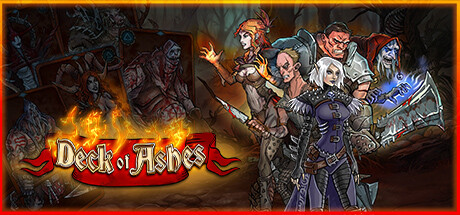
“Gorgeous dark fantasy art wraps a deckbuilder undermined by a punishing ash mechanic, broken balance, and years of unresolved bugs.”
Mixed
Roughly half of players recommend it.
Analysis by Ivan Z. Ganza · Methodology →
Quick Stats
379en
1,062 total (all languages)
379 analyzed
Current as of Apr 22, 2026
Jun 9, 2020
$19.99
Apr 23, 2026
0.1/day
Slowing
Metadata current as of Apr 22, 2026 · Source: Steam
Market Reach
≈44,000
≈$890.0K
Based on 1,062 reviews (all languages)
Based on review count × genre/age/price-adjusted Boxleiter ratio. Gross revenue before Steam’s 30% cut, refunds, and regional pricing.
Design Strengths
- Hand-drawn dark fantasy art is the game's undisputed standout — monster variety, character design, and card art are consistently praised across all review periods
- Recipe-based card crafting gives players unusual agency over deck construction compared to pure-RNG reward systems in genre peers
- Each playable character features meaningfully distinct mechanics and deck archetypes, providing genuine playstyle variety
- Narrative investment is unusually high for a roguelike — characters have compelling backstories, voice acting, and individual motivations within a shared curse-driven plot
- Bidirectional overworld map with dungeons adds an adventuring layer that differentiates the game from pure card-combat roguelikes
- Hybrid camp management and resource system creates strategic decisions beyond individual combat encounters
Gameplay Friction
- Ash mechanic punishes players for playing cards — health drain and forced reshuffle prompts disrupt flow and create negative emotions even during successful runs
- Discard archetype is game-breakingly overpowered, trivializing content with common cards, while most other archetypes feel underpowered; developer has publicly declined to rebuild it
- Final boss hard-counters ash-focused builds and strips player agency by forcing a special card, rendering run investment moot
- Combat pacing is severely slow — card animations add seconds per action, story voice-line interruptions freeze input for 1-2 seconds mid-fight, and no speed-up option exists
- Sound effects desync from animations — audio resolves before hit impact lands, making all combat feel 'off'
- Early game is overly restrictive — vendor upgrades lock behind RNG currencies and must be re-unlocked every run, creating a tedious ramp before the game becomes enjoyable
- Overworld timer forces resource grinding even when a strong deck is already assembled, making mid-run pacing feel mandatory rather than strategic
Audience Profile
Ideal Player
A patient deckbuilder fan who prioritizes atmosphere, dark fantasy aesthetics, and deliberate deck crafting over run speed or mechanical polish.
Casual Friendliness
low
Player Archetypes
Not For
Sentiment Trend
stable
Insufficient recent review volume to determine trend.
Genre Context
Roguelike deckbuilders are benchmarked on run speed, card pool depth, and mechanical clarity — areas where this game underperforms genre norms with 6-13 hour runs, a card pool exhausted in under 3 hours, and a signature mechanic that the majority of players find punishing rather than engaging. Its hybrid RPG overworld and recipe-based crafting represent genuine structural differentiation, but the execution gap between concept and polish is wider than the genre average.
Promise Gap
Audience Match
The store page targets fans of creative deck-building and tactical depth, but the game's actual audience skews toward dark fantasy atmosphere enthusiasts willing to tolerate significant mechanical rough edges. Players expecting the tactical precision and card variety implied by the store description frequently bounce.
Player Wishlist
- Configurable animation/combat speed slider or skip option
- Persistent meta-progression for vendor unlocks across runs
- Expanded card pool with deeper per-character synergies
- Hotkey support for card play and menu navigation
- Additional difficulty modifiers or challenge modes to extend endgame variety
Churn Triggers
- Within the first 1-3 hours, players hit the ash recovery loop — spending health to cycle cards mid-combat — and immediately flag it as a dealbreaker before the game's strengths have time to land
- Around hour 3 of a single run, players realize they have already seen the full card pool and the remaining 3-6 hours offer no new discoveries, killing motivation to continue
- After the final boss fight strips deck synergy by forcing a special card, players who invested 10+ hours in a run feel cheated and report not starting another run
- New players who plug in a controller at launch find the mouse cursor disappears and the game becomes effectively unplayable, leading to immediate refund language
Developer Priorities
Fix controller/Steam Deck support so plugging in a controller does not disable mouse input — or explicitly remove the 'Playable' Steam Deck tag until it works
This is the single fastest path to a refund: players cannot interact with the game at all, and the false 'Playable' tag actively misleads buyers
Rebalance the discard archetype and ash mechanic — cap discard damage scaling, add a hotkey/button to trigger ash recovery without interrupting flow, and lower the per-card health cost or offer an alternative recovery option
The ash mechanic is the most-mentioned topic (62 signals) and the top reason players call the game fundamentally flawed; discard imbalance (48 signals) makes every other archetype feel pointless
Add a combat speed multiplier (1x / 1.5x / 2x) and remove or shorten forced voice-line input locks during battle
Slow pacing (44 signals, avg 9 helpful votes) is the most-cited reason players stop mid-session; it directly enables the 'boredom churn' around hour 3-6
Redesign the final boss to not hard-counter ash builds or strip the player's deck — at minimum, remove the forced special-card mechanic
Players who invest 10+ hours in a run and hit the final boss encounter report it invalidates the entire experience, and explicitly cite it as a reason not to start another run
Implement persistent meta-progression for vendor unlocks across runs to reduce early-game repetition
Having to re-unlock vendors every run discourages multi-character play and is cited as a reason players skipped the DLC entirely — directly harming long-term retention and DLC revenue
Competitive Context
Most frequent comparison; some praise Deck of Ashes as a worthy darker alternative with more deliberate deck crafting, but reviewers broadly find it inferior in card variety, run pacing, balance, and polish. Treated as the genre benchmark.
Cited as the clear visual and thematic inspiration; reviewers describe Deck of Ashes as a Darkest Dungeon / Slay the Spire mashup in art style and atmosphere.
Reviewers explicitly prefer Monster Train for deeper card synergies and faster, better-paced runs.
Cited as having a superior card pool; reviewers wish Deck of Ashes had comparable card variety to support its crafting system.
Suggested as a more substantial deckbuilding RPG alternative.
Referenced as a deckbuilder that succeeds at story and character integration in ways Deck of Ashes attempts but falls short of.
Preferred by reviewers for better map design, run pacing, and the short-run addictive loop that Deck of Ashes lacks.
Both games criticized for slow combat; reviewers note Across the Obelisk at least includes hotkeys, giving it a pacing edge.
Mentioned as a genre comparator without specific valence judgment.
Sentiment History
Sentiment over time
Playtime Sentiment
Sentiment by time invested
· 209 post-launch reviewsPlayers who invest more time rate this game significantly higher (+59pts) — a strong signal of a slow-burn experience that rewards patience.
Competitive Benchmark
Compared to 211 similar games in the Strategy genre released in 2020.
Tags
Loading analytics...
Get more analyses like Deck of Ashes
Free reports today. Pro launches soon. No spam.