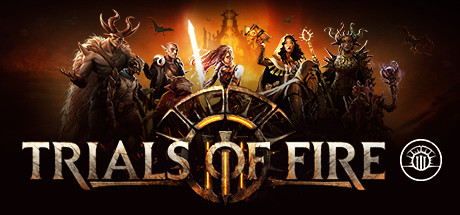
The Verdict
“Tactical hex-grid combat meets elegant deckbuilding — one of the genre's smartest hybrids, now dormant but deeply worth your time.”
Very Positive
This puts the game in the top 30% of all reviewed games on Steam.
Analysis by Ivan Z. Ganza · Methodology →
Quick Stats
1,727en
3,242 total (all languages)
1,721 analyzed
Current as of Apr 23, 2026
Apr 9, 2021
$19.99
Apr 23, 2026
0.6/day
Slowing
Metadata current as of May 2, 2026 · Source: Steam
Market Reach
≈120K
≈$2.4M
Based on 3,242 reviews (all languages)
Based on review count × genre/age/price-adjusted Boxleiter ratio. Gross revenue before Steam’s 30% cut, refunds, and regional pricing.
Design Strengths
- Hex-grid combat with flanking, line-of-sight, and positional play creates layered tactical decisions absent from most deckbuilders
- Every card has four uses (ability, willpower/mana, movement, defense), making bad draws rare and every hand decision-rich
- Equipment directly injects cards into character decks, binding loot excitement to build strategy in a single elegant system
- Nine distinct hero classes with 500+ party combinations drive genuine run-to-run variance
- Accessibility support — probability displays, turn-based pacing, alternative input device compatibility — meaningfully broadens the potential player base
- Storybook UI framing with polished card art, 3D battlefield environments, and satisfying combat VFX punches well above indie budget
- AI follows the same positioning rules as the player, making enemy behavior readable and tactically fair
Gameplay Friction
- Difficulty spikes unpredictably — runs that feel manageable can end in a total party wipe in 2-3 turns at final bosses, with no telegraphing of gimmick mechanics
- Higher difficulties (Cataclysm+) shift from skill expression to RNG dependency, undermining the tactical depth the game builds
- Melee builds become non-viable at higher difficulties as ranged kiting dominates and several bosses mechanically punish melee engagement
- Deck bloat accumulates as equipment adds off-class cards with no way to customize starting decks and prohibitively high card removal costs
- Enemy variety is shallow — primarily bandits, ratlings, and Ashen — causing encounter fatigue after 10–30 hours of play
- Overworld map lacks a pullable overview, making navigation disorienting; food/stamina survival pressure is punishing rather than strategic for many players
- UI has multiple clarity issues: unclear card wording, poor high-resolution scaling, tiny fonts, and an undo button nearly invisible against same-color backgrounds
Audience Profile
Ideal Player
A tactics-loving deckbuilder fan who wants meaningful positional decisions and party synergy rather than pure card combo optimization.
Casual Friendliness
low
Player Archetypes
Not For
Sentiment Trend
stable
Insufficient recent review volume to determine trend.
Genre Context
In the tactical deckbuilder roguelike genre, Trials of Fire occupies a distinctive niche by fusing hex-grid positional combat with equipment-linked deck construction — a combination that outpaces most genre peers in tactical complexity but trails them in onboarding clarity and UI polish. For a single-developer indie, the mechanical ambition is exceptional; the content volume (9 classes, 345 cards, 4 modes) is competitive at launch but has not expanded, which is now a liability in a genre where live content updates are increasingly expected.
Promise Gap
Audience Match
The store page leans into 'adventure' and 'RPG depth' language that attracts narrative RPG players, but the actual experience is mechanics-first with thin story — players seeking narrative investment are a poor fit. The core audience is tactics and deckbuilder enthusiasts, which the description undersells.
Player Wishlist
- Co-op multiplayer for the 3-hero party system
- Additional campaigns and quest types beyond the 4 available lore quests
- More hero classes, bosses, and enemy factions
- Steam Workshop mod support with meaningful tooling (currently only 4 mods exist)
- DLC or a sequel to extend the content lifespan
Churn Triggers
- Players hit the first final boss after a well-built run and lose in 2-3 turns to an unexplained gimmick mechanic — often the final drop before uninstalling
- New players encounter a cluttered UI, unclear card terminology, and no effective tutorial in the first 1-2 hours and disengage before the tactical depth reveals itself
- After 10–30 hours, players recognize they are speed-clicking through the same small pool of repeated random encounters and stop returning
- Players who complete their first story run are dropped to the main menu with no persistent reward or carry-over acknowledgment, creating a hollow feeling that breaks the motivation loop
Developer Priorities
Redesign final boss and Act 3 encounters to telegraph gimmick mechanics and smooth the difficulty curve into the endgame
The unpredictable difficulty spike is the single most-upvoted criticism (153 helpful votes on one review alone) and is the primary moment driving run abandonment and negative reviews from otherwise satisfied players
Add starting deck customization and reduce card removal costs to give players meaningful agency over deck composition
Deck bloat undermines the equipment-as-deckbuilding system that is the game's core innovation; players who feel locked into identical starts disengage from experimentation
Audit controller and Steam Deck input mapping to match the Verified certification's implied quality bar
Steam Deck Verified status sets an explicit expectation; reviews describe controller support as 'an afterthought' and cite specific softlock bugs on Deck — a reputational liability on a growing platform
Rebalance melee class viability and higher-difficulty scaling to reward strategic variety rather than funneling players into ranged kiting
Class balance issues at Cataclysm+ difficulty cause experienced players to feel shoehorned, reducing the 500+ party combinations to a handful of viable strategies and killing long-term replayability
Add a minimap or persistent overworld navigation aid and clarify card/mechanic tooltips throughout the UI
Navigation disorientation on the overworld and unclear card wording are early-session friction that drives new-player dropout before the tactical depth can convert them
Competitive Context
The most-cited reference point. Reviewers with 2000+ hours in StS describe ToF as the first game to scratch the same itch. ToF wins on tactical depth and party complexity; StS wins on UI polish and deck control precision.
Reviewers describe ToF as a faster, more accessible single-player alternative to the digital Gloomhaven adaptation, with comparable hex-grid tactical depth but less setup friction.
High-playtime reviewers rate ToF above Monster Train for mechanical depth; early negative reviews cite Monster Train as having superior polish and onboarding.
Multiple reviewers describe ToF as 'Card Hunter done better' — the same equipment-as-cards core mechanic executed with tighter design and a more engaging unlock loop.
Cited as a direct comparable hybrid; reviewers are split, with some preferring ToF's tactical depth and others finding Gordian Quest executes similar mechanics more cleanly.
Referenced for atmospheric party-based roguelike tone and punishing difficulty; ToF is seen as blending that atmosphere with deckbuilding and tactical positioning.
Cited as a structural influence on ToF's overworld exploration format — FTL-style resource and risk decisions layered under the tactical combat system.
Tactical grid combat draws consistent 'fantasy XCOM with deckbuilding' comparisons from reviewers, used to orient the game's positional and turn-based feel.
One reviewer describes ToF as the deepest and most fun tactics RPG they've played outside of FFT — a high bar that signals the ceiling of the praise the game receives.
Cited as a quality benchmark for roguelike design; one negative reviewer implies Hades is a superior alternative, but the comparison is not elaborated substantively.
Sentiment History
Sentiment over time
Playtime Sentiment
Sentiment by time invested
· 1,261 post-launch reviewsPlayers who invest more time rate this game significantly higher (+44pts) — a strong signal of a slow-burn experience that rewards patience.
Competitive Benchmark
Compared to 219 similar games in the Strategy genre released in 2021.
Tags
Loading analytics...
Get more analyses like Trials of Fire
Free reports today. Pro launches soon. No spam.