The Verdict
“A charming, genuinely fresh take on deckbuilders — the 3x3 grid mechanic alone makes it worth $5.”
Very Positive
This puts the game in the top 30% of all reviewed games on Steam.
Analysis by Ivan Z. Ganza · Methodology →
Quick Stats
358en
890 total (all languages)
353 analyzed
Current as of Apr 26, 2026
Jul 22, 2020
$14.99
Apr 23, 2026
0.1/day
Slowing
Metadata current as of Apr 26, 2026 · Source: Steam
Market Reach
≈28,000
≈$140.0K
Based on 890 reviews (all languages)
Based on review count × genre/age/price-adjusted Boxleiter ratio. Gross revenue before Steam’s 30% cut, refunds, and regional pricing.
Design Strengths
- 3x3 grid fuses deckbuilding with spatial puzzle logic — enemies and player tiles share the same shuffled board, creating a distinctive tactical layer not found in other deckbuilders
- Enemy intent is always visible in advance, making deaths feel like player error rather than unfair RNG — rare in the genre
- Five characters with genuinely differentiated mechanics (tank/block, debuff, combo/first-strike) drive distinct run strategies rather than cosmetic variation
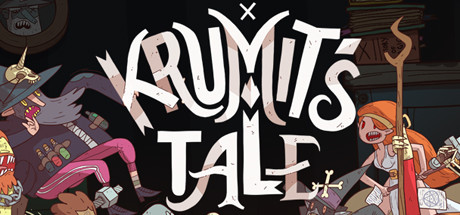
- Adventure Time-influenced hand-drawn art and fluid animation give the game a strong, consistent visual identity
- Soundtrack and voice work are polished and characterful, reinforcing the whimsical tone throughout
- 20–40 minute session length is well-suited to repeated runs without fatigue
- Ascension-style difficulty modifiers and mutation runs extend the challenge curve meaningfully past initial unlocks
Gameplay Friction
- Board RNG can generate enemy-heavy grids with no viable resource tiles, creating objectively unwinnable board states — especially punishing at late dungeons
- Shallow combat ceiling: experienced players report that optimal play collapses into math-heavy tile-duplication loops rather than evolving strategic choices
- No in-game tooltips or glossary — core mechanics like parry and exhaust require consulting external resources, creating a steep early wall
- Mobile-origin UI lacks PC-quality affordances: no hero progress tracking, no card discovery log, no achievement progress visibility
- Map is displayed but offers no meaningful routing choice — the illusion of agency with none of the decision-making
Audience Profile
Ideal Player
A deckbuilder fan who's exhausted the Slay the Spire formula and wants a mechanically novel, short-session roguelite with real tactical crunch.
Casual Friendliness
medium
Player Archetypes
Not For
Sentiment Trend
stable
Insufficient recent review volume to determine trend.
Genre Context
Within the roguelike deckbuilder genre, most entries iterate on hand-management and turn-sequencing inherited from tabletop models. Krumit's Tale breaks from this by fusing spatial board-puzzle logic with the deckbuilding loop, producing a hybrid that plays and feels unlike the dominant dungeon-crawl formula.
Promise Gap
Audience Match
The store page targets fans of the mobile Meteorfall universe ('same cast', 'same core mechanics'), but the PC audience is primarily genre-first deckbuilder players discovering the game cold. The description undersells the mechanical novelty that actually drives purchase decisions for this audience.
Player Wishlist
- Expanded post-unlock meta-progression system that provides meaningful run-to-run growth beyond card unlocks
- Deeper narrative or lore layer — in-world story content beyond the recurring sequel-bait cutscene
- Branching map routing with genuine path choice consequences
- In-game glossary and keyword tooltips for all mechanics
Churn Triggers
- Within the first 2 hours, players without tooltip guidance hit an opaque mechanics wall (parry, exhaust) and drop before the grid system clicks
- Around 6–10 hours, players expecting Slay the Spire-level strategic depth realize the combat ceiling is lower than anticipated and exit negative
- After unlocking all 5 base characters (~35 hours for engaged players), the absence of meaningful meta-progression removes the primary long-term pull
Developer Priorities
Add in-game tooltips and a keyword glossary for all mechanics (parry, exhaust, tile interactions)
The single largest early-dropout trigger — players quit within 2 hours when mechanics are opaque. Fixing this directly improves conversion from trial to retained player.
Audit and fix tile-overlap soft-lock and ability stat inconsistencies
A run-ending soft-lock is the highest-severity repeatable bug; erodes trust even in players who are otherwise positive.
Introduce a lightweight meta-progression layer that persists meaningful unlocks or modifiers across runs past the initial character unlock phase
The primary long-term churn driver — once all 5 base characters are unlocked, there is no structural pull. Adding this extends the tail of engaged players significantly.
Redesign or expand map routing to offer genuine path decisions with distinct consequences
The current map creates an expectation of agency it doesn't deliver — a cheap trust breach that also caps strategic variety complaints.
Revise DLC achievement structure so base-game achievements are not locked behind paid content
Completionists — disproportionately long-playtime players — are vocally alienated by this. Low effort fix with outsized goodwill return.
Competitive Context
Primary benchmark. Reviewers consistently position Krumit's Tale as faster, more deterministic, and spatially distinct — not a clone. StS veterans appreciate the novelty but some find the strategic ceiling lower.
Comparable roguelike deckbuilder; some reviewers prefer Meteorfall's pace and uniqueness, others credit Monster Train with greater lasting strategic depth.
Cited for grid-based tactical comparison; some prefer Desktop Dungeons' reveal-as-you-go mechanic and character differentiation.
Mentioned as a comparable tile-monster roguelike; reviewers recommend one to fans of the other, with Ring of Pain credited for richer synergies by some.
Compared for character diversity and puzzle-design philosophy; some feel Dicey Dungeons executes the puzzle aspect more cleanly.
Referenced as a shared reference point for puzzle-like tactical roguelikes with deterministic, readable enemy behavior.
One reviewer found Neoverse more mechanically complex, framing Krumit's Tale as overly simplistic by comparison.
One reviewer compared unfavorably, finding Night of the Full Moon more engaging and strategic.
Mobile predecessor; Krumit's Tale is a significant mechanical evolution (grid vs. swipe), not a direct sequel in gameplay feel.
Sentiment History
Sentiment over time
Playtime Sentiment
Sentiment by time invested
· 206 post-launch reviewsPlayers who invest more time rate this game significantly higher (+20pts) — a strong signal of a slow-burn experience that rewards patience.
Competitive Benchmark
Compared to 264 similar games in the Strategy genre released in 2020.
Tags
Loading analytics...
Get more analyses like Meteorfall: Krumit's Tale
Free reports today. Pro launches soon. No spam.