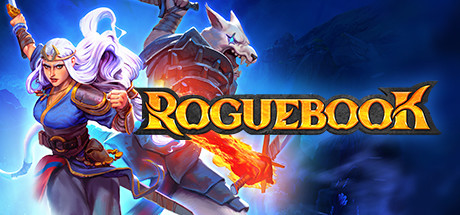
The Verdict
“A gorgeous, dual-hero deckbuilder with real strategic depth — but abandoned by its developers and riddled with unfixed bugs.”
Very Positive
This puts the game in the top 30% of all reviewed games on Steam.
Analysis by Ivan Z. Ganza · Methodology →
Quick Stats
2,568en
4,420 total (all languages)
1,993 analyzed
Current as of Apr 22, 2026
Jun 17, 2021
$24.99
Apr 23, 2026
1.4/day
Slowing
Metadata current as of May 3, 2026 · Source: Steam
Market Reach
≈130K
≈$220.0K
Based on 4,420 reviews (all languages)
Based on review count × genre/age/price-adjusted Boxleiter ratio. Gross revenue before Steam’s 30% cut, refunds, and regional pricing.
Design Strengths
- Dual-hero front/rear positioning system creates tactical depth and synergy variety absent in single-character competitors — consistently the most praised mechanic across all review cohorts
- Six hero pairings produce meaningfully different strategic identities, enabling high build diversity across hundreds of hours
- Gem-socket card customization adds a satisfying crafting layer where even weak cards become viable synergy pieces with the right gem
- Hex-grid map exploration with ink/brush resource management replaces linear path selection with a puzzle-like strategic layer
- Art style, character animations, and 'cutout puppet' presentation are among the most praised aesthetics in the deckbuilder genre
- Soundtrack delivers a distinct fantasy atmosphere that reviewers across playtime cohorts call a consistent strength
- Daily tournament runs with randomized modifiers provide a structured endgame loop for players who exhaust the base content
- More viable deck archetypes per run than most genre peers — high-playtime reviewers cite this as the game's clearest edge over competitors
Gameplay Friction
- Near-zero card removal options force large, bloated decks — players report removing a card once or twice across 10 runs — directly undermining synergy-building as a meaningful player choice
- Unskippable animations (map reveal, card draw, combat, movement) make runs 2–4× longer than comparable deckbuilders with no speed option ever added in 4+ years post-launch
- Difficulty is sharply unbalanced: early enemies can deal near-full HP damage on turns 1–2, while late-game becomes trivial once meta-progression unlocks stack
- Excessive RNG in ink/brush availability frequently strands players — ink scarcity forces burning resources just to reach the next fight, which then rewards more ink
- Meta-progression grind is artificially steep — some late embellishments cost 7–17 runs each, and the game is arguably unwinnable on a fresh save without significant unlock investment
- Healing scarcity forces near-zero-damage play throughout runs; potion and event recovery is insufficient to sustain attrition strategies
- Chapter 3 boss mechanic that consumes cards actively punishes lean-deck strategies, contradicting the game's own card-acquisition reward loops
Audience Profile
Ideal Player
A genre-savvy deckbuilder fan who wants a visually polished, mechanically fresh take on the roguelite formula and is comfortable grinding 20+ hours before all systems click.
Casual Friendliness
low
Player Archetypes
Not For
Sentiment Trend
declining
Sentiment dropped from 82% to 70% positive over the last 90 days (77 reviews vs 87 prior).
Genre Context
Roguebook occupies a mid-tier position in an increasingly crowded roguelite deckbuilder market — its dual-hero positioning system and hex-grid exploration are genuine mechanical innovations above genre baseline, but the absence of card removal, unskippable animations, and abandoned post-launch state place it below the genre's quality ceiling. At its current price point it overdelivers on value for content volume; at full price it competed unfavorably against more polished and actively supported peers.
Promise Gap
Audience Match
The store page targets genre-curious players drawn to the MTG creator credential and the promise of elegant synergy-building, but the actual audience skews toward roguelite veterans who can tolerate steep early difficulty, large-deck philosophy, and no story payoff. Casual players attracted by the polished art and MTG branding are the most likely to churn within the refund window.
Player Wishlist
- Additional hero characters beyond the base four to expand pairing combinations and late-game variety
- More zones, enemy types, and event pools to extend the content ceiling past the ~20–40 hour exhaustion point
- Animation speed toggle or fast-forward mode to let players control run pacing
- Expanded endgame content (the NPC hints at planned post-final-boss content that was never delivered)
- More story and narrative development for heroes and the Roguebook itself
- Additional challenge modifier modes or Hades-style heat scaling beyond the current epilogue system
Churn Triggers
- Within the first 3 hours: new players hit early-game enemies that deal near-full HP damage before defensive tools are available, triggering repeated early deaths that read as unfair rather than instructive
- Around hour 10–20: players attempting to build tight synergy decks discover that card removal is nearly impossible, realize the large-deck design philosophy contradicts their playstyle, and abandon before meta-progression pays off
- After the first boss kill or story beat: players reach the final boss and are returned to the title screen with no resolution, prompting immediate negative reassessment of the run investment
- After a mid-run crash or save corruption in the cave/mines level: players who lose a 1.5–2.5 hour run to an unresolved bug frequently decide not to restart
Developer Priorities
Patch the cave/mines save corruption bug and crash-on-boss interactions — ship a targeted stability hotfix, not a content update
Save corruption is the single fastest path from 'I love this game' to 'do not buy' — it affects veteran players with 700+ hours and is the top driver of recent negative review sentiment and inbound refund language
Add an animation speed toggle (1×/2×/fast-forward) as a settings option
Slow unskippable animations are the second most-mentioned friction point (186 mentions) and directly suppress replayability — the core monetization of a roguelite. Players with 30+ hours still cite this as the reason they play less
Introduce at least one reliable card-removal mechanic accessible in every run, regardless of RNG
Deck bloat with near-zero removal is the highest-upvoted design complaint (84 helpful votes on the top negative quote) and the primary cause of mid-game churn for players who entered expecting standard deckbuilder minimization
Fix Steam Deck text rendering and resolve controller soft-lock requiring mouse fallback
The game is rated 'Playable' on Steam Deck but reviewers call handheld 1/10 due to unreadable text — a platform the store page implicitly supports. Controller soft-locks break the input promise of a couch-friendly game
Rebalance early-game enemy damage and healing availability to reduce first-run death spikes before defensive tools are accessible
Early-game difficulty spikes are the primary churn trigger in the first 3 hours — the window where refund decisions are made. Players who quit before the meta-progression loop clicks never discover the game's genuine depth
Competitive Context
The dominant benchmark across all reviews. Roguebook is praised as equal or superior for synergy variety, art, and dual-hero innovation; criticized as derivative and less strategically rigorous at the high end. Consensus: a worthy genre companion, not a replacement.
Frequently cited alongside StS as a quality bar. Some reviewers rank Roguebook above Monster Train for exploration and character variety; others find Monster Train's replayability and content depth superior.
Repeatedly recommended as a superior alternative with more narrative depth and mechanical variety; some reviewers explicitly suggest playing Griftlands before or instead of Roguebook.
Set in the same universe by the same developer; shared art assets and characters are a consistent aesthetic strength for players familiar with Faeria.
Some reviewers prefer Gordian Quest for multi-hero deckbuilding depth; others find Roguebook comparable in strategic richness.
Recommended by some reviewers as a superior alternative specifically for endgame content depth.
Referenced for its heat-scaling difficulty system; Roguebook's epilogue modifier system is compared favorably to this model.
Listed as a genre peer among players who cite multiple favorite roguelike deckbuilders.
Richard Garfield's design credit raises CCG-player expectations; some feel the MTG pedigree promises strategic depth the game doesn't fully deliver.
Sentiment History
Sentiment over time
Playtime Sentiment
Sentiment by time invested
· 2,534 post-launch reviewsPlayers who invest more time rate this game significantly higher (+31pts) — a strong signal of a slow-burn experience that rewards patience.
Competitive Benchmark
Compared to 211 similar games in the Strategy genre released in 2021.
Tags
Loading analytics...
Get more analyses like Roguebook
Free reports today. Pro launches soon. No spam.