The Verdict
“A top-tier roguelike deckbuilder that adds tower-defense strategy across three train floors — hundreds of hours of synergy hunting await.”
Overwhelmingly Positive
Fewer than 5% of Steam games with 1,000+ reviews achieve this.
Analysis by Ivan Z. Ganza · Methodology →
Quick Stats
13,973en
22,790 total (all languages)
1,991 analyzed
Current as of Apr 24, 2026
May 21, 2020
$24.99
Apr 19, 2026
4.5/day
Slowing
Metadata current as of May 1, 2026 · Source: Steam
Market Reach
≈750K
≈$18.0M
Based on 22,790 reviews (all languages)
Based on review count × genre/age/price-adjusted Boxleiter ratio. Gross revenue before Steam’s 30% cut, refunds, and regional pricing.
Design Strengths
- Dual-clan selection from five (six with DLC) creates an enormous combinatorial space — reviewers with 600–993 hours still discover novel synergies each run
- Three-floor vertical defense mechanic is a genuinely successful twist on the deckbuilder formula, adding spatial strategy absent from all genre peers
- Run length of 30–60 minutes with a speed-up button hits the sweet spot between feeling complete and enabling 'one more run' sessions
- Deck-building is explicitly designed to let players construct overpowered, game-breaking combos — satisfying power fantasy that feels earned
- 25-tier Covenant difficulty system provides gradual, self-paced scaling that extends competitive life well beyond initial mastery
- Soundtrack described by multiple reviewers as the best indie OST they've heard — atmospheric and genre-spanning, with in-game track display
- Accessibility curve is gentle enough to convert players who dislike roguelikes, without sacrificing endgame depth
- Steam Deck performance praised as smooth with reliable cross-platform save sync
Gameplay Friction
- Balance collapses at high Covenant levels (roughly 12–25): only a narrow set of meta builds remain viable, and RNG in artifact and card offerings becomes disproportionately decisive
- Base game difficulty is too low for experienced deckbuilder players — multiple reviewers report winning their first run, reducing early tension
- Clan and champion balance disparities are noticeable: certain clans (e.g., Umbra) feel underpowered relative to others, narrowing build diversity at higher tiers
- Enemy and encounter variety is limited, contributing to a repetitiveness wall for players who don't advance into Covenant difficulty tiers
- DLC Pact Shards mechanic introduces additional RNG at the endgame that some players feel undermines strategic control
Audience Profile
Ideal Player
A deckbuilder fan who wants deep, combinatorial synergy-hunting with a genuine mechanical twist and hundreds of hours of replayability at a low price of entry.
Casual Friendliness
medium
Player Archetypes
Not For
Sentiment Trend
stable
Sentiment steady at ~91% positive over the last 180 days (182 reviews).
Genre Context
Monster Train sits at the top tier of the roguelike deckbuilder genre, distinguished by its three-floor tower-defense mechanic and dual-clan combinatorial system — innovations that give it a distinct identity rather than a derivative one. At $6.50 (and frequent sale prices of $2–5), it delivers a playtime-to-price ratio that routinely surprises even genre veterans accustomed to high-value indie deckbuilders.
Promise Gap
Audience Match
The store description targets existing roguelike deckbuilder fans with genre-fluent language, but reviews show the game also converts players who actively dislike roguelikes — a broader audience the page fails to court. The mobile/F2P visual impression also creates a mismatch with the game's actual depth, deterring quality-sensitive buyers before they read the description.
Player Wishlist
- Expanded story, lore, and narrative content — the hell-train premise is compelling but goes almost entirely unexplored
- A more satisfying true ending or Covenant-25 conclusion — the current payoff is described as underwhelming
- More enemy and boss variety to reduce mid-game repetition for players who don't push difficulty tiers
Churn Triggers
- Players who beat their first few runs without engaging Covenant difficulty report feeling 'done' around 15–30 hours, before clan variety has been explored
- Around hours 10–30, players who don't discover cross-clan synergy building hit a predictability wall and drop off, citing same-boss repetition
- New buyers who discover Monster Train 2 includes all original clans plus more content — some report dropping the game immediately after learning this, including one who hit the refund window
Developer Priorities
Fix the persistent startup FMV crash and PC freeze bugs — or officially document workarounds and pin them in the store page and community hub
These bugs have existed for 4+ years, generate explicit negative reviews, and directly cause refunds; the longevity of the issue signals developer abandonment to new buyers at a critical first-impression moment
Add clear in-game messaging (or store page callout) guiding players to Covenant difficulty tiers after their first completed run
The single largest churn driver is players declaring the game 'done' at 15–30 hours before discovering the Covenant system that unlocks hundreds more hours — this is a discoverability failure, not a content failure
Update the store page to explicitly address Monster Train 2's existence and differentiate the two products (e.g., unique multiplayer mode, original writing/worldbuilding, distinct UI)
A growing share of recent negative reviews explicitly warn buyers to get MT2 instead; without a clear differentiation message, the original's purchase case erodes and refund frustration grows
Rebalance artifact weighting and card offering pools at Covenant 15–25 to reduce the dominance of a handful of meta builds
High-Covenant balance failure converts experienced players into negative reviewers and caps the skill ceiling for the game's most invested audience segment
Remove or relocate home screen DLC promotional ads to a less intrusive UI position
While affecting only a small number of reviewers, the 'ad creep' framing in negative reviews damages trust and reinforces the F2P visual misread that already creates a poor first impression
Competitive Context
Referenced 400+ times — the dominant benchmark. Majority of reviewers rate Monster Train equal or superior, citing less punishing RNG, the three-floor mechanic, better faction variety, and faster pacing. A minority consider StS deeper at its highest skill ceiling.
The sequel includes all original clans plus additional content, leading some reviewers to warn against buying the original at full price. Others defend the original for its unique Hell Rush multiplayer, distinct writing, and UI preferences.
Positioned as a peer in the top tier of roguelike deckbuilders — players frequently recommend both, with Monster Train often cited as the stronger pick for tactical depth.
Named as a comparable high-quality deckbuilder; Monster Train is generally rated equal or above by reviewers who have played both.
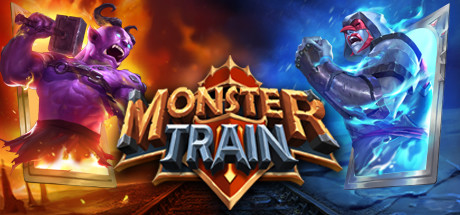
Art style is periodically criticized as resembling a 'dumbed-down Hearthstone' or mobile F2P title — a visual first-impression problem that gameplay quickly overcomes for most players.
Mentioned as a comparable roguelike deckbuilder; most reviewers who compared the two preferred Monster Train, though some preferred Wildfrost's UI clarity.
Sentiment History
Sentiment over time
Playtime Sentiment
Sentiment by time invested
· 10,015 post-launch reviewsPlayers who invest more time rate this game significantly higher (+16pts) — a strong signal of a slow-burn experience that rewards patience.
Competitive Benchmark
Compared to 207 similar games in the Strategy genre released in 2020.
Tags
Loading analytics...
Get more analyses like Monster Train
Free reports today. Pro launches soon. No spam.