The Verdict
“Real-time deck-building meets tower defense and city management — addictive, punishing, and unlike anything else if you can stomach heavy RNG and frantic micro.”
Very Positive
This puts the game in the top 30% of all reviewed games on Steam.
Analysis by Ivan Z. Ganza · Methodology →
Quick Stats
1,796en
5,487 total (all languages)
1,793 analyzed
Current as of Apr 23, 2026
Dec 22, 2020
$7.19
Apr 23, 2026
0.5/day
Slowing
Metadata current as of May 4, 2026 · Source: Steam
Market Reach
≈210K
≈$3.8M
Based on 5,487 reviews (all languages)
Based on review count × genre/age/price-adjusted Boxleiter ratio. Gross revenue before Steam’s 30% cut, refunds, and regional pricing.
Design Strengths
- Genuine genre fusion — real-time deck-building layered over tower defense and city management feels fresh and cohesive rather than a lesser version of its parts
- Six leaders with distinct card pools and mechanics provide structurally different playstyles, not just stat reskins
- 20–60 minute run lengths are accessible enough to encourage retry without overcommitting time
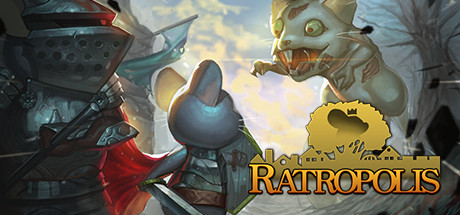
- Charming rat-themed art and card illustrations create strong aesthetic identity that contrasts memorably with the game's punishing mechanics
- Pollution/Ascension difficulty system gives dedicated players a scalable long-term challenge ladder
- 100+ random decision events meaningfully diversify individual runs beyond card draw variance
- Voice acting and sound design are consistently praised as a production quality high-point for the genre tier
Gameplay Friction
- Card balance skew — only a small subset of the 500+ cards are viable at higher difficulties; unlocking more cards dilutes the draw pool without proportional shop/reward expansion, worsening RNG outcomes
- Difficulty spike at waves 20–30 is severe and poorly telegraphed — runs that felt controlled collapse suddenly as enemy damage and tankiness jump dramatically
- Unit micromanagement requires clicking each soldier individually to move between left and right walls; no drag-select or group-move exists, becoming physically overwhelming as army size grows
- RNG dependency is excessive for a strategy game — bad adviser draws or merchant offers can make high-difficulty runs mathematically unwinnable regardless of player decision quality
- Pause is non-interactive — the game freezes but cards cannot be read, commands cannot be issued, and hand inspection is blocked, eliminating its value for planning under pressure
- Card and UI information clarity is poor — enemy stats, unit names, and keyword definitions (e.g. 'Ephemeral') are opaque; new players routinely need external resources to understand core mechanics
- Leader-specific card update created grind gates on some leaders, making them effectively unplayable until 25–35 hours of unlock investment per character
Audience Profile
Ideal Player
A roguelite enthusiast who enjoys tight real-time decision-making, tolerates high RNG variance, and finds satisfaction in mastering complex multi-system strategies across dozens of hours.
Casual Friendliness
low
Player Archetypes
Not For
Sentiment Trend
stable
Sentiment steady at ~70% positive over the last 180 days (20 reviews).
Genre Context
Real-time roguelite deck-builders occupy a small, high-skill niche within the broader deck-building genre dominated by turn-based titles; Ratropolis is unusual in successfully layering city management and tower defense atop that structure, but it carries the genre's typical RNG-vs-skill tension at higher-than-average intensity. By genre standards, its replayability ceiling of 100–400+ hours for completionists is strong, though its card balance spread and micromanagement demands are notably rougher than top-tier genre peers.
Promise Gap
Audience Match
The store description's 'Easy to play' framing and casual genre tags (Casual, Simulation) attract low-APM and casual card game players who encounter high micromanagement demands and a punishing difficulty curve within the first session. The game's actual audience is patient roguelite strategists comfortable with real-time pressure — a narrower and more hardcore profile than the store page implies.
Player Wishlist
- Additional maps and biomes beyond the current 3 to increase strategic environment variety
- Campaign or story mode as an alternative to pure survival runs
- Daily challenge or seeded run mode for competitive replay structure
- New leaders beyond the current six
- Multiplayer or co-op mode
- DLC content expansion (additional cards, factions, or events)
Churn Triggers
- Players expecting a turn-based Slay the Spire experience discover real-time mechanics within the first 1–2 hours and exit before engaging with the systems
- Unit micromanagement friction hits immediately on first multi-directional attack — players who refund cite this single mechanic as a same-session dealbreaker
- Gotcha losses at waves 20–30 (flying enemies bypassing defenses, infection mechanics, wave bosses countering specific builds) end 30–60 minute investment runs with no prior warning, causing dropout after 2–5 runs
- Players who unlock many cards early find the diluted pool worsens RNG outcomes rather than expanding options, triggering disengagement around 10–20 hours when grind fatigue peaks
Developer Priorities
Rework pause to allow card inspection and hand reading while time is frozen, without necessarily enabling card play
98 mentions — prevents new player learning entirely and alienates non-APM players from the strategy layer the game promises; low-effort change with outsized accessibility impact
Implement drag-select or group-move for unit repositioning between walls
156 mentions — the single most-cited mechanical dealbreaker; drives same-session refunds and locks out older or lower-APM players from a game that is otherwise accessible in concept
Rebalance card pool to reduce dead weight and scale shop/reward slot count with leader unlock level
198 mentions — the most-mentioned design complaint; progressing through unlocks actively worsens RNG outcomes, which inverts the reward loop and pushes experienced players toward frustration rather than mastery
Smooth the wave 20–30 difficulty ramp with telegraphed escalation signals or adaptive enemy scaling
187 mentions — abrupt difficulty spike ends 30–60 minute runs without player agency or prior warning, creating a churn moment that feels unfair rather than challenging
Improve card text clarity, add in-run enemy stat tooltips, and expand tutorial to cover keyword definitions and multi-directional attack mechanics
94 mentions — new players cannot make informed strategic decisions; missing information forces reliance on external wikis and increases early-session dropout before the game's strengths are discovered
Competitive Context
Most frequent benchmark; fans recommend Ratropolis as a worthy real-time alternative, but critics note it lacks StS's strategic depth, synergy breadth, and tutorial quality. Mismatched expectations from StS fans seeking turn-based play is a primary refund driver.
Grouped with StS as genre benchmark; Ratropolis recommended to Monster Train fans for its addictive loop, but reviewers note Monster Train's higher polish and onboarding quality.
Cited as the co-inspiration for the side-scrolling tower defense and wall mechanics; Ratropolis described as a more hectic, card-driven evolution of Kingdom's formula.
Mentioned alongside StS and Monster Train as a top-tier roguelite deck-builder; Ratropolis positioned as a comparable entry in the genre by enthusiast reviewers.
Referenced as foundational deck-building inspiration; one reviewer explicitly criticizes adding real-time mechanics to a Dominion-style game, citing this as a design philosophy concern.
Cited as a reference point for the tower defense layer; helps players unfamiliar with the genre understand Ratropolis's unit-and-lane defensive structure.
Mentioned as part of Ratropolis's hybrid appeal combining city management and wave-based survival with deck-building — cited to illustrate the game's genre-blending ambition.
Sentiment History
Sentiment over time
Playtime Sentiment
Sentiment by time invested
· 1,063 post-launch reviewsPlayers who invest more time rate this game significantly higher (+35pts) — a strong signal of a slow-burn experience that rewards patience.
Competitive Benchmark
Compared to 199 similar games in the Strategy genre released in 2020.
Tags
Loading analytics...
Get more analyses like Ratropolis
Free reports today. Pro launches soon. No spam.