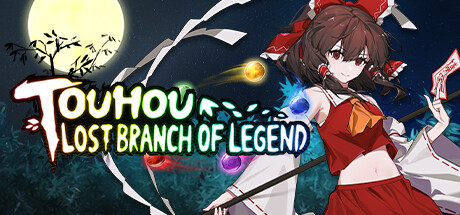
Touhou: Lost Branch of Legend
The Verdict
“A genuinely superior Slay the Spire heir — MTG-style mana, 500+ balanced cards, and Touhou flair produce hundreds of addictive hours.”
Overwhelmingly Positive
Fewer than 5% of Steam games with 1,000+ reviews achieve this.
Analysis by Ivan Z. Ganza · Methodology →
Quick Stats
650en
1,992 total (all languages)
643 analyzed
Current as of Apr 23, 2026
Aug 17, 2022
$29.99
Apr 18, 2026
0.5/day
Slowing
Metadata current as of Apr 23, 2026 · Source: Steam
Market Reach
≈65,000
≈$2.0M
Based on 1,992 reviews (all languages)
Based on review count × genre/age/price-adjusted Boxleiter ratio. Gross revenue before Steam’s 30% cut, refunds, and regional pricing.
Design Strengths
- Five-color MTG-inspired mana system adds a second strategic layer to every card play decision — tap order, multi-color splash, and boss-reward pool steering all emerge from one elegant mechanic
- 500+ card pool maintains near-universal viability; almost no dead cards, enabling mix-and-match synergies across archetypes without dominant meta locks
- Ten starting configurations (5 characters × 2 variants) with cross-character card access via exhibits creates combinatorial run variety that sustains hundreds of hours
- Boss-reward mana exhibit system lets players actively steer the card pool direction each act, creating meaningful long-term planning absent in genre peers
- Bullet-hell danmaku combat animations and multi-artist card illustrations deliver production values that reviewers consistently rank far above genre competitors
- Touhou soundtrack treated as a first-class design element — music actively enhances tension rather than becoming wallpaper
- Granular four-level difficulty system with optional per-level modifiers accommodates complete novices and challenge-seeking veterans in the same product
- Core loop feels polished and complete despite EA status — the game ships as a finished experience with additional content still in development
Gameplay Friction
- Final boss is overtuned at higher difficulties — accurate attacks and exhibit removal invalidate wide categories of builds, forcing players toward a narrow set of consistent archetypes
- Lunatic difficulty RNG variance is too extreme — runs tend to collapse or steamroll based on early draws rather than player skill, undermining the high-end challenge
- Exhibit (relic) design frequently feels inconsequential; low money income compounds this by reducing agency to actively shape a run toward strong exhibit synergies
- Events skew negative too often, making event nodes strategically unappealing and reducing meaningful player choice during runs
- Enemy and encounter variety within a given stage is limited — repeated enemies across runs reduce the sense of discovery after the first dozen hours
- Map layout is too predictable — elite, rest, and special nodes always appear at fixed branch positions, eliminating route-planning tension
- Colored mana auto-tapper is weak, creating friction for players who don't yet understand tap sequencing — a manual error floor that punishes newcomers disproportionately
Audience Profile
Ideal Player
A Slay the Spire veteran with 100+ hours who craves deeper deckbuilding strategy and appreciates anime aesthetics or the Touhou franchise.
Casual Friendliness
medium
Player Archetypes
Not For
Sentiment Trend
stable
Sentiment steady at ~96% positive over the last 180 days (49 reviews).
Genre Context
The roguelike deckbuilder genre is saturated with Slay the Spire derivatives, but this game distinguishes itself with a five-color mana system, dual character variants, and a 500+ card pool that sustains build diversity far beyond genre norms. Presentation quality — art, animation, soundtrack — meaningfully exceeds the EA-era standard for the genre.
Promise Gap
Audience Match
The store page targets Touhou franchise fans who will recognize Gensokyo characters and lore, but the actual player base is predominantly Slay the Spire and deckbuilder veterans who arrived for the mechanical depth — many with no prior Touhou knowledge. The Touhou framing undersells the game's appeal to the much larger roguelike-deckbuilder audience.
Player Wishlist
- Expanded enemy roster per stage to increase encounter variety across runs
- More impactful exhibit pool — relics with stronger build-defining effects comparable to Slay the Spire's rare relics
- Additional playable character: Alice (currently announced but incomplete in EA)
- Completed story mode (currently absent from EA build)
- Richer event pool with more positive or neutral outcomes to make event nodes worth visiting
Churn Triggers
- Players new to colored mana who recommended the game to friends report those friends dropping it within the first 2–3 runs when mana complexity overwhelms them before the strategic payoff becomes clear
- Players who exhaust all five characters and their variants step away mid-EA to wait for Alice and story mode content — departure happens after the natural completion of available character content, not frustration
- Negative reviewers citing the final boss quit the run type entirely after the boss invalidates a carefully constructed deck build, with some abandoning the game at that point rather than rebuilding for resistant archetypes
- A small cohort of development-aware players disengaged when they learned the developer shifted focus to a new title, with the Koishi update being the last major content drop
Developer Priorities
Rebalance the true final boss — specifically remove or limit the exhibit-stripping mechanics and reduce accuracy on wide-attack patterns to allow diverse build types to compete
The final boss is the most-cited friction point in negative reviews and directly causes run abandonment; it contradicts the game's core promise of viable build variety and will gate players out of high difficulty permanently
Ship the Alice character and story mode to formally exit Early Access — even a partial story mode release would close the most cited 'abandoned EA' narrative
Development stagnation perception is the primary driver of low-confidence negative reviews and the main reason engaged players step away; completing the EA roadmap converts this from a risk into a loyalty signal
Redesign the exhibit pool to include more build-defining high-impact relics and increase money income to make exhibit acquisition feel meaningful
Exhibit inconsequentiality undermines the deck-shaping fantasy that is central to the deckbuilder genre contract; it also compounds event node avoidance, reducing meaningful player choices per run
Expand enemy variety per stage, particularly on the Moriya Shrine section, to reduce encounter repetition in runs 10+
Enemy repetition is the top friction for engaged mid-to-late players who have otherwise mastered the card system — it is the primary reason reviewers caveat otherwise glowing praise
Improve the mana auto-tapper logic and add a short interactive mana tutorial for the first run
Auto-tapper weakness and mana complexity are the primary cited causes of newcomer dropout when the game is recommended to friends — fixing this widens the addressable audience without touching core depth
Competitive Context
The dominant reference across 247 mentions — reviewers with 200–1000+ hours in StS overwhelmingly rate Lost Branch of Legend as mechanically superior, citing the mana system, graze/barrier mechanics, character variety, and art. A small minority (most-helpful negative review, 81 votes) argue it is too derivative and lacks modding depth.
The five-color mana system is explicitly modeled on MTG's color pie; players with MTG backgrounds cite this as the reason the game's strategic depth feels more familiar and rewarding than genre peers.
Mentioned as a peer deckbuilder; Lost Branch of Legend is cited as having superior replayability in at least one direct comparison.
Multiple reviewers chose Lost Branch of Legend over StS2 post-release, citing its mana system as a more genuine genre evolution than the sequel's incremental changes.
Referenced as a same-genre peer; Lost Branch of Legend is generally preferred in direct comparisons.
One reviewer's personal favorite card roguelike, but they still recommend Lost Branch of Legend to Touhou and StS fans — not a negative comparison, just a personal preference caveat.
Sentiment History
Sentiment over time
Playtime Sentiment
Sentiment by time invested
· 651 post-launch reviewsSentiment is consistent across all playtime ranges — players feel the same way whether they've played 2 hours or 200.
Competitive Benchmark
Compared to 159 similar games in the Strategy genre released in 2022.
Tags
Loading analytics...
Get more analyses like Touhou: Lost Branch of Legend
Free reports today. Pro launches soon. No spam.