The Verdict
“The best co-op deckbuilder on Steam — but only if you have two friends ready to play; solo is a different, lesser game.”
Very Positive
This puts the game in the top 30% of all reviewed games on Steam.
Analysis by Ivan Z. Ganza · Methodology →
Quick Stats
2,272en
4,552 total (all languages)
1,994 analyzed
Current as of Apr 23, 2026
Feb 1, 2024
$24.99
Apr 23, 2026
1.7/day
Slowing
Metadata current as of May 2, 2026 · Source: Steam
Market Reach
≈150K
≈$3.8M
Based on 4,552 reviews (all languages)
Based on review count × genre/age/price-adjusted Boxleiter ratio. Gross revenue before Steam’s 30% cut, refunds, and regional pricing.
Design Strengths
- Simultaneous-turn co-op with cross-deck synergies creates emergent teamplay that is unique in the deckbuilder genre
- Isometric battlefield with near/far positioning zones and AOE mechanics adds spatial tactics missing from most card games
- Card upgrade system transforms cards qualitatively rather than just inflating numbers, rewarding build experimentation
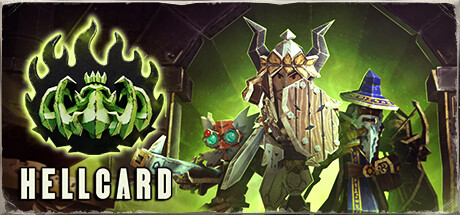
- Papercraft/pop-up book art style is visually distinctive and consistently praised as charming across the full review period
- Three-class party structure produces high cross-class synergy potential in co-op that solo play cannot replicate
- Fast-paced tactical card combat keeps individual encounters engaging once runs find momentum
Gameplay Friction
- E key ends turn adjacently to W camera-pan key with no rebinding option — the most-upvoted complaint in the dataset, causing accidental run-ending misclicks
- Solo mode forces management of three simultaneous hands with AI companions making suboptimal card and upgrade choices, undermining the strategic core
- Slow animations, sluggish screen transitions, and unresponsive UI make extended runs feel padded; no speed-up option exists
- Balance is inconsistent: Gargoyle enemies are severely overtuned, the final boss's 7-card-per-turn cap invalidates entire build archetypes, and infinite combos trivialize other encounters
- Unlock progression is gated behind heavy per-character XP grind, meaning 8–10 runs are needed before viable builds become accessible
- Endless mode difficulty scaling breaks down by floor 20, becoming trivially easy once optimal builds stabilize
- Launcher hub forces players through a promotional screen for other developer titles before entering the game, and clicking linked titles silently adds DLC to Steam cart
Audience Profile
Ideal Player
A social gamer who has a consistent 2-3 person friend group and loves deckbuilding roguelikes, willing to coordinate around a 1.5–3 hour co-op session.
Casual Friendliness
medium
Player Archetypes
Not For
Sentiment Trend
declining
Sentiment dropped from 87% to 78% positive over the last 90 days (193 reviews vs 63 prior).
Genre Context
Cooperative deckbuilding roguelikes are a small but growing niche; most genre entries are solo-first with multiplayer bolted on. HELLCARD inverts this — it is multiplayer-first with spatial positioning mechanics that set it apart from pure card-draw systems — but it has not achieved the content volume or solo polish that genre leaders deliver as baseline expectations.
Promise Gap
Audience Match
The store description targets a broad audience including solo players and those who might recruit 'strangers', implying accessible public matchmaking; actual players are almost exclusively pre-formed friend groups of 2–3, as random matchmaking is functionally dead.
Player Wishlist
- Full manual control over all three character decks and AI companion card/upgrade choices in solo mode
- Local/couch co-op support (currently absent despite Steam co-op tags implying otherwise)
- Permanent meta-progression system (e.g., post-run currency, skill tree) to make each run feel cumulatively rewarding
- 4-player co-op support
- In-game text chat beyond emotes for multiplayer coordination
- Additional character classes beyond the current roster
Churn Triggers
- Players attempting solo mode within the first 1–3 hours encounter the triple-hand management with unhelpful AI and quit, citing the experience as fundamentally not fun
- New players accidentally press E instead of W during early runs, ending their turn unintentionally and losing progress with no undo, triggering immediate negative reviews
- Players who queue for random online co-op and wait 5–20+ minutes without finding a match abandon multiplayer and conclude the game requires pre-formed groups they don't have
- Players who reach the final boss after a 2+ hour run and discover their entire build strategy is nullified by the 7-card-per-turn passive report abandoning the game entirely at that moment
Developer Priorities
Add full key rebinding and fix the E/W turn-end conflict with a confirmation prompt as an immediate stopgap
The single most upvoted complaint (127 helpful votes on one review alone); causes irreversible run loss from a misclick and drives negative reviews from otherwise-satisfied players
Rebalance the final boss 7-card-per-turn cap and Gargoyle enemy tuning to avoid punishing specific legitimate build archetypes
Players who invest 2+ hours in a run and lose due to a mechanic that invalidates their strategy are the most vocal churners; this directly drives declining sentiment
Redesign solo mode to give players manual control over all three character decks and upgrade decisions, or offer a dedicated 1-character solo variant
198 negative reviews cite solo as the reason not to recommend; solo players are a large segment who cannot access the co-op core and currently have no good path to enjoyment
Remove or make the Back2Games launcher optional, and eliminate the silent Steam cart-add behavior for linked titles
Described as dark-pattern manipulation; damages trust at first launch before a single card is played, and is a fixable first-impression problem
Implement a lightweight permanent meta-progression system (e.g., post-run currency for cosmetics or starting card options) to improve long-term replayability
Mid-tier players (10–50 hours) plateau and churn without a progression carrot; this is the primary reason the game is not recommended at full price by otherwise-positive reviewers
Competitive Context
Universal reference point — Hellcard is described as 'Slay the Spire with co-op'. Reviewers consistently position it as superior to STS for multiplayer, but inferior for solo depth and build variety.
One reviewer explicitly favors Hellcard's co-op synergy and coordination requirements over STS2's multiplayer implementation, calling Hellcard superior for co-op.
Hellcard's simultaneous-turn multiplayer is praised as superior to Across the Obelisk's sequential turns; however, some reviewers recommend Across the Obelisk as a better overall alternative.
Some reviewers note Hellcard lacks the polish and build variety of Monster Train, positioning it as a less refined product.
Compared for positioning and AOE mechanics; one reviewer recommends Inkbound as superior for vanilla card roguelike gameplay, while another favors Hellcard's co-op implementation.
Reviewers describe Hellcard as a fusion of For the King and Slay the Spire, placing it in the cooperative tactical roguelike space.
Hellcard shares the papercraft universe; some reviewers prefer Book of Demons for faster, more accessible mechanics.
One reviewer rates Hellcard as 'Balatro levels of good', suggesting comparable addictiveness and quality.
Referenced as a model for skill-based RNG mitigation and post-run currency meta-progression systems that reviewers wish Hellcard would adopt.
Mentioned as a structural comparison for dungeon-crawler theming and as a more atmospheric roguelike alternative.
Sentiment History
Sentiment over time
Playtime Sentiment
Sentiment by time invested
· 1,541 post-launch reviewsPlayers who invest more time rate this game significantly higher (+45pts) — a strong signal of a slow-burn experience that rewards patience.
Competitive Benchmark
Compared to 303 similar games in the Strategy genre released in 2024.
Tags
Loading analytics...
Get more analyses like HELLCARD
Free reports today. Pro launches soon. No spam.