The Verdict
“Stunning dark-fantasy deckbuilder with Hades-level storytelling — but unfair difficulty spikes and a broken final boss will test your patience.”
Very Positive
This puts the game in the top 30% of all reviewed games on Steam.
Analysis by Ivan Z. Ganza · Methodology →
Quick Stats
1,356en
2,850 total (all languages)
1,352 analyzed
Current as of Apr 22, 2026
Aug 8, 2024
$24.99
Apr 23, 2026
1.6/day
Slowing
Metadata current as of May 3, 2026 · Source: Steam
Market Reach
≈94,000
≈$2.0M
Based on 2,850 reviews (all languages)
Based on review count × genre/age/price-adjusted Boxleiter ratio. Gross revenue before Steam’s 30% cut, refunds, and regional pricing.
Design Strengths
- Groundhog Day time-loop narrative where characters retain knowledge across runs, unlocking new dialogue and event outcomes — the single strongest differentiator in the genre
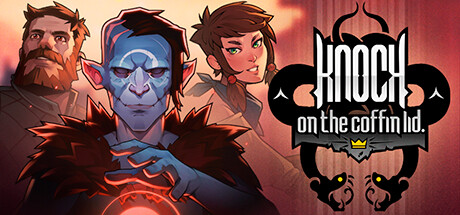
- Exceptional hand-drawn art with character equipment visually reflected on sprites, voice acting, and music that exceeds indie production norms
- RPG-style gear set system with WoW-style set bonuses that meaningfully alter playstyle and add a strategic layer absent from most deckbuilders
- Three characters with 4–5 subclasses each, effectively delivering 12+ distinct mechanical and narrative playthroughs
- Static overworld map designed to synergize with the time-loop premise, rewarding knowledge-based strategic planning across runs
- 226 achievements and branching story paths sustain 100+ hour playthroughs with players still discovering new content
- Character-specific story arcs and antagonists with unique mechanical expressions (e.g., one class spends HP for spells, another uses gold in combat)
Gameplay Friction
- Difficulty balance is the most-cited friction: enemies one-shot players with 100+ damage per hit, bosses stack buffs infinitely, and status spam invalidates entire decks — the game reads as unfair rather than challenging
- Final boss (Millenis/Vanadis) breaks core genre conventions: a real-time QTE in a turn-based game, immunity phases that nullify deck power, a 5000+ burst damage turn timer, and mandatory specific map paths to unlock the fight
- Illusion of open exploration: the overworld looks traversable but deviating from the optimal path causes run failure, collapsing advertised agency into a memorization exercise by the third or fourth run
- Card design closely mirrors Slay the Spire — status effects renamed rather than redesigned (Vulnerable → Exposed), some cards near-identical in effect and art — reducing perceived originality
- Only a subset of character/class combinations are viable at higher difficulties; Bjorn (second character) is widely criticized as actively unfun, directly blocking access to the third character
- Meta-progression demands an estimated 400+ runs to fully unlock all content, with 10–15 runs required per character variant to reach max level
- UI/UX gaps: enemy ability values are hidden (tooltip says 'gains strength,' actual value is +15), card wording is inconsistent, no event log, no quick-skip for repeated dialogue, and missing keyboard shortcuts
Audience Profile
Ideal Player
A narrative-hungry deckbuilder fan who wants a rich Slavic dark-fantasy world to unravel across dozens of runs, and can tolerate steep learning curves in exchange for exceptional lore and production craft.
Casual Friendliness
low
Player Archetypes
Not For
Sentiment Trend
improving
Sentiment rose from 69% to 81% positive over the last 90 days (26 reviews vs 32 prior).
Genre Context
Narrative-driven roguelike deckbuilders are a small but competitive sub-genre where mechanical polish from flagship titles sets a high bar; KOTCL punches above genre norms on production quality and story integration but sits below the curve on balance and mechanical originality. The static overworld map and time-loop narrative are genuine structural innovations in the format, but the genre's audience is conditioned to expect randomized paths and learnable difficulty curves — both of which KOTCL struggles to deliver consistently.
Promise Gap
Audience Match
The store page targets players drawn to worldbuilding, choice-driven narrative, and faction politics — which accurately describes the audience that loves the game. However, it implies broad freedom of exploration and world-shaping agency that reviews consistently contradict, attracting players who will be frustrated by the linear optimal path.
Player Wishlist
- Randomized or semi-randomized overworld map variant mode to restore genuine route agency on repeat runs
- Dialogue fast-forward or skip-on-repeat option for players who have already seen an encounter
- Dedicated difficulty slider or accessibility mode allowing tuning of enemy damage scaling independently of other modifiers
- New subclasses or a fourth playable character to extend narrative and mechanical variety beyond the current roster
- An in-run event log to review combat history and enemy ability triggers
Churn Triggers
- First run is scripted to fail — new players who explore freely are punished immediately, and the lesson that 'freedom is an illusion' arrives before any mechanical mastery is established
- Players hit the second boss in early runs and encounter the first severe difficulty spike (normal mobs dealing 100+ damage), causing dropout before unlocking the third character
- After 40–60 hours, completionists discover the grind to unlock remaining content requires hundreds more identical runs on the same static map, triggering burnout
- Players who beat the game discover a proper ending requires purchasing DLC — some stop immediately at that revelation without continuing
Developer Priorities
Redesign the final boss encounter: remove the real-time QTE, add transparent immunity phase counters, eliminate the mandatory single-path unlock requirement, and tune the burst damage threshold to a learnable ceiling
The final boss is the last thing most players experience — it is poisoning otherwise positive long-run sentiment and is the primary driver of negative reviews from players with 20–70 hours invested
Audit and rebalance enemy damage scaling and buff-stacking across all acts, with particular focus on the post-second-boss difficulty cliff that blocks third-character unlock
178 mentions make this the highest-volume friction signal; it drives early dropout before players reach the narrative content that retains long-term fans, directly suppressing lifetime hours and word-of-mouth
Add full tooltip transparency for all enemy abilities (show exact numeric values), fix card description inconsistencies, and ship a dialogue quick-skip for repeated encounters
82 UI/UX mentions with high helpfulness scores (avg 18.4); hidden enemy values specifically undermine the strategic promise of the game and fuel 'unfair' perception even among players who enjoy the difficulty
Rework Bjorn (second character) subclass design to be at minimum competitively viable and intrinsically engaging, as a prerequisite to unlocking the third character
A poorly designed mandatory character is a hard gate on the third character — players who quit on Bjorn never see the full content roster, artificially capping the game's perceived depth and replay value
Publicly address the AI pivot and bot review allegations with a transparent studio statement, and if the pivot is real, communicate clearly how KOTCL's live development will or will not be affected
The AI pivot cluster carries the highest per-review helpfulness votes in the entire dataset (avg 68.2) — a small number of reviews are having outsized negative influence on purchase decisions and community trust
Competitive Context
The dominant comparison in the dataset. Reviewers praise KOTCL for surpassing StS on narrative depth, art, and the equipment set system; criticize it for lifting card mechanics, status effects, and archetypes with minimal redesign. The consensus: KOTCL differentiates via story and gear, not core card design.
Cited as the model for KOTCL's narrative-through-death mechanic. Reviewers describe KOTCL as 'StS gameplay with Hades-level storytelling' — the comparison is consistently flattering.
Mentioned as a peer deckbuilder; reviewers credit KOTCL with deeper story but acknowledge Monster Train has tighter mechanical fine-tuning and balance.
Compared as the closest analogue for narrative-driven deckbuilding. Some reviewers position KOTCL as the stronger story experience within this sub-genre.
Referenced for tonal and atmospheric similarity, difficulty philosophy, and as a voice-acting quality benchmark. Not a mechanical comparison.
Mentioned as a comparable example of narrative-integrated roguelike structure. No clear preference expressed.
Some reviewers explicitly prefer KOTCL's narrative depth over Across the Obelisk's approach to story in deckbuilding.
Cited as a mechanical fine-tuning benchmark; one reviewer named KOTCL best card game of the year in the same breath as Balatro, suggesting peer-tier positioning.
Sentiment History
Sentiment over time
Playtime Sentiment
Sentiment by time invested
· 1,096 post-launch reviewsPlayers who invest more time rate this game significantly higher (+32pts) — a strong signal of a slow-burn experience that rewards patience.
Competitive Benchmark
Compared to 303 similar games in the Strategy genre released in 2024.
Tags
Loading analytics...
Get more analyses like Knock on the Coffin Lid
Free reports today. Pro launches soon. No spam.