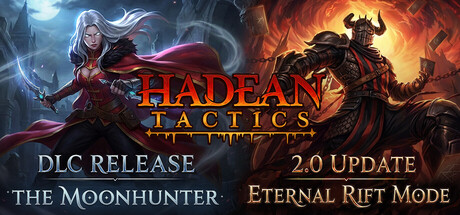
The Verdict
“Slay the Spire meets auto-battler in a genuinely fresh fusion — 50 addictive hours at a steal of a price.”
Very Positive
This puts the game in the top 30% of all reviewed games on Steam.
Analysis by Ivan Z. Ganza · Methodology →
Quick Stats
903en
1,870 total (all languages)
895 analyzed
Current as of Apr 22, 2026
Aug 24, 2023
$8.99
Apr 19, 2026
0.5/day
Slowing
Metadata current as of May 4, 2026 · Source: Steam
Market Reach
≈55,000
≈$1.1M
Based on 1,870 reviews (all languages)
Based on review count × genre/age/price-adjusted Boxleiter ratio. Gross revenue before Steam’s 30% cut, refunds, and regional pricing.
Design Strengths
- 7-second pause-and-play combat loop gives meaningful card-based agency over autobattler battles without demanding micromanagement
- Four-dimensional synergy system — cards, relics, unit skills, and alliances — produces genuinely emergent and varied builds across runs
- Crypt mode custom hero builder unlocks near-infinite build experimentation by combining any alliance, skill, and ability freely
- 20-level Corruption system adds difficulty modifiers beyond simple HP scaling, extending engagement for players who master base content
- Procedurally generated maps, 260+ cards, 34 units, and 45+ alliances give each run a meaningfully different composition space
- Cell-shaded, non-anime art style creates a distinctive hellish atmosphere that stands out in a genre dominated by generic aesthetics
- Core loop reliably produces 'just one more run' compulsion, with reported sessions of 10+ hours from high-playtime reviewers
Gameplay Friction
- Significant balance disparity: a subset of cards, relics, and alliances are far stronger than the rest, leaving many options effectively unviable at higher Corruption levels
- RNG-dependent runs — at mid-to-high Corruption, each hero relies on 1–2 specific combo loops; failing to draw supporting cards or relics produces unwinnable states
- Key mechanics (mana, unit targeting logic, deck editing, hero variant differences) are unexplained or explained only through trial-and-error
- Movement cards can trigger unintended friendly fire with no in-game warning, and no undo functionality exists to recover from misplays
- XP-gated unlock system gates hero variants, custom hero options, and cards behind a grind that many players exhaust their engagement before completing
- Combat visual clarity degrades in large battles — damage numbers and effects overlap, making it difficult to diagnose why units died
- Base game difficulty is tuned too easy for genre veterans; first-run wins are common, requiring Corruption to find appropriate challenge
Audience Profile
Ideal Player
A roguelike deckbuilder fan who wants meaningful mid-battle decisions without constant micromanagement and loves discovering powerful synergy combos across long sessions.
Casual Friendliness
medium
Player Archetypes
Not For
Sentiment Trend
stable
Insufficient recent review volume to determine trend.
Genre Context
Roguelike deckbuilders are a saturated genre with several genre-defining titles already entrenched; Hadean Tactics differentiates itself through the autobattler fusion rather than narrative or artistic direction, which is a mechanically credible but execution-sensitive bet. At $11.69 it sits well below the genre's standard price band, which reduces the barrier to the audience most likely to appreciate its depth and partially compensates for content volume that falls short of genre leaders at full price.
Promise Gap
Audience Match
The store page targets players seeking a novel genre fusion with near-endless variety, but experienced deckbuilder veterans — the most likely audience given the genre tags — are the group most likely to find the structural borrowing from Slay the Spire too familiar and the autobattler layer insufficiently deep. New-to-the-genre players who arrive without StS baggage are the ones who respond most enthusiastically, but the store page's language assumes genre familiarity.
Player Wishlist
- Additional heroes or classes with distinct mechanical identities beyond the existing three
- More map floors (players suggest thematically using all seven circles of hell)
- Expanded enemy and boss variety to reduce run-to-run repetition at high hours
- Steam Workshop / mod support to enable community-created content
- More random events both on the map and during combat
- Additional music tracks to reduce audio repetition over long sessions
Churn Triggers
- Around 15–25 hours, players recognize that synergistic builds converge on the same optimal patterns, removing the surprise of discovery and triggering disengagement
- After unlocking all three base heroes and reaching early Corruption levels without yet accessing the custom hero, players hit a content plateau before the deepest mode is available
- During higher Corruption runs, a string of RNG-bad drops (no combo-enabling relics or cards by floor 3's boss) delivers a punishing loss that feels unfair rather than instructive, prompting session abandonment
- Post-1.0 launch, players who returned expecting new content found minimal updates, accelerating permanent dropout for those who had already plateaued
Developer Priorities
Rebalance the card and relic pool to reduce the power gap between top-tier and useless options, and widen the viable meta at Corruption 10+
Balance is the single most-cited negative (112 mentions, 8.3 avg helpful votes on negative reviews). A narrow meta reduces build variety — the game's primary retention driver — and is the most common reason engaged players leave negative reviews despite high playtime.
Redesign or significantly reduce the XP unlock gate for Crypt mode and hero variants — consider front-loading access or removing the grind entirely
Crypt mode is the game's highest-rated feature and the primary replayability ceiling-raiser, but 32 reviews flag that players exhaust meaningful content before unlocking it. Gatekeeping the best feature behind a grind causes permanent dropout before players reach it.
Build an interactive tutorial or contextual tooltip system that explains mana, targeting logic, hero variant differences, and deck editing without requiring trial-and-error
46 reviews cite mechanical opacity as a friction point. Poor onboarding disproportionately affects the first 3 hours — the highest-risk refund window — and produces the unfair-difficulty perception that drives the few negative reviews.
Add a content update with at least one new hero, one new map floor, and expanded enemy variety
38 wishlist mentions and 24 dropout mentions both trace to content exhaustion. New heroes and floors directly extend the engagement window past the 15–25 hour plateau. Players explicitly frame these requests as 'I love the game and want more' — conversion intent is high.
Add visual clarity options for large battles — damage summary overlays, combat log, or a post-combat breakdown showing what killed each unit
38 mentions of visual chaos in large fights. When players can't diagnose why they lost, they attribute it to RNG rather than correctable decisions, reinforcing the 'unfair balance' perception and blocking skill growth that would extend retention.
Competitive Context
Most-cited reference. Hadean Tactics directly inherits its map structure, node types, and deckbuilding loop from StS, which fans of both treat as a strong foundation; genre veterans with 100–340+ hours in StS frequently recommend it as a worthy evolution. A vocal minority feel the structural copy is too close and the autobattler layer doesn't sufficiently differentiate the experience.
Cited as a peer in deckbuilder depth and unit-upgrade systems. Players who loved Monster Train are consistently pointed to Hadean Tactics as the next best thing in the genre.
Primary autobattler reference point. Players value the removal of competitive multiplayer pressure while retaining unit synergy depth. A subset feel the autobattler execution doesn't reach TFT's tactical ceiling.
Mentioned alongside other established deckbuilders by players who feel the genre is saturated and Hadean Tactics doesn't add sufficient innovation for veterans of multiple titles.
Referenced as a genre high-water mark; one player called Hadean Tactics the best Spire-like since Inscryption, indicating it holds up favorably against acclaimed genre entries.
Cited by a negative reviewer as a more engaging deckbuilder alternative with stronger overall design, suggesting some players defect to narrative-driven deckbuilders.
Sentiment History
Sentiment over time
Playtime Sentiment
Sentiment by time invested
· 503 post-launch reviewsPlayers who invest more time rate this game significantly higher (+43pts) — a strong signal of a slow-burn experience that rewards patience.
Competitive Benchmark
Compared to 309 similar games in the Strategy genre released in 2023.
Tags
Loading analytics...
Get more analyses like Hadean Tactics
Free reports today. Pro launches soon. No spam.