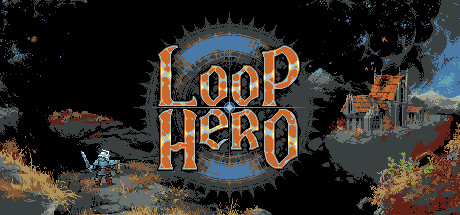
The Verdict
“A hypnotic, one-more-loop autobattler with masterful pixel art and music — brilliant for 20 hours, grindy after that.”
Very Positive
This puts the game in the top 30% of all reviewed games on Steam.
Analysis by Ivan Z. Ganza · Methodology →
Quick Stats
17,177en
36,131 total (all languages)
1,992 analyzed
Current as of May 30, 2026
Mar 4, 2021
$14.99
May 30, 2026
5.2/day
Slowing
Metadata current as of May 1, 2026 · Source: Steam
Market Reach
≈1.1M
≈$17.0M
Based on 36,131 reviews (all languages)
Based on review count × genre/age/price-adjusted Boxleiter ratio. Gross revenue before Steam’s 30% cut, refunds, and regional pricing.
Design Strengths
- Core loop structure is elegantly self-reinforcing — tile placement, gear swaps, and risk management create satisfying micro-decisions every cycle
- Genre-defying concept of building the world around an auto-walking hero is genuinely novel and well-executed
- Pixel art is exceptionally detailed and atmospheric, with multi-resolution sprite work that draws consistent comparisons to AAA visual production
- Soundtrack is widely described as one of the best in indie gaming — haunting, Castlevania-adjacent, and playlist-worthy outside the game
- World-building and lore delivered through bestiary entries and item descriptions as self-contained short stories, adding narrative depth without cutscene bloat
- Auto-battle structure and pause settings make the game an ideal passive or multitasking experience without sacrificing decision-making
- Dark-fantasy existential narrative thematically mirrors the loop mechanic itself, creating unusual tonal coherence
Gameplay Friction
- Mid-to-late game becomes repetitive and grindy — resource accumulation slows, upgrades become incremental, and strategic variety collapses into optimal-route replication
- Skill ceiling is reached quickly once the optimal tile strategy per class is discovered, leaving little reason to experiment in subsequent runs
- Auto-battler passivity frustrates players who want meaningful agency beyond tile placement and gear swaps — combat is fully automated with no direct input
- RNG in gear drops and tile availability can make runs feel unwinnable through no fault of the player, compounding the grind into wasted effort
- Boss mechanics are opaque gimmicks with no in-game explanation — multiple reviewers report losing 20-minute runs to mechanics they had to look up on a wiki
- Onboarding is weak — resource acquisition chains, building synergies, and stat interactions are not clearly explained, requiring external guides for efficient play
Audience Profile
Ideal Player
A patient strategy fan who enjoys watching systems interact, loves rich pixel art and atmospheric music, and is happy treating a game as a podcast companion or second-monitor experience.
Casual Friendliness
medium
Player Archetypes
Not For
Sentiment Trend
stable
Sentiment steady at ~83% positive over the last 180 days (363 reviews).
Genre Context
Loop Hero occupies a rare niche in the roguelite space — blending deckbuilding, autobattler, and reverse tower-defense into a genuinely novel system that has no direct equivalent. Compared to genre peers, it trades active combat agency for strategic world-building depth, which excites players who find traditional roguelites too reflex-dependent but frustrates those expecting the escalating build complexity of card-based roguelites.
Promise Gap
Audience Match
The store description leads with active strategy language ('Plan Your Struggle', 'Strategically place') that attracts players expecting direct tactical agency — but the game's most enthusiastic audience is passive strategists and ambient/multitasking players who enjoy light oversight of automated systems. The copy undersells the idle-adjacent nature and oversells the moment-to-moment strategic demand.
Player Wishlist
- Additional card and tile types to expand strategic variety beyond current optimal routes
- New character classes beyond the existing three (a fourth class was hinted at but never implemented)
- Post-game or endgame content layer beyond chapter completion to reward continued play
- Story expansion or resolution of dead-end plot threads left open in the current build
- More card synergies and building combinations to deepen late-game decision space
Churn Triggers
- Around 8–15 hours in, when players have discovered the optimal tile strategy for their preferred class and realize subsequent runs will replicate the same pattern with diminishing novelty
- Shortly after the first boss kill, when the game's complexity plateaus and no new systemic layer arrives to replace early-game discovery
- After completing the final chapter, when players find no endgame content, achievement hooks aside, and the loop continues with nothing new to unlock
- Within the first 4–5 hours for players who expected active combat — realizing the auto-battler structure is permanent, not a tutorial phase, triggers immediate departure
Developer Priorities
Ship any content update — even one new card set, tile type, or class rework — to signal the game is not abandoned
The 'incomplete/abandoned' signal is the single highest-helpfulness negative narrative (88 votes on top review), directly converting curious players into refund candidates and suppressing word-of-mouth
Implement in-game boss mechanic explanations and improve tooltip clarity for building synergies and stat interactions
Wiki-dependency is a conversion killer — players who bounce to external guides frequently don't return, and early-hour churn from confusion is the fastest-acting dropout vector
Redesign mid-game resource pacing to introduce at least one new strategic variable per act rather than stretching existing systems
Grind and repetition is the dominant criticism (389 mentions, highest mention count of any topic) and the primary reason positive players give negative reviews
Fix macOS compatibility for Apple Silicon and update the store page to reflect accurate platform support
Misleading store page on Mac support generates targeted negative reviews and refund risk from a platform the game nominally still lists as supported
Publish a public roadmap or honest closure statement — confirm what is and isn't coming
Ambiguity about promised features (fourth class, unused inventory slots) sustains low-grade negative sentiment; a clear statement either restores trust or allows community to move on
Competitive Context
Most frequent roguelike benchmark. Reviewers who prefer active combat and narrative escalation favor Hades; those who want strategic passivity prefer Loop Hero. Neither is framed as strictly superior.
Compared as a deckbuilding roguelite peer. Loop Hero is seen as more accessible but shallower in deckbuilding decisions — recommended to Slay the Spire fans as a complement, not replacement.
Cited as a similarly innovative, loop-driven roguelite with comparable addictive qualities and session flexibility.
Compared as a fellow auto-battler. Some prefer Loop Hero's tile-placement strategy; others find Loop Hero more repetitive by comparison.
Suggested by at least one reviewer as a superior alternative for players frustrated by Loop Hero's mid-game grind — seen as deeper and more replayable.
Player preferred Dead Cells as a roguelike with active agency and found Loop Hero repetitive after 10 hours.
Developer DMCA action against this game drew critical reviews; some players claim Stuck in Time is the superior product and cite Four Quarters' conduct as reason to withhold purchase.
Referenced as a tonal comparison point — Loop Hero described as 'a lighter Darkest Dungeon' in dark aesthetic and resource management feel.
Sentiment History
Sentiment over time
Playtime Sentiment
Sentiment by time invested
· 10,076 post-launch reviewsPlayers who invest more time rate this game significantly higher (+21pts) — a strong signal of a slow-burn experience that rewards patience.
Competitive Benchmark
Compared to 272 similar games in the Strategy genre released in 2021.
Tags
Loading analytics...
Get more analyses like Loop Hero
Free reports today. Pro launches soon. No spam.