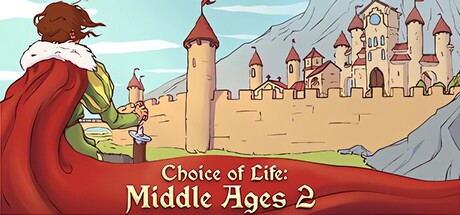
Choice of Life: Middle Ages 2
The Verdict
“A charming medieval card-story with branching choices and genuine character heart — undermined by arbitrary deaths and clunky translation.”
Very Positive
This puts the game in the top 30% of all reviewed games on Steam.
Analysis by Ivan Z. Ganza · Methodology →
Quick Stats
75en
970 total (all languages)
74 analyzed
Current as of Apr 27, 2026
Sep 30, 2022
$2.09
Apr 23, 2026
0.1/day
Slowing
Metadata current as of Apr 27, 2026 · Source: Steam
Market Reach
≈27,000
≈$72.0K
Based on 970 reviews (all languages)
Based on review count × genre/age/price-adjusted Boxleiter ratio. Gross revenue before Steam’s 30% cut, refunds, and regional pricing.
Design Strengths
- Complex branching narrative that produces a coherent story regardless of path taken — high-confidence praise from 16 reviewers
- Emotionally fleshed-out characters, with Serpentine the cat repeatedly cited as a standout storyline that drives replay
- Hand-drawn illustrations consistently praised as beautiful and atmosphere-enhancing, lifting immersion for a text-heavy experience
- Relaxing medieval atmosphere described as 'like reading a book,' distinguishing it from action-heavy genre peers
- 22 achievements and 99 ways to die create structured replay incentives across multiple short runs
- Perceived as a significant content and ambition step up from the first game by the majority of returning players
Gameplay Friction
- Deaths feel arbitrary and unpredictable — no logical way to anticipate which choice kills you, pushing players toward save-scumming rather than strategic play (16 mentions, highest-voted negative signal)
- Late-game replays reveal that most choices funnel into predetermined outcomes, with marriage partner cited as the single decisive variable — illusion of agency collapses on second run
- Skill and inventory systems are present but functionally inert — they do not meaningfully alter choice outcomes, making the RPG-lite mechanics feel decorative
- Humor tone is inconsistent with the medieval fairytale setting — crude and toilet humor divides players who expected something more thematically cohesive
- Some card imagery depicting body parts described as disturbing and out of place with the otherwise whimsical aesthetic
Audience Profile
Ideal Player
A casual narrative fan who enjoys reading branching adventure stories, doesn't mind trial-and-error exploration, and will replay 2–3 times to chase endings and achievements.
Casual Friendliness
medium
Player Archetypes
Not For
Sentiment Trend
stable
Insufficient recent review volume to determine trend.
Genre Context
Card-based choose-your-own-adventure games live or die on the perceived weight of player decisions — the genre norm is that consequence clarity and replayability are table stakes. At $2.69 with 2–4 hour runs, this game undercuts most genre peers on price but also underdelivers on the mechanical depth (skill systems, meaningful branching) that players familiar with the genre will expect.
Promise Gap
Audience Match
The store page targets players who want strategic rulership and survival tension ('weigh every decision not to die'), but the audience who actually enjoys the game most are casual narrative readers who accept trial-and-error exploration — the survival framing over-promises strategic agency to the wrong crowd.
Player Wishlist
- Contextual hints or consequence previews to allow some strategic anticipation before committing to a choice
- Deeper mechanical integration of skill and inventory systems so they genuinely influence story branches
- More total content volume — players want longer or additional story arcs beyond the current 2–4 hour run length
Churn Triggers
- Within the first run (~1 hour), players who die repeatedly from choices that feel completely random disengage before the story hooks them
- On second or third playthrough, players who discover that most choices converge on the same outcomes feel deceived and stop replaying
- Early in the game, non-native English speakers or those sensitive to translation quality bounce when they encounter frequent grammatical errors in a text-driven game
Developer Priorities
Fix translation errors across English and French text — prioritize a full localization audit with native speakers or professional translation service
Cited in the majority of negative reviews and explicitly described as 'underwhelming' for a text-only game; bad translation actively breaks immersion in the core product loop
Redesign choice consequence signaling to give players at least partial strategic context before committing — e.g. visible stat checks, character knowledge hints, or mild foreshadowing in card text
Arbitrary deaths are the single most-mentioned friction (16 mentions, highest helpful-vote signal among negatives); they convert what should be tension into frustration and force save-scumming
Audit branching structure to ensure late-game outcomes genuinely diverge beyond the marriage variable, or clearly communicate the structural design to set expectations
Second-run players discover the illusion of agency (14 helpful votes on that review); this is the primary churn trigger for the replay-motivated segment the game is explicitly sold to
Either meaningfully wire skill and inventory systems into choice outcomes or remove them from the UI to reduce misleading player expectations
Players invest attention into systems that do nothing, compounding the feeling that they lack real agency; decorative mechanics actively damage trust
Review and optionally gate disturbing body-part card imagery behind a content warning or art style audit
While low-frequency (1 mention), it conflicts sharply with the 'fairytale' positioning on the store page and could deter the casual audience the game targets
Competitive Context
Sequel praised as bigger and more ambitious, but some players prefer the first game's tighter balance and simplicity; one reviewer notes the sequel is narratively disconnected from the original beyond name and basic format
Cited as a tonal reference for narrative structure and political intrigue, not a direct mechanical comparison
Reviewer places both in the same choice-driven text adventure format space, noting this game leans more narrative than card-mechanical
Sentiment History
Sentiment over time
Playtime Sentiment
Sentiment by time invested
· 75 post-launch reviewsCompetitive Benchmark
Compared to 92 similar games in the RPG genre released in 2022.
Tags
Loading analytics...
Get more analyses like Choice of Life: Middle Ages 2
Free reports today. Pro launches soon. No spam.