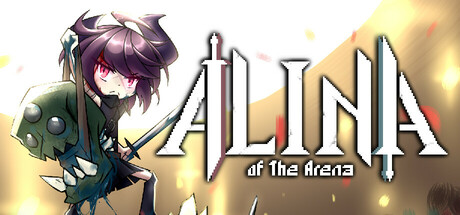
The Verdict
“A brilliant Slay the Spire × Into the Breach fusion — mechanically sharp but thin on content after 20 hours.”
Very Positive
This puts the game in the top 30% of all reviewed games on Steam.
Analysis by Ivan Z. Ganza · Methodology →
Quick Stats
1,196en
3,889 total (all languages)
1,189 analyzed
Current as of Apr 23, 2026
Oct 13, 2022
$14.99
Apr 23, 2026
0.6/day
Slowing
Metadata current as of Apr 23, 2026 · Source: Steam
Market Reach
≈120K
≈$1.8M
Based on 3,889 reviews (all languages)
Based on review count × genre/age/price-adjusted Boxleiter ratio. Gross revenue before Steam’s 30% cut, refunds, and regional pricing.
Design Strengths
- Hex-grid positioning transforms deckbuilding into spatial puzzle-solving — movement, knockbacks, and wall-stuns add a tactical layer that pure deckbuilders lack
- Successful genre fusion: the Slay the Spire deckbuilding loop and Into the Breach telegraphed-enemy system combine into something greater than either part
- Dual-hand weapon system assigns card colors, modifies attack ranges, and enables distinct build archetypes (dual-wield, shield, two-hander, crossbow reload) within a compact card pool
- Combat losses feel skill-attributable — telegraphed enemy intents mean players can identify the decision that cost them, reinforcing mastery satisfaction
- Addictive core loop produces genuine 'one more run' pull, with multiple reviewers citing unplanned 12-hour sessions
- Crowd mechanic rewards stylish play with items and gold thrown into the arena, making creative solutions economically incentivized
- Pixel art, hit animations, and soundtrack maintain quality over long sessions — music specifically praised as non-repetitive after 50+ hours
- Class identity is mechanically grounded — starter strike/block cards gain weapon-specific utility, giving each class a distinct early-game decision space
Gameplay Friction
- Boss difficulty spikes are inconsistent: Act 3 bosses (especially the Jester and final boss) deal 10× more damage than regular fights and use massive unavoidable AoE that hard-counters entire build archetypes
- Build meta is narrow — shield/ferocity/movement builds dominate at high difficulty while exhaust and bow builds are significantly underpowered, reducing perceived build diversity
- Base movement of one hex per turn is insufficient against AoE attacks and multi-enemy encounters; players without movement cards feel positionally trapped despite the game's positioning emphasis
- Weapon-specific cards become dead weight when the matching weapon doesn't appear — players can reach Arena 3 without ever drawing the weapon a third of their deck is built around
- Fatigue mechanic is widely criticized as an ineffective balance tool (131 helpful votes on the top critical review)
- Arena variety is cosmetic only — all three arenas share the same size, items, and navigation patterns despite visual differentiation
- UI information gaps: players cannot check equipment slots during card selection or review the map during key decisions, causing preventable reward waste
Audience Profile
Ideal Player
A tactics-loving deckbuilder veteran who wants spatial positioning to matter and is happy to master a tight system before it runs dry.
Casual Friendliness
low
Player Archetypes
Not For
Sentiment Trend
improving
Sentiment rose from 95% to 100% positive over the last 90 days (15 reviews vs 19 prior).
Genre Context
The roguelike deckbuilder genre is defined by deep card pools, strong meta-progression, and high replayability — Alina delivers exceptional mechanical innovation with its hex-grid positioning system but ships with roughly one-quarter the card count of genre leaders, limiting longevity well below the genre median of 40–80 hours before content exhaustion. Its mechanical quality places it at the top of the tactical deckbuilder subgenre, but its content volume keeps it in the 'gem with caveats' tier rather than genre-defining status.
Promise Gap
Audience Match
The store page targets fans of both Slay the Spire and Into the Breach accurately, but undersells the difficulty and mastery curve required — casual deckbuilder fans drawn in by the StS comparison will likely hit the boss wall and churn before the game's depth reveals itself.
Player Wishlist
- Ascension-style difficulty tiers with meaningful mechanical modifiers rather than stat inflation
- Expanded meta-progression: permanent unlocks, inter-run upgrades, or class-specific card unlock trees
- Additional card pool depth — players exhaust all ~100 cards within 10 hours, roughly a quarter of genre peers
- More bosses and enemy types to reduce combat repetition in the 20–40 hour range
- Lore, events, and narrative hooks to give the gladiatorial world contextual depth beyond combat
- Motion sensitivity accessibility option to disable the constant idle animation loops
Churn Triggers
- Around hours 10–20, players hit the content ceiling — every card, relic, event, and playstyle has been seen, and runs begin to feel like repetition rather than discovery
- After clearing the game on the highest difficulty setting (~hour 22–40 depending on skill), many players report a hard 'done' moment with no further mechanical challenge to pursue
- Within the first 5 hours, players without early movement or matching weapon RNG encounter multiple run-ending situations that feel luck-dependent rather than skill-dependent, driving early exits before mechanics click
- New players encounter the Act 3 boss difficulty wall before mastering positioning, experiencing the spikes as unfair rather than challenging — a common drop-off point before the 'when it clicks' payoff
Developer Priorities
Expand the card pool with class-specific cards and new archetypes to break build homogeneity and extend the content ceiling past 10 hours
Content exhaustion is the #1 cited criticism (148 mentions, high confidence) and the primary driver of review score changes from positive to negative; it is also the bottleneck on replayability
Rebalance Act 3 bosses — specifically reduce Jester and final boss AoE damage output and remove hard-counters to entire build archetypes
98 mentions; the boss wall is the most common point of pre-mastery churn, directly responsible for players quitting before the game's depth reveals itself
Redesign or replace the fatigue mechanic with a build-diversity balancing system that doesn't punish specific archetypes
The fatigue criticism has 131 helpful votes on a single review — the highest signal of any friction point; narrow meta reduces the game's advertised build variety to a few dominant paths
Add a lightweight meta-progression layer — ascension-style unlocks, class-specific card discoveries, or inter-run permanent upgrades — to extend meaningful engagement past the content ceiling
58 direct wishlist mentions; absence of meta-progression is cited as a structural gap versus genre peers and accelerates the 'done' feeling after first completion
Fix UI information access during card selection and reward screens — allow equipment slot inspection and map review at all decision points
52 mentions; preventable mistakes during reward selection create frustration disproportionate to the implementation cost; low-effort win that directly improves the moment-to-moment experience
Competitive Context
The universal reference point. Reviewers praise Alina for matching StS's moment-to-moment satisfaction and fixing what they disliked about StS (reliable damage avoidance via positioning), but consistently note StS has greater card pool depth, build variety, and replayability.
Identified as the source of Alina's telegraphed-enemy and tactical positioning system. Reviewers treat the ItB influence as a structural complement rather than a competition.
Reviewers with experience in both titles frequently favor Alina's positioning system, with one noting Alina is what FiTS tried to be and succeeded.
Cited as a quality benchmark; one 600-hour StS player names Alina their favorite deckbuilder since Monster Train, but others note Alina lacks Monster Train's combo depth.
Multiple reviewers identify Alina as the closest game to Duelyst's grid-based tactical deckbuilding since that game's shutdown — a strong positive signal for that niche audience.
Referenced specifically as having superior replayability compared to Alina, positioning it as a benchmark Alina falls short of on content depth.
Structural comparison for roguelike design patterns; reviewers describe Alina as 'Hades but turn-based' as a genre shorthand without strong preference claims.
Referenced for the tactical grid-combat similarity — 'Final Fantasy Tactics had a baby with Slay the Spire' — used as positive framing for the genre fusion.
Sentiment History
Sentiment over time
Playtime Sentiment
Sentiment by time invested
· 839 post-launch reviewsPlayers who invest more time rate this game significantly higher (+30pts) — a strong signal of a slow-burn experience that rewards patience.
Competitive Benchmark
Compared to 310 similar games in the Strategy genre released in 2022.
Tags
Loading analytics...
Get more analyses like Alina of the Arena
Free reports today. Pro launches soon. No spam.