The Verdict
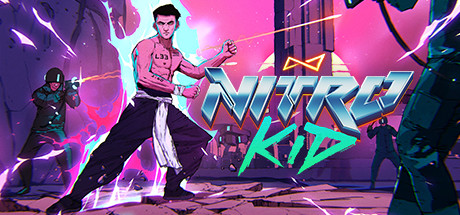
“A neon-soaked, synthwave-drenched roguelike deckbuilder that fuses Into the Breach grid tactics with Slay the Spire cards — criminally underplayed at under $6.”
Very Positive
This puts the game in the top 30% of all reviewed games on Steam.
Analysis by Ivan Z. Ganza · Methodology →
Quick Stats
352en
539 total (all languages)
348 analyzed
Current as of Apr 27, 2026
Oct 18, 2022
$19.99
Apr 23, 2026
0.3/day
Slowing
Metadata current as of Apr 27, 2026 · Source: Steam
Market Reach
≈17,000
≈$86.0K
Based on 539 reviews (all languages)
Based on review count × genre/age/price-adjusted Boxleiter ratio. Gross revenue before Steam’s 30% cut, refunds, and regional pricing.
Design Strengths
- Grid-based movement is deliberately scarce, making positioning feel genuinely rewarding and strategic rather than incidental
- Three characters (L33, J4X, K31) play so differently they effectively deliver three distinct games within one package
- Synthwave/darksynth soundtrack of 30+ tracks is exceptional enough that players listen outside of gameplay sessions
- Card synergies integrate tightly with grid positioning — spatial and deck decisions reinforce each other rather than existing in parallel
- 10-tier Security Level difficulty system provides long-term challenge scaling that keeps high-hour players engaged well past 100 hours
- 1–2 hour run length with auto-save makes the game fit short sessions without sacrificing strategic depth
- Isometric neon pixel art aesthetic is cohesive and immersive, reinforcing the retrofuture 80s tone throughout
Gameplay Friction
- Auto-attacking enemies that rotate and track the player regardless of positioning undercut the tactical movement system — the most-helpful negative review (89 votes) describes being unable to outsmart any dangerous enemy through clever grid play
- L33 (Bruce Lee character) is significantly weaker and more RNG-dependent than J4X and K31, creating a lopsided first-character experience for new players
- Boss encounters can invalidate otherwise functional builds, effectively penalizing build diversity and narrowing viable strategies
- Card selection has no confirmation dialog — hovering to inspect a card can accidentally commit the choice
- Enemy HP is not visible on the field without hovering over each enemy individually, disrupting combat flow
- Status effects (Burn, Stun, Fragile) lack in-game explanation adequate for newcomers unfamiliar with genre conventions
- SKIP/NEXT buttons on the path map are proximity-misclick risks that can send players into unintended rooms with no way to back out
Audience Profile
Ideal Player
A deckbuilder veteran who wants spatial tactics baked into every card decision and can appreciate a tight 80s aesthetic package.
Casual Friendliness
medium
Player Archetypes
Not For
Sentiment Trend
declining
Sentiment dropped from 92% to 80% positive over the last 90 days (10 reviews vs 13 prior).
Genre Context
Roguelike deckbuilders are a crowded genre with high player expectations set by genre-defining titles; Nitro Kid differentiates by layering grid-based spatial tactics onto the card system, a hybrid that remains uncommon. At under $6, it punches well above its price tier on production value, but its shallow meta-progression and absent post-launch support are meaningful competitive weaknesses against actively maintained genre peers.
Promise Gap
Audience Match
The store page targets genre fans with its deckbuilder and grid-combat framing accurately, but the Steam Deck Verified badge and lack of controller support creates a mismatch for the handheld audience that badge implies. The description also undersells the session-length accessibility that casual-leaning tactical players would find most persuasive.
Player Wishlist
- Richer meta-progression system with persistent cross-run unlocks (new cards, relics, or story beats) similar to Slay the Spire's unlock ladder
- Expanded card pools per character to reduce run-to-run sameness at high playtimes
- Narrative or story layer — even minimal lore or an ending state to give runs a meaningful goal beyond difficulty tiers
- Additional agents or DLC characters to extend replayability beyond the current three
Churn Triggers
- Players new to the character L33 often quit within the first few runs after hitting the first boss with a weak or mismatched build — the character's RNG dependency makes early failure feel unjust rather than instructive
- First-session players who encounter auto-tracking enemies on early floors abandon runs after realizing grid movement provides no escape — the highest-voted negative review (89 helpful) captures this moment exactly
- Players with 20–60 hours report dropping off when the absence of new unlock milestones becomes apparent — runs start to feel identical with no progression carrot after the initial character explorations
- New players who accidentally commit to a wrong card pick (no confirmation dialog) and lose a run as a result sometimes exit without returning
Developer Priorities
Ship a targeted bug-fix patch addressing save corruption and stuck turn states, and post a public developer update acknowledging the issues
The highest-helpful-vote negative review (55 votes) is entirely about abandoned development — this single signal is actively converting undecided buyers to pass. A small patch with a changelog resets this narrative and signals life in the project.
Add native controller support with a Steam Deck layout profile
The game holds Steam Deck Verified status but lacks native controller support — a contradiction that produces a 30-vote complaint and multiple negative reviews. Fixing this unlocks the handheld audience the badge implies.
Rebalance L33 to reduce RNG dependency and broaden viable build paths in early floors
L33 is the default-adjacent first character many new players try and the most-cited balance complaint. A weak first-character experience directly drives early churn before the game's genuine depth is discovered.
Add a card-selection confirmation dialog and make enemy HP visible on the combat grid without hover
These two UI fixes address documented friction that causes involuntary run-ending mistakes — the kind of friction that feels like a game flaw rather than a skill gap, and turns positive sessions negative.
Design and ship a lightweight meta-progression layer — even a Slay the Spire-style card/relic unlock ladder — to give returning players a persistent goal
The absence of meaningful cross-run progression is the primary reason high-hour players plateau and stop returning. This is the single most-requested feature and directly extends the revenue tail of an otherwise excellent game.
Competitive Context
The universal genre benchmark. Reviewers praise Nitro Kid as a worthy companion but consistently note it falls short on meta-progression depth, card pool breadth, and the 'just one more run' pull that defines the gold standard.
Cited as the tactical grid inspiration Nitro Kid successfully integrates with deckbuilding. Reviewers see the merger as Nitro Kid's defining strength, not a derivative move.
The closest direct competitor. Some reviewers prefer Nitro Kid for its synergy variety and price; others prefer Fights in Tight Spaces for more mobility options and the ability to genuinely outsmart enemies through positioning — exactly where Nitro Kid's auto-attack problem is felt most.
Experienced deckbuilder players rank Nitro Kid alongside Monster Train and Slay the Spire — a meaningful positive signal about perceived ceiling quality.
Cited both as a comparable multi-character deckbuilder and as a preferred alternative by at least one reviewer — no clear directional edge.
Compared primarily on OST quality. Most reviewers favor Nitro Kid's synthwave soundtrack; one reviewer found it forgettable by comparison — minority view.
Sentiment History
Sentiment over time
Playtime Sentiment
Sentiment by time invested
· 352 post-launch reviewsPlayers who invest more time rate this game significantly higher (+25pts) — a strong signal of a slow-burn experience that rewards patience.
Competitive Benchmark
Compared to 232 similar games in the Strategy genre released in 2022.
Tags
Loading analytics...
Get more analyses like Nitro Kid
Free reports today. Pro launches soon. No spam.