The Verdict
“A fresh, tactically rich apocalyptic deckbuilder with gorgeous art — still rough at the edges but already dangerously addictive.”
Very Positive
This puts the game in the top 30% of all reviewed games on Steam.
Analysis by Ivan Z. Ganza · Methodology →
Quick Stats
572en
1,143 total (all languages)
571 analyzed
Current as of Apr 27, 2026
May 28, 2025
$19.99
Apr 23, 2026
1.3/day
Slowing
Metadata current as of Apr 27, 2026 · Source: Steam
Market Reach
≈34,000
≈$670.0K
Based on 1,143 reviews (all languages)
Based on review count × genre/age/price-adjusted Boxleiter ratio. Gross revenue before Steam’s 30% cut, refunds, and regional pricing.
Design Strengths
- Per-squad deck architecture — each unit brings its own card pool that merges into one deck at deployment, creating a combinatorial composition puzzle absent from most deckbuilders
- Dual-layer strategic structure (city management hub + expedition combat) adds meaningful resource decisions between fights rather than a simple upgrade shop
- Combat zone positioning (Guard vs. Support Zone) rewards tactical repositioning and creates counterplay against telegraphed enemy intents
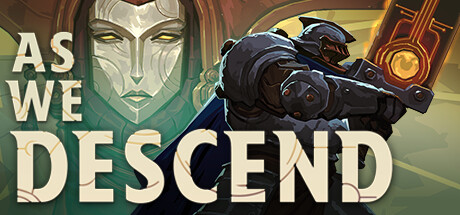
- Distinctive gothic steampunk aesthetic with high-quality character art, animations, and thematic cohesion across all visual elements
- Atmospheric soundtrack and sound design that reinforces immersion and drives the 'one more run' loop
- Strong 'one more run' pacing that many players describe as genuinely hard to put down despite run lengths of 1.5–2 hours
- Developer cadence of frequent, substantive updates with transparent community communication earns sustained goodwill
Gameplay Friction
- Difficulty scaling between Descent levels is jarring — the first post-tutorial jump introduces one-shot mechanics with no gradual ramp, punishing new players before they understand systems
- UI provides insufficient information at decision points: NPC reward outcomes are hidden until interaction, buff/debuff icons lack readable tooltips, and card ownership during combat is unclear
- Single-unit carry strategies dominate over multi-unit synergy builds, undermining the core squad-composition premise — adding more units dilutes decks rather than amplifying them
- Relic (tech item) pool is mostly non-viable — only ~3 of 20+ relics are broadly useful, making higher-difficulty builds feel luck-dependent rather than skill-driven
- Excessive unskippable or slow repeated text and dialogue on subsequent runs creates pacing drag, particularly in city NPC interactions
- City phase has obvious dominant choices that reduce strategic tension, with inconsistent shop behavior and underdeveloped NPC interaction design
- No mid-run save or pause functionality forces full 2-hour session commitment, a dealbreaker for players with variable schedules
Audience Profile
Ideal Player
A veteran deckbuilder fan who wants squad-based tactical depth layered on top of the roguelike loop and doesn't mind rougher Early Access edges.
Casual Friendliness
low
Player Archetypes
Not For
Sentiment Trend
stable
Sentiment steady at ~88% positive over the last 180 days (218 reviews).
Genre Context
The roguelike deckbuilder genre is crowded with StS-derived single-character builds; As We Descend differentiates through squad-based deck composition and a city management layer, positioning it closer to tactical RPG hybrids than pure deckbuilders. At $19.99 in Early Access, it sits at a premium price point for the genre's EA standard, which reviewers benchmark against more content-complete competitors.
Promise Gap
Audience Match
The store description targets fans of deep tactical strategy and apocalyptic world-building, which aligns with who is actually playing — but it underplays the steep learning curve and 2-hour run commitment, attracting casual card game fans who then churn at the difficulty wall. The omission of Early Access content limits is a notable gap.
Player Wishlist
- Endless or sandbox exploration mode that lets players enjoy deck-building without high-intensity run pressure
- Third playable faction (currently locked in EA) to expand strategic variety
- More enemy types and unique level encounters across biomes to reduce repetition
- In-run squad reroll or composition flexibility to recover from poor recruitment RNG
- Per-squad perk filtering to prevent irrelevant perks from appearing on incompatible units
- Post-game vertical content and expanded meta-progression unlocks beyond current ceiling
Churn Triggers
- Players drop off immediately after the first win when they hit the Descent 2 difficulty wall and encounter one-shot enemy attacks with no prior warning — many quit before understanding the system
- New players abandon runs within the first hour after feeling lost in the city phase, having spent excessive time talking to every NPC to discover hidden reward outcomes with no previews
- Players who reach ~10–20 hours exhaust all meta-progression unlocks and available content, triggering a 'nothing left to do' exit before full release adds the third faction
- Players who must stop mid-run due to real-life interruptions are forced to abandon all progress, causing permanent dropout rather than a return session
Developer Priorities
Overhaul the Descent 1→2 difficulty transition with a graduated ramp replacing the current jump to one-shot mechanics
This is the single most-upvoted negative signal (90 helpful votes) and the primary churn trigger after first win — it converts new players into refund-language reviewers before they understand the game's depth
Rebuild UI information architecture: add reward previews for city NPC interactions, readable buff/debuff tooltips, card ownership indicators in combat, and surface the Codex prominently
60 mentions with high confidence; new players cite UI opacity as the reason they feel lost and disengage before reaching the game's strategic depth — this directly expands the addressable audience
Rebalance unit synergy to make multi-squad compositions competitively viable versus single-unit carry builds
32 mentions; the squad-composition mechanic is the game's core design identity — if players discover the optimal path is to ignore it, the central promise collapses and long-term replayability shrinks
Implement mid-run save/suspend functionality
8 mentions but disproportionate impact: the 2-hour run commitment requirement is a hard access barrier for a large player segment, and 'dealbreaker' language appears explicitly — it also limits Steam Deck portability value
Expand and rebalance the relic (tech item) pool so that a majority of items are broadly viable with meaningful tradeoffs
14 mentions; only ~3 of 20+ relics are considered useful, making high-difficulty build diversity feel like an RNG lottery rather than player skill — undermines the game's roguelike replayability claim
Competitive Context
Most frequent reference point; reviewers acknowledge direct inspiration but consistently note As We Descend is a distinct evolution — adding squad tactics and city management. Negatively, $19.99 EA price is criticized as double StS's price for less content.
Cited for shared gothic atmosphere, punishing difficulty, and party-based tension; comparisons are uniformly favorable and used to signal the game's emotional weight.
Cited as a comparable genre peer; one reviewer specifically suggested studying Monster Train's upgrade and combat systems as a superior implementation reference.
Listed alongside As We Descend as a 2025 GOTY contender, signaling strong competitive positioning in the current roguelike card game landscape.
Referenced for roguelike structure and addictive 'one more run' loop; no explicit favorability claim in either direction.
Tactical positioning and unit attachment mechanics favorably compared to XCOM's squad strategy feel.
City-building aesthetics and resource scarcity decisions in the hub phase draw Frostpunk comparisons; used as genre-set identification without favorability claim.
Praised alongside As We Descend as an 'exceptional genre peer' for injecting tactical strategy into deckbuilding.
Recommended alongside As We Descend for card battler roguelikes with narrative elements; framed as complementary rather than competitive.
One reviewer explicitly preferred Commander Quest over As We Descend, citing deeper mechanics and less repetition.
Sentiment History
Sentiment over time
Playtime Sentiment
Sentiment by time invested
· 572 post-launch reviewsSentiment is consistent across all playtime ranges — players feel the same way whether they've played 2 hours or 200.
Competitive Benchmark
Compared to 467 similar games in the Strategy genre released in 2025.
Tags
Loading analytics...
Get more analyses like As We Descend
Free reports today. Pro launches soon. No spam.