The Verdict
“Gorgeous, brutally clever roguelike deckbuilder with truly fresh mechanics — if punishing early runs don't break you first.”
Very Positive
This puts the game in the top 30% of all reviewed games on Steam.
Analysis by Ivan Z. Ganza · Methodology →
Quick Stats
5,661en
8,647 total (all languages)
1,994 analyzed
Current as of Apr 25, 2026
Apr 12, 2023
$19.99
Apr 23, 2026
4.7/day
Slowing
Metadata current as of May 1, 2026 · Source: Steam
Market Reach
≈260K
≈$7.6M
Based on 8,647 reviews (all languages)
Based on review count × genre/age/price-adjusted Boxleiter ratio. Gross revenue before Steam’s 30% cut, refunds, and regional pricing.
Design Strengths
- Countdown timer system replacing mana/energy gives full combat foresight and near-zero hidden RNG in battle resolution, enabling genuine tactical planning
- Free unit repositioning on a 6×2 grid adds a positional layer absent from most genre peers, creating meaningful spatial decisions every turn
- Charm system enables modular card/unit customization with unexpected cross-synergies that sustain build diversity across hundreds of hours
- Single-card-per-turn structure forces deliberate prioritization, making each decision feel high-stakes without overwhelming the player with hand management
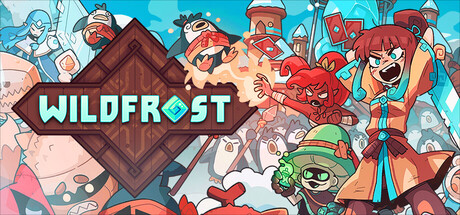
- Art style is cohesive and distinctive — polar tribal aesthetic extends consistently to enemies, items, bosses, backgrounds, and animations
- Soundtrack is broadly exceptional, with individual tracks cited as among players' all-time favorites in the genre
- Short run length (~30–60 min) drives compulsive restart behavior and makes the game well-suited for portable sessions on Steam Deck
- Post-launch Storm Bells difficulty system and 'A Better Adventure' update meaningfully addressed early accessibility complaints without dumbing down the ceiling
Gameplay Friction
- No damage preview or end-of-turn consequence display — players cannot see how much incoming damage will resolve, unlike genre peers where survival math is explicit
- Charm compatibility rules are not clearly communicated in-game, causing players to lose runs to interactions they had no way to predict
- Adaptive final boss mechanic (previous winning deck becomes the boss) is perceived as punishing success — a first-run overpowered deck can create a permanently difficult or unbeatable final encounter
- Charm pool dilution as meta-progression unlocks accumulate: more unlocked content means a higher share of weak or situational charms in drops, degrading late-game run quality
- RNG in card/charm/companion offerings creates a genuine skill-independent variance floor — a minority of runs present builds that experienced players still identify as unwinnable
- Boss and enemy roster repeats frequently after a handful of runs — only 4 distinct pre-final bosses means pattern recognition diminishes run tension
- No undo for misclicks in a game where a single wrong card play can end a run
Audience Profile
Ideal Player
A patient strategy gamer who thrives on discovering emergent synergies, doesn't mind losing repeatedly to learn a system, and wants a deckbuilder that feels mechanically distinct from Slay the Spire.
Casual Friendliness
low
Player Archetypes
Not For
Sentiment Trend
declining
Sentiment dropped from 96% to 90% positive over the last 90 days (63 reviews vs 78 prior).
Genre Context
Wildfrost sits at the premium tier of the roguelike deckbuilder genre, distinguished by its countdown-timer combat and positional grid — mechanics uncommon among genre peers that favor energy-based hand management. Compared to genre norms, it has a narrower base card pool and fewer biomes but compensates with a more modular customization layer (charms) and meaningfully lower in-combat RNG than most competitors.
Promise Gap
Audience Match
The store description leads with accessible, cozy language ('cute', 'adorable', 'rescue companions') and buries the difficulty framing, attracting casual players who then encounter a brutally steep learning curve. The actual player base skews toward patient, experienced roguelike veterans — a gap the store page does not close.
Player Wishlist
- Expanded boss roster with at least one additional boss per node to reduce repetition across runs
- More story content and world-building beyond scattered lore pages — a structured narrative layer comparable to genre peers
- Wider card pool per tribe to increase mid-run build diversity after full unlock completion
- Additional biomes beyond the current three
- Damage/consequence preview UI so players can evaluate survival math before committing a play
Churn Triggers
- Players drop within the first 6 hours after repeated losses with no understanding of why they lost — the game provides no post-loss explanation of what went wrong or what to do differently
- First-win players frequently quit permanently after discovering their winning deck is now the final boss and they cannot replicate their previous success
- Low-playtime players (under 10 hours) quit at their first encounter with a stage 2 enemy pack that hard-counters their build, reading it as unfair RNG rather than a solvable system
- Players who exhaust all base content (~100+ hours) and find no new official content arriving churn to other titles, with some staying only via Workshop mods
Developer Priorities
Add a damage/consequence preview system showing how much incoming damage will resolve before the player commits a card play
The most upvoted friction signal in the corpus (135 helpful votes on a single review). Directly causes early churn and is the top differentiator cited versus Slay the Spire. A low-information environment in a high-stakes game is the clearest solvable gap.
Redesign or add an opt-out for the adaptive final boss mechanic — e.g., allow players to choose a different saved deck as the boss, or offer a 'story mode' final boss
142 reviews cite this mechanic; it is the primary cause of post-first-win permanent dropout and the most polarizing single design decision in the game. Players who leave after their first win are unlikely to return.
Add at least one additional boss per node to expand the pre-final boss roster beyond the current four
Boss repetition is a top wishlist item and a driver of content-plateau churn among players with 30–50+ hours. New boss variety is high-impact for the core audience without requiring systemic redesign.
Implement a charm compatibility and interaction tooltip system — show which charms are valid for a card/unit and preview interaction outcomes before equipping
Charm opacity causes run-ending misplays that players attribute to the game being unfair rather than skill-based, driving negative reviews and early churn. Fixing this converts frustrated quitters into engaged learners.
Fix the crowned card recycling softlock (gnome runs) and add a save-file escape valve for the unkillable-team final boss edge case
The unkillable-team softlock forces a full save reset — a catastrophic outcome that generates disproportionately negative word-of-mouth. The recycling softlock silently invalidates runs. Both are fixable edge cases with outsized reputation cost.
Competitive Context
Most frequently cited peer. Wildfrost is positioned as a fresh alternative with comparable strategic depth; players most often rank it equal to or just below StS. The primary critique is that StS communicates combat consequences more clearly.
Closest mechanical peer — both feature positional unit placement and layered synergy systems. Players find Wildfrost comparable in quality, with Wildfrost's freer unit movement and charm system as differentiators.
Cited as a quality benchmark; one reviewer notes Wildfrost 'deserves to be as big as Balatro,' implying underexposure relative to mechanical merit.
Mentioned alongside Wildfrost as a top-tier deckbuilder; some players place both in their personal top-3 of the genre.
Described as a tactical touchstone — one reviewer calls Wildfrost 'Into the Breach but with cards,' highlighting the positional puzzle-like combat layer.
Players who came from Griftlands expected comparable narrative depth and were disappointed; the comparison highlights Wildfrost's intentional de-emphasis of story.
Cited as a visual and design contrast — Wildfrost's art polish is said to 'put Hearthstone to shame.' Some players migrated to Wildfrost after Hearthstone Adventures shut down.
Sentiment History
Sentiment over time
Playtime Sentiment
Sentiment by time invested
· 5,654 post-launch reviewsSentiment is consistent across all playtime ranges — players feel the same way whether they've played 2 hours or 200.
Competitive Benchmark
Compared to 285 similar games in the Strategy genre released in 2023.
Tags
Loading analytics...
Get more analyses like Wildfrost
Free reports today. Pro launches soon. No spam.