The Verdict
“A $5 dice-building roguelike with Slay the Spire-level depth — ugly on the outside, brilliant on the inside.”
Very Positive
This puts the game in the top 30% of all reviewed games on Steam.
Analysis by Ivan Z. Ganza · Methodology →
Quick Stats
521en
595 total (all languages)
517 analyzed
Current as of Apr 27, 2026
Jul 11, 2022
$5.99
Apr 23, 2026
0.4/day
Slowing
Metadata current as of Apr 27, 2026 · Source: Steam
Market Reach
≈18,000
≈$99.0K
Based on 595 reviews (all languages)
Based on review count × genre/age/price-adjusted Boxleiter ratio. Gross revenue before Steam’s 30% cut, refunds, and regional pricing.
Design Strengths
- Dice-face building mechanic is a genuine innovation on the deckbuilder formula — players modify individual die faces mid-run to shape probability rather than drawing from a deck
- 10 playable classes each feel mechanically distinct, and cross-class relic mixing enables emergent hybrid builds
- Gradual onboarding drip-feeds new mechanics without overwhelming, scaling complexity like a tutorial that never announces itself
- 'Just one more run' loop is tightly engineered: 15–30 minute run length pairs with an unlock structure that always gives a reason to return
- 13 scenarios plus hard mode variants, campaign mode, and endless mode create a layered content structure that keeps expanding past initial impressions
- Relic system with 60+ items creates meaningful build synergies that interact with dice customization in distinct, discoverable ways
- Short run length makes the game genuinely pick-up-and-play without sacrificing strategic depth
Gameplay Friction
- Star-based progression forces a painful in-run choice between scoring points (needed to unlock content) and taking rewards that make the run winnable — valid strategies are penalized by the unlock gating
- RNG on shop offerings is polarizing, particularly on hard mode where the absence of healing or defensive items in the shop can make runs unwinnable by round 2–3
- Relics auto-unequip when changing areas, forcing players to manually rebuild loadouts each time; no loadout-save option exists
- Inability to lock dice faces during rerolls removes a strategic lever players intuitively expect in a dice-manipulation game
- UI is rough: small artifact selection menus, misaligned tooltips, and abilities accordion that requires extra clicks to navigate
Audience Profile
Ideal Player
A roguelike enthusiast who loves probability manipulation and combo crafting in short, satisfying sessions of 15–30 minutes.
Casual Friendliness
medium
Player Archetypes
Not For
Sentiment Trend
stable
Insufficient recent review volume to determine trend.
Genre Context
The roguelike deckbuilder genre is crowded at the mid-to-high price tier ($15–$25), but Circadian Dice occupies an unusual position: it delivers top-tier strategic depth at a budget price point with run lengths shorter than most genre peers. Its dice-face manipulation mechanic is mechanically distinct from card-draw systems, offering a genuine design innovation rather than a genre-standard execution.
Promise Gap
Audience Match
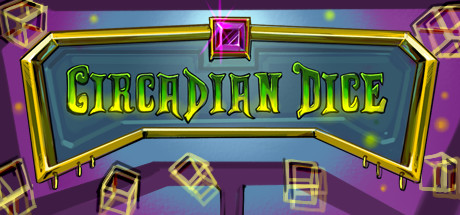
The store page targets deckbuilder fans with its 'instead of upgrading a deck, you build up a set of dice' framing, which accurately reaches the right audience — but the low-budget visual presentation acts as an unaddressed filter that loses players who would otherwise love the game. The store page does not inoculate against the visual first impression that drives early abandonment.
Player Wishlist
- Loadout presets per character so relic configurations persist across sessions
- Campaign mode narrative interstitials or story content to give the campaign structure meaning beyond mechanical progression
- Dice face lock mechanic during rerolls to add a deliberate layer of strategic control
Churn Triggers
- Players who hit the star-based progression wall within the first 2–3 hours drop off after realizing that failed runs yield no rewards and that scoring 5 stars requires sacrificing run viability
- New players overwhelmed by the gap between the plain visual presentation and unexplained mechanical depth may quit in the first 30 minutes before the gameplay hook lands
- Late-stage players who unlock all heroes and exhaust scenario variety plateau around 20–40 hours with no new structural goals pulling them forward
Developer Priorities
Redesign the star-based unlock gating so players earn meaningful progression from failed runs, not just 5-star completions
The most-upvoted negative review (137 helpful votes) targets this directly; the system forces players to choose between a fun run and accessing the game's content, causing dropout within the Steam refund window
Fix fullscreen rendering: support native 1080p+ resolution and remove the 60Hz cap in fullscreen mode
The 720p-native rendering is the single most visible technical flaw on first launch; it generates immediate negative reviews from players who refund before engaging with gameplay
Add mid-run save support for campaign mode to prevent crash-triggered progress loss
A crash that wipes a multi-scenario campaign run is catastrophic for retention; this is the only crash scenario with severe consequences since normal scenarios are short
Implement per-character relic loadout presets and a dice-face lock option during rerolls
Relic auto-unequipping on area change creates repetitive setup friction every session; face-locking is an expected strategic affordance in a dice-manipulation game that players explicitly request
Add Steam achievements tied to in-game unlock milestones
The game already has a completionist-friendly achievement system internally; exposing this to Steam achievements would extend engagement and improve store page discoverability via achievement hunters — game context confirms 44 achievements exist but reviews predate or contradict this, suggesting they may not be surfaced correctly
Competitive Context
Most frequent comparison; reviewers position Circadian Dice as a dice-based alternative that matches STS in strategic depth and is praised for avoiding its 'parasitic class mechanics.' Some call it equally engaging despite simpler presentation.
Reviewers consistently argue Circadian Dice's literal dice-face-building mechanic is fundamentally deeper than Dicey Dungeons' approach; several call it the superior game.
Cited as the closest mechanical comparable; one reviewer calls Circadian Dice 'much better,' another lists both among favorites, indicating the comparison cuts both ways depending on player preference.
Referenced as a top-tier genre benchmark; reviewers note Circadian Dice matches Monster Train in gameplay and content depth despite its lower-budget presentation.
Reviewers explicitly note it is not a Balatro clone and achieves comparable originality and satisfaction; one calls it 'the best single-player digital dice game ever designed.'
Compared favorably for rapid roguelite pacing and value-for-money; one reviewer rates it on par with Vampire Survivors in gameplay satisfaction.
One reviewer states it is 'like a better Luck be a Landlord,' positioning Circadian Dice as the superior dice-based roguelike.
Noted as similar in style but Circadian Dice is described as faster-paced and less reliant on stat-stacking.
Referenced as a board game inspiration for the digital dice-building mechanic; reviewers note Circadian Dice extends the concept with combat elements Dice Forge lacks.
Listed among comparable roguelike deckbuilders by experienced genre players as a competitive-set identifier.
Sentiment History
Sentiment over time
Playtime Sentiment
Sentiment by time invested
· 521 post-launch reviewsSentiment is consistent across all playtime ranges — players feel the same way whether they've played 2 hours or 200.
Competitive Benchmark
Compared to 231 similar games in the Strategy genre released in 2022.
Tags
Loading analytics...
Get more analyses like Circadian Dice
Free reports today. Pro launches soon. No spam.