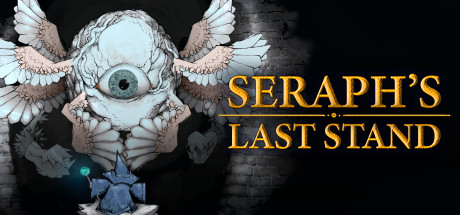
The Verdict
“A dangerously addictive $1 bullet-hell roguelike with a broken early grind, abandoned by its dev but still worth every cent.”
Very Positive
This puts the game in the top 30% of all reviewed games on Steam.
Analysis by Ivan Z. Ganza · Methodology →
Quick Stats
1,046en
4,307 total (all languages)
1,042 analyzed
Current as of Apr 23, 2026
Mar 23, 2022
$0.69
Apr 23, 2026
0.7/day
Slowing
Metadata current as of May 1, 2026 · Source: Steam
Market Reach
≈130K
≈$92.0K
Based on 4,307 reviews (all languages)
Based on review count × genre/age/price-adjusted Boxleiter ratio. Gross revenue before Steam’s 30% cut, refunds, and regional pricing.
Design Strengths
- Upgrade synergy system generates genuine 'aha' moments — stacking attack speed, life steal, fragmentation, and wisps creates emergent game-breaking combos that drive discovery
- Escalating power curve delivers a satisfying snowball arc once build synergies click around wave 30+
- Ascension mechanic (stacking the same upgrade for a special ability) adds a hidden depth layer that rewards experimentation
- Core loop is tight enough to produce unplanned multi-hour sessions with minimal friction between runs
- Minimalist black-and-white aesthetic contrasted with colorful projectile effects creates a distinctive, readable visual identity
- Leaderboard system (world, national, local) provides a concrete long-term goal that extends playtime well beyond content exhaustion
- OST praised independently as catchy and tonally appropriate for extended casual sessions
Gameplay Friction
- First 20–30 waves are mechanically barren — no upgrade stacking is visible and the pace is slow enough that death before wave 20 makes restarting feel punishing rather than motivating
- Meta-progression currency (soul coins) drops at 1–3 per run against a cost of 25 per basic upgrade, creating a grind ratio that feels disproportionate relative to the game's casual positioning
- Difficulty spike at wave 40–60 causes one-shot deaths even with defensive builds, while cloak+barrier and cloak+lifesteal combos invert the problem into an idle-waiting simulator — neither extreme feels earned
- A recent update increased enemy damage by 30%, worsening the mid-game spike without corresponding balance to defensive viability
- Visual clutter at high wave counts makes enemy projectiles indistinguishable from player particles — the cursor and crosshair become invisible during the most demanding moments
- Only a handful of builds (thunder staff, cloak/barrier variants) are viable past wave 50, undermining the store promise of 'crazy builds'
- Leaderboard top scores require breaking the game into an AFK idle state, making competitive play a waiting sim rather than a skill expression
Audience Profile
Ideal Player
A late-night casual who loves finding broken build synergies in short roguelike sessions and doesn't need ongoing content updates to justify the price.
Casual Friendliness
medium
Player Archetypes
Not For
Sentiment Trend
stable
Insufficient recent review volume to determine trend.
Genre Context
The action roguelike / bullet-hell genre has established strong player expectations for build variety, meaningful run differentiation, and content longevity — benchmarks set by games with active ongoing development. Seraph's Last Stand delivers a competitive core loop and replayability for its price tier, but its single map, fixed wave order, and ~15-hour content ceiling sit below genre norms for long-term retention, while its FPS degradation at high wave counts is an unusual technical failure for a 2D pixel game.
Promise Gap
Audience Match
The store description targets competitive leaderboard chasers and build-breakers seeking maximum variety, but the actual audience skews toward casual late-night players who enjoy a relaxing power-fantasy loop within a narrow but satisfying build space — the competitive framing oversells the breadth and undersells the chill factor.
Player Wishlist
- Additional maps beyond the single arena, with varied enemy compositions or environmental hazards
- Randomized wave order to break run-to-run predictability
- Steam Workshop / mod support to extend community-driven content
- Co-op multiplayer mode
- Cloud save support to prevent progress loss across devices
- Wave-skip or fast-forward option for the opening 15–20 waves
Churn Triggers
- Players who die before wave 20 and face the prospect of replaying the slow opening frequently quit the session rather than restart — the dropout risk is highest in the first 30 minutes of any given run
- Players who reach wave 40–60 and are one-shot killed despite investing in defensive upgrades often abandon the run and do not return, citing the balance spike as the moment the game stopped being fun
- New players who spend soul coins on unlockable hats or staffs without knowing their effects (no in-game preview) feel misled and disengage from the meta-progression system early
- Players who reach the leaderboard and discover the top spots are held by cheaters report dropping competitive motivation entirely, often at the point of their first genuine high-score run
Developer Priorities
Reduce early-game friction by implementing a wave-skip or accelerated opening mode for the first 15–20 waves on repeat runs
The slow early game is both the most-cited friction point (98 mentions) and the primary churn trigger — players dying before wave 20 frequently do not restart. Fixing this directly improves retention without requiring new content.
Fix the audio reset bug and settings persistence failures (volume, resolution, window mode) that affect every single session
Audio resetting to max volume on every run is the most universally experienced bug — it affects all players every session and signals an abandoned, unpolished product. It is low-effort to fix and high-visibility to every returning player.
Profile and patch the memory/particle leak causing FPS collapse at wave 60+, with Fragmentation stacking as the primary suspect
Late-game FPS degradation to 1–3 FPS is a hard wall that blocks the most engaged players from reaching their potential peak — it disproportionately affects the high-playtime audience that drives word of mouth and leaderboard competition.
Rebalance the wave 40–60 difficulty spike and audit the meta-progression soul coin economy to reduce the grind-to-unlock ratio
The difficulty spike (87 mentions) and soul coin grind (98 mentions) are the two largest design complaints — both undermine the game's core promise of empowering build experimentation. The 30% enemy damage increase from a recent update actively worsened the spike.
Add visible stat displays (current DPS, HP, fire rate) and upgrade interaction previews, and move OST promotion to a one-time opt-in rather than per-run pop-up
Opaque upgrade math (34 mentions) causes wasted soul coins and uninformed build decisions, reducing the satisfaction of the core loop. The OST pop-up (14 mentions) actively damages goodwill and is the most fixable monetization friction in the game.
Competitive Context
Most-cited genre reference — reviewers position Seraph's Last Stand as a 2D sidescroller/platformer variant with aiming and jumping added. A minority recommend Vampire Survivors instead for its greater content volume at twice the price; one review accuses Seraph's Last Stand of directly copying the formula.
Cited as a tonal and mechanical peer — both games drip-feed upgrades with combinatorial synergies. Reviewers note Seraph's Last Stand offers less variety but a faster loop.
Described as '2D Risk of Rain' by multiple reviewers; both share the problem of long runs terminating in sudden one-shot deaths at high wave counts.
Suggested as a content-richer alternative in the same genre for players who exhaust Seraph's Last Stand — framed as the natural step up, not a direct replacement.
Cited by at least one reviewer as a superior alternative with a better OST and more fully realized broken-wizard build mechanics.
Developer-cited inspiration; reviewers affirm Seraph's Last Stand exceeds the original Heli Attack games in quality and depth.
Sentiment History
Sentiment over time
Playtime Sentiment
Sentiment by time invested
· 1,045 post-launch reviewsSentiment is consistent across all playtime ranges — players feel the same way whether they've played 2 hours or 200.
Competitive Benchmark
Compared to 76 similar games in the Action genre released in 2022.
Tags
Loading analytics...
Get more analyses like Seraph's Last Stand
Free reports today. Pro launches soon. No spam.