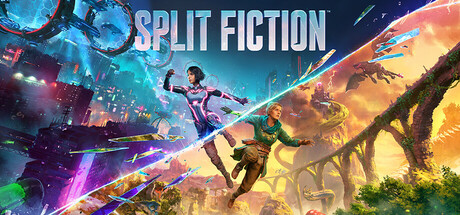
The Verdict
“The best co-op game in years — endlessly inventive mechanics and stunning visuals, held back only by weak early-game writing.”
Overwhelmingly Positive
Fewer than 5% of Steam games with 1,000+ reviews achieve this.
Analysis by Ivan Z. Ganza · Methodology →
Quick Stats
37,195en
118,919 total (all languages)
2,000 analyzed
Current as of Apr 27, 2026
Mar 6, 2025
$34.99
27.8/day
Slowing
Metadata current as of May 1, 2026 · Source: Steam
Market Reach
≈2.7M
≈$94.0M
Based on 118,919 reviews (all languages)
Based on review count × genre/age/price-adjusted Boxleiter ratio. Gross revenue before Steam’s 30% cut, refunds, and regional pricing.
Design Strengths
- Mechanics rotate every 20–30 minutes — dragon-riding, cyber-ninja combat, pinball, platforming — making the experience feel like dozens of games in one
- Final act is consistently called among the most visually and creatively impressive sequences in modern gaming, saving the best for last
- Art direction contrasts vibrant fantasy and dystopian sci-fi with Pixar-level visual fidelity that prompts players to stop and admire environments
- Friend Pass (one purchase covers both players) is praised as the most consumer-friendly co-op model in the industry
- Fail-forward difficulty design makes the game fully accessible to non-gamers without alienating experienced players
- Optional side stories are frequently cited as rivaling or surpassing the main story in creativity, adding meaningful depth beyond the critical path
- Soundtrack is precisely matched to each world's tone, described as phenomenal across virtually all review chunks
- Hazelight's iterative studio craft is visible — each design layer (camera work, level geometry, ability pairing) is tuned specifically for two-player synchrony
Gameplay Friction
- Opening-chapter dialogue is widely described as cringe-worthy and clichéd — ironic given the protagonists are writers — with the antagonist underdeveloped throughout
- Sci-fi segments feel weaker and more generic than fantasy sections; Zoe's story arc is perceived as underserved relative to Mio's
- Boss fights drag through repeated action loops rather than escalating — the most cited pacing complaint in negative reviews
- Side worlds disappear entirely in the middle-to-late game, removing the variety that defined the opening hours
- Parkour and traversal sections become samey in the second half before the final act rescues momentum
- Keyboard-and-mouse controls are awkward for platforming sections, creating friction when one partner uses a controller and the other does not
- Difficulty ceiling is too low for experienced players — the game never offers a meaningful challenge option
Audience Profile
Ideal Player
A couple, sibling pair, or close friend duo who wants a visually spectacular, laugh-out-loud shared adventure with zero barrier to entry and no prior gaming skill required.
Casual Friendliness
high
Player Archetypes
Not For
Sentiment Trend
stable
Insufficient recent review volume to determine trend.
Genre Context
Co-op action-adventure games rarely sustain mechanical novelty across a full 15-hour runtime — the genre norm is a single central mechanic iterated to exhaustion. Split Fiction inverts this by discarding mechanics once mastered, a structural risk that the vast majority of reviewers say pays off. Its closest structural peers are narrative-led co-op experiences, a thin genre where production quality of this scale is exceptional rather than expected.
Promise Gap
Audience Match
The store page targets a broad action-adventure audience with emphasis on spectacle and story. In practice, the game's audience skews heavily toward couples, families, and casual co-op pairs — the Friend Pass and accessibility-first design are the actual purchase drivers, not the narrative premise the store page leads with.
Player Wishlist
- Split Fiction 2 or DLC expanding the side-world format into standalone experiences
- End-of-game statistics screen (deaths, abilities used, time per world) similar to post-game summaries in other co-op titles
- Arcade or challenge mode letting players revisit individual worlds outside the main story
- Additional side worlds — several reviewers felt the existing ones deserved full standalone games
- Steam achievements unlockable via Friend Pass for the second player
Churn Triggers
- Players who dislike the protagonists on first impression may quit within the opening cutscenes — multiple reviewers explicitly state their co-op partner was the only reason they continued past chapter one
- Partners with no prior gaming experience hit a frustration wall during precision platforming sections, typically within the first 2–3 hours, stalling progress and testing patience
- Reviewers who complete the game in under 10 hours (rushed or dissatisfied players) disproportionately question value, triggering regret before the redemptive final act is reached
- The disappearance of side worlds mid-game surprises players who expected that format to continue, creating a perceived content drop that some interpret as the game 'running out of ideas'
Developer Priorities
Revise the opening two chapters — sharpen protagonist introductions, reduce antagonistic bickering, and front-load a character moment that creates investment before the first major world
The single highest-risk dropout window is the first 60–90 minutes; multiple reviewers state they nearly quit due to disliking the characters, and the most helpful negative review (52 votes) leads with this criticism. The gameplay is already strong in chapter one — the writing is actively undercutting retention.
Redesign or truncate boss fight loops — introduce a new mechanic or phase escalation at the halfway point of each boss to break the repetition
Boss fights are the second most cited negative signal and the most helpful negative quote (24 votes) specifically calls them out. This directly contradicts the game's core promise of constant mechanical variety.
Extend side-world availability deeper into the second half of the game — do not cut them off before the final act
The disappearance of side worlds mid-game is a surprise content drop that triggers the 'running out of ideas' perception. Retaining them through chapter four would smooth the pacing curve and maintain the variety that drives the game's identity.
Audit and rebalance sci-fi world content volume and story beats to match the perceived richness of the fantasy segments
32 reviews specifically identify the sci-fi half as the weaker experience, with Zoe's arc described as rushed. The store page sells a dual-world premise equally — underdelivering on one half is a promise broken.
Add an end-of-game statistics screen and unlock Steam achievements for Friend Pass (second-player) accounts
Both are low-effort, high-goodwill additions. Achievement lockout for Friend Pass users is a minor but avoidable friction on a feature that is already the game's most praised differentiator. Stats screens reinforce replay motivation.
Competitive Context
The most-cited benchmark — mentioned across all 40 review chunks. Majority view Split Fiction as equal or superior in mechanical variety and visual ambition. A vocal minority prefer It Takes Two for tighter narrative, stronger character chemistry, and denser mini-game integration. The comparison is the lens through which almost every reviewer frames their verdict.
Referenced as an earlier Hazelight title in the studio's upward trajectory. One dissenting reviewer rated it above Split Fiction for story intensity, but the dominant framing is that Split Fiction represents a clear improvement.
Cited by one reviewer as the previous benchmark for co-op excellence, which Split Fiction surpasses — the highest compliment in the corpus for mechanical co-op design.
One reviewer compared Split Fiction's writing unfavorably to Borderlands 3, calling it 'the most atrocious writing since Borderlands 3' — the sharpest writing criticism in the corpus.
Named alongside Split Fiction as a 2025 GOTY contender, suggesting reviewers place Split Fiction in the top tier of the release year.
Sentiment History
Sentiment over time
Playtime Sentiment
Sentiment by time invested
· 10,514 post-launch reviewsPlayers who invest more time rate this game significantly higher (+30pts) — a strong signal of a slow-burn experience that rewards patience.
Competitive Benchmark
Compared to 432 similar games in the Action genre released in 2025.
Tags
Loading analytics...
Get more analyses like Split Fiction
Free reports today. Pro launches soon. No spam.