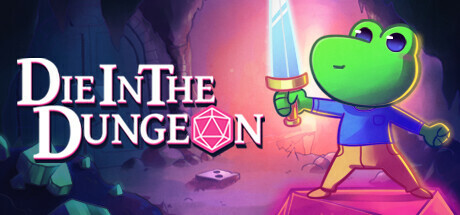
The Verdict
“A dice-as-cards roguelike with exceptional art and addictive combo-building — best in its first 30 hours, before meta stagnation sets in.”
Very Positive
This puts the game in the top 30% of all reviewed games on Steam.
Analysis by Ivan Z. Ganza · Methodology →
Quick Stats
1,676en
2,788 total (all languages)
1,662 analyzed
Current as of Apr 25, 2026
Feb 21, 2025
$14.99
Apr 23, 2026
3.2/day
Slowing
Metadata current as of Apr 25, 2026 · Source: Steam
Market Reach
≈78,000
≈$1.2M
Based on 2,788 reviews (all languages)
Based on review count × genre/age/price-adjusted Boxleiter ratio. Gross revenue before Steam’s 30% cut, refunds, and regional pricing.
Design Strengths
- Spatial dice-placement on a grid board creates a genuinely novel strategic layer over the standard deckbuilder formula — positioning interactions between dice and enemy board effects produce satisfying puzzle-like depth
- Combo and synergy design generates a powerful dopamine loop as dice, relics, and modifiers chain into escalating power spikes
- Pixel art, character design, and enemy animations are consistently praised as vibrant and full of personality — among the most polished visual presentations in the genre
- Soundtrack is near-universally described as exceptional, diverse, and replayable — players with 50+ hours report never muting it
- Addictive 'one more run' loop drives engagement well beyond typical genre benchmarks, with many players logging 50–200+ hours
- Relic system creates meaningful build commitment: strong relics carry real drawbacks, rewarding strategic prioritization over blind optimization
- Early Access content volume delivers 30–50 hours to completion — unusual density for the price point at launch stage
Gameplay Friction
- At D3+ difficulty, viable builds collapse to a narrow set (mirror/boost/pack, regen combos), making the large dice pool feel cosmetic rather than strategic
- Heavy RNG in late-game encounters means zero-block draws can end an hour-plus run in a single round, with outcomes that feel luck-dependent rather than skill-readable
- First-act offerings become repetitive after 10+ hours — experienced players report identical dice and relic pools each run through the opening area
- Run length of 1–3 hours combined with slow battle animations and inter-room loading screens compounds tedium, particularly in the early-game segment of experienced runs
- Three playable characters differ mainly in starting relics rather than unique dice pools or mechanics, limiting cross-character variety
- Many dice in the pool are perceived as underpowered to the point of being actively skipped — deck offers rarely motivate deviation from established strategies
- Tooltip and UI clarity issues persist: energy costs obscured, item descriptions don't always match effects, and icon legibility is inconsistent
Audience Profile
Ideal Player
A roguelike deckbuilder fan who wants a fresh spatial-puzzle twist on the card-game formula and is happy to ride 30–50 hours of discovery before the meta calcifies.
Casual Friendliness
medium
Player Archetypes
Not For
Sentiment Trend
stable
Sentiment steady at ~92% positive over the last 180 days (289 reviews).
Genre Context
Die in the Dungeon occupies a crowded niche of Slay the Spire-derivative roguelike deckbuilders, but differentiates itself meaningfully through spatial dice-placement mechanics that no direct competitor has replicated. Its core innovation is legitimate, but at high difficulty the build diversity thins to genre-typical levels — a known ceiling in the deckbuilder format that here arrives earlier than most genre leaders.
Promise Gap
Audience Match
The store description targets players who want endless build variety and replayability ('brand new experience every run,' 'tons of combinations'), but the actual audience skews toward players content with a defined 30–50 hour arc of discovery before reaching the strategic ceiling. Players drawn in by the infinite-variety framing are disproportionately represented in negative reviews.
Player Wishlist
- Endless or post-completion run mode beyond the current D6 ceiling
- Additional playable characters with mechanically distinct dice pools or board layouts
- More biomes, enemy types, and boss variety to break first-act monotony
- More dice and relic content to expand the viable build space at high difficulty
- Community design-contest outputs (enemies, lore) incorporated into the main game faster
Churn Triggers
- Around 10–15 hours, players begin recognizing the dominant strategy and stop experimenting — runs shift from discovery to execution, triggering a 'seen the matrix' dropout for players who need ongoing novelty
- After completing D6 (typically 25–35 hours), completionist players hit a hard content wall with no post-game loop, and a significant portion stop returning
- Within the first 10 minutes of experienced runs, repetitive first-area offerings create a dreaded 'dull opening gauntlet' that erodes motivation to start new runs
- At D0→D1 and floor 1→2 transitions, first-time difficulty spikes without visible skill-expression send newer players into confusion-driven quit moments
Developer Priorities
Expand the viable high-difficulty build space by buffing underperforming dice and adding new synergy pathways that compete with mirror/boost/pack at D3+
This is the single most-cited reason engaged players go negative — 124 mentions, highest harmful-signal count. Solving it extends the playable ceiling for the core audience and directly addresses the 'only one winning build' complaint that drives post-D3 dropout.
Reduce first-area repetition by increasing pool diversity or guaranteed variety in opening dice and relic offerings for experienced players
The repetitive first 10 minutes is the primary churn trigger for experienced players starting new runs — 112 RNG/repetition mentions plus 56 meta-stagnation mentions converge on this moment as the most common dropout catalyst.
Implement run-time reduction: cut inter-room loading, add a speed/animation toggle, and reduce early-game decision friction to target sub-60-minute runs
98 mentions cite run length as the biggest quality-of-life barrier. Long runs combined with repetitive openings compound into a high barrier for starting new sessions, directly throttling the 'one more run' loop.
Add an accessibility toggle to disable or reduce looping idle animations (character wiggle, enemy wiggle, cursor) and add an alternative readable font option
Although lower volume (8 motion + 86 UI mentions), the animation issue produces high-helpfulness negative reviews (avg 32 helpful votes per mention) and is a hard blocker for a segment of players who leave immediately — cheap fix, outsized goodwill return.
Design and release a fourth playable character with a mechanically distinct dice pool or board configuration that cannot be replicated by the existing three
74 players explicitly request more content and 42 cite character sameness as a friction point. A genuinely differentiated character is the highest-leverage single content drop for reigniting review velocity from lapsed players.
Competitive Context
The universal reference point — reviewers describe Die in the Dungeon as 'Slay the Spire with dice.' Most consider the spatial board mechanic a genuine improvement on StS's formula; a minority feel StS has deeper synergy complexity and longer-term replayability. One reviewer explicitly recommends StS over DiD.
Cited as sharing the same 'numbers go brrr' dopamine loop. Reviewers describe DiD as scratching the same itch, with one calling it 'Balatro but DnD.' The comparison is uniformly used to recommend DiD to Balatro fans.
Cited as a predecessor in the dice roguelike space; at least one reviewer states DiD is 'what Dicey Dungeons should have been,' positioning DiD as a significant evolution of that formula.
Referenced as a comparable dice roguelike; one reviewer notes DiD is less strategically demanding but more relaxing than Slice and Dice — DiD wins on approachability, loses on strategic ceiling.
One experienced player notes DiD has more intuitive upgrade systems than Astrea, positioning DiD as more accessible to players new to the dice-roguelike sub-genre.
Mentioned as a deckbuilder peer; one reviewer suggests DiD could compete with Monster Train if balance issues at high difficulty are resolved.
The free predecessor is cited as a benchmark — most reviewers praise the full game as a major improvement, but a minority preferred Origins for its shorter runs and simpler mechanics, suggesting the full game's run length is a regression for that audience.
Referenced as a genre-adjacent dice deckbuilder, used to contextualize DiD's position in the growing dice-roguelike niche.
Cited alongside DiD as a creative roguelike; reviewers note DiD has a distinct enough identity to stand apart.
One reviewer explicitly prefers DiD over Peglin, citing deeper strategic engagement.
Referenced as a roguelike with stronger content variety and long-term progression. A 43-hour player notes DiD did not replace Hades in their rotation but is a welcome addition.
Sentiment History
Sentiment over time
Playtime Sentiment
Sentiment by time invested
· 1,675 post-launch reviewsSentiment is consistent across all playtime ranges — players feel the same way whether they've played 2 hours or 200.
Competitive Benchmark
Compared to 586 similar games in the Strategy genre released in 2025.
Tags
Loading analytics...
Get more analyses like Die in the Dungeon
Free reports today. Pro launches soon. No spam.