The Verdict
“A cheap, addictive Lovecraftian roulette-deckbuilder with a game-breaking save-file bug that progressively makes it unplayable.”
Very Positive
This puts the game in the top 30% of all reviewed games on Steam.
Analysis by Ivan Z. Ganza · Methodology →
Quick Stats
118en
560 total (all languages)
116 analyzed
Current as of Apr 27, 2026
Oct 21, 2022
$3.99
Apr 23, 2026
0.1/day
Slowing
Metadata current as of Apr 27, 2026 · Source: Steam
Market Reach
≈17,000
≈$39.0K
Based on 560 reviews (all languages)
Based on review count × genre/age/price-adjusted Boxleiter ratio. Gross revenue before Steam’s 30% cut, refunds, and regional pricing.
Design Strengths
- Roulette-wheel placement mechanic is a genuinely novel twist on deckbuilding — spatial randomness plus lockable slots creates a distinct strategic layer not seen in genre peers
- Deep card synergies across multiple distinct archetypes (Evolve, burn, freeze, snakes, King in Yellow) reward experimentation and produce varied run outcomes
- Lovecraftian theme is fully integrated — each eldritch god has unique mechanics, Easter eggs, and lore references woven into card interactions rather than used as surface decoration
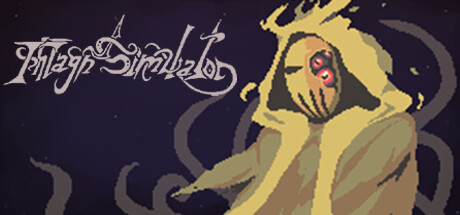
- Black-and-white pixel art style is striking, atmospheric, and gives the game a strong personality disproportionate to its budget
- Music loops without becoming grating, sustaining long play sessions
- Quick run structure supports the 'one more run' loop effectively at an average ~8.5 hours before fatigue sets in
Gameplay Friction
- Card descriptions are ambiguous or mistranslated, particularly for status effects like freeze and burn — players cannot reliably predict card behavior without external trial and error (most-cited criticism, avg 9.5 helpful votes)
- Archetype balance is uneven: King in Yellow and Evolve builds are dominant and easy to execute, while freeze-based decks are underpowered and struggle to win early rounds
- Difficulty scaling is flat — players who clear the base game can typically clear up to difficulty 10 with no meaningful escalation in challenge
- Heavy RNG on card draws with a costly banish mechanic means runs can feel decided by draw luck rather than player decision-making
- Onboarding is inconsistent — tutorial is mandatory but leaves players confused about cause-and-effect, particularly with overlapping status interactions
Audience Profile
Ideal Player
A fan of Lovecraftian aesthetics who enjoys lightweight roguelike deckbuilders and doesn't mind learning synergies through trial and error.
Casual Friendliness
medium
Player Archetypes
Not For
Sentiment Trend
stable
Insufficient recent review volume to determine trend.
Genre Context
Within the Lovecraftian roguelike deckbuilder space, Fhtagn Simulator occupies a distinctive niche by replacing the standard hand-management loop with a roulette-wheel placement system — a mechanical differentiator that genre veterans notice immediately. At its price point it competes credibly on content-per-dollar, but its 10–15 hour ceiling and absent progression system fall well short of genre leaders that sustain 50+ hour engagement through unlock trees and meta-progression.
Promise Gap
Audience Match
The store description's atmospheric horror framing and mythos lore emphasis targets Lovecraft narrative fans, but the actual player base skews toward casual roguelike deckbuilder players who appreciate the theme as flavor rather than substance. Players arriving primarily for deep lore or narrative may find less than promised; genre mechanics players find more than expected.
Player Wishlist
- Deck management UI with filtering and sorting by card type, rarity, or alphabetical order
- Run history or replay log so players can review completed runs and learn from decisions
- Additional card pool and new synergy archetypes to extend long-term replayability beyond 10–15 hours
- Progression unlock system to give returning players structured goals after clearing all current content
Churn Triggers
- Players hit an unresponsive title screen after completing the tutorial — the bug locks them out entirely before the first real run, causing immediate abandonment
- After several runs, progressive performance degradation becomes noticeable enough that some players quit mid-session and do not return
- Within the first 1–2 hours, players confused by ambiguous card text and lacking visible feedback leave before synergies click
- Players who master dominant archetypes find no difficulty escalation and disengage around the 10–15 hour mark once all content is exhausted
Developer Priorities
Fix the save-file bloat bug by capping or pruning run history written to disk, and patch the title screen freeze
This is a play-ending bug cited in ~43% of negative reviews and has the highest helpful-vote signal in the dataset. It transforms a satisfying game into an eventually unlaunchable one and is the single largest driver of negative word-of-mouth.
Rewrite card descriptions for all status effects (freeze, burn) with precise, unambiguous English — hire a native English editor, not a direct translator
The most-cited gameplay friction with 21 mentions and 9.5 avg helpful votes. Opaque card text blocks new players from discovering the synergies that define the game's strongest selling point.
Rebalance underperforming archetypes (freeze) and add meaningful difficulty escalation above the base game clear threshold
13 mentions of flat difficulty and archetype imbalance; veteran players disengage once they identify dominant strategies with no challenge remaining. This extends retention beyond the 10–15 hour ceiling.
Add deck management filtering and sorting (by card type, rarity, alphabetical)
5 explicit wishlist mentions; improving UI clarity reduces the friction of evaluating synergies and extends engagement with the core loop that players already praise.
Expand the card pool with new synergy archetypes and add a lightweight progression/unlock system
Content ceiling of 10–15 hours is the second most common reason for disengagement. Even a small unlock layer gives returning players a reason to keep spinning.
Competitive Context
Most frequent comparison — reviewers describe Fhtagn Simulator as a thematically focused Lovecraftian variant that benefits from its singular aesthetic coherence. One reviewer called it 'Luck be a Landlord without all the commie propaganda,' suggesting the theme substitution is seen as a net positive for some.
Referenced as a genre benchmark for roguelike deckbuilders; Fhtagn Simulator shares roguelike event structure but uses a fundamentally different wheel-based core mechanic.
Cited as occupying similar thematic and mechanical space; one reviewer placed Fhtagn Simulator 'somewhere between Luck be a Landlord and Inscryption.'
Mentioned as a standard for occult-themed writing quality; the comparison implies Fhtagn Simulator's English translation falls short of what genre peers achieve in text clarity.
Cited for comparable circular/wheel mechanics; reviewer notes Fhtagn Simulator is 'quite a bit simpler' — positions it as accessible entry point in the sub-genre.
Described as mechanically very similar; Fhtagn Simulator differentiates via Cthulhu theming and pixel art.
Reviewer recommends Fhtagn Simulator directly to players who enjoyed Endgame of Devil, suggesting strong audience overlap.
Referenced as part of the roguelike deckbuilder genre context without specific comparative claims.
Sentiment History
Sentiment over time
Playtime Sentiment
Sentiment by time invested
· 118 post-launch reviewsCompetitive Benchmark
Compared to 145 similar games in the Strategy genre released in 2022.
Tags
Loading analytics...
Get more analyses like Fhtagn Simulator
Free reports today. Pro launches soon. No spam.