The Verdict
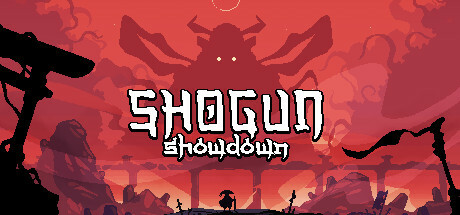
“A chess-like samurai roguelike where every death is your fault — compulsively addictive, gorgeously minimal, and perfect on Steam Deck.”
Overwhelmingly Positive
Fewer than 5% of Steam games with 1,000+ reviews achieve this.
Analysis by Ivan Z. Ganza · Methodology →
Quick Stats
3,737en
6,685 total (all languages)
1,994 analyzed
Current as of Apr 23, 2026
Sep 5, 2024
$14.99
Apr 23, 2026
3.6/day
Slowing
Metadata current as of May 2, 2026 · Source: Steam
Market Reach
≈190K
≈$1.4M
Based on 6,685 reviews (all languages)
Based on review count × genre/age/price-adjusted Boxleiter ratio. Gross revenue before Steam’s 30% cut, refunds, and regional pricing.
Design Strengths
- 1D movement axis creates chess-like tactical puzzles that feel both elegant and fair — the geometric constraint forces creative positioning decisions every turn
- Fully telegraphed enemy intents give players perfect information, making every death attributable to player error rather than luck (Days 1–4)
- Short run lengths (30–60 min) combined with satisfying combo chains produce an exceptionally strong 'one more run' loop, cited by players with 200–500+ hours
- Five characters with distinct signature moves and tile pools force meaningfully different strategic approaches per playthrough
- Pixel art communicates all tactical information at a glance — information density and aesthetic quality praised together as a unified design achievement
- Soundtrack is described as 'absolute metal' and 'fire,' thematically cohesive with the Edo-Japan setting and enhancing run momentum
- Steam Deck verified with excellent battery efficiency (7–9 hours reported), mouse-only and controller options, and clean readability on small screens
- Unlock progression across 100+ tiles and 7 difficulty days per character is praised as well-paced and intrinsically motivating
Gameplay Friction
- Days 5–7 shift from skill-based to RNG-dependent: poor upgrade offerings can produce unwinnable runs regardless of player execution, undermining the game's core fairness promise
- Unlocking more tiles dilutes the upgrade pool, paradoxically incentivizing players to avoid unlocking content in order to maintain build consistency at high difficulty
- Per-character Day counter forces players to replay trivially easy Days 1–4 for each of the five characters before accessing higher difficulties — significant grind for character experimenters
- Drag-and-drop tile mechanics trigger accidental cancellations or deletions with no undo option; a small drag rightward removes an attack permanently mid-run
- Crucial tactical rules are undocumented: enemy wave spawn triggers change across difficulty days without in-game explanation, boss HP is not displayed, and some augment interactions require external research
Audience Profile
Ideal Player
A tactics-first player who loves mastering elegant systems, finds joy in 30-60 minute runs that cascade into five-hour sessions, and prefers puzzles over chaos.
Casual Friendliness
medium
Player Archetypes
Not For
Sentiment Trend
stable
Sentiment steady at ~94% positive over the last 180 days (456 reviews).
Genre Context
In a saturated turn-based roguelike market where RNG variance and build complexity are genre norms, Shogun Showdown differentiates through geometric constraint and information transparency — the 1D lane and fully telegraphed enemies are design choices that most genre peers avoid. The game benchmarks above genre average on replayability and polish for its price tier, but falls closer to genre average on late-game balance, where the fairness promise erodes in ways familiar to roguelike veterans.
Promise Gap
Audience Match
The store description targets a general strategy/roguelike audience with neutral, feature-list language. The actual player base skews toward mastery-oriented tactics players who respond to the fairness promise and the tactical puzzle identity — neither of which the store page emphasizes with sufficient specificity to pre-qualify or excite this audience.
Player Wishlist
- Weekly or daily challenge modes with fixed starting conditions and leaderboards
- Puzzle mode: fixed-tile scenarios with a set number of moves to clear a stage
- Endless or infinite ascension mode beyond Day 7
- Additional characters, attack tiles, and skills (high-playtime players consistently report content exhaustion at 60–100h)
- A full sequel with expanded enemy variety, world map diversity, and deeper boss patterns
Churn Triggers
- Players who converge on an optimal strategy after ~15–40 hours find runs feel identical regardless of character or difficulty, triggering disengagement once the meta is 'solved'
- First encounter with a Day 5+ run where a poor upgrade pool makes the run feel unwinnable — players who valued the fairness promise disengage when that contract breaks
- After completing Day 7 with one character, facing the requirement to replay Days 1–4 (perceived as trivially easy) from scratch on each new character causes some players to stop experimenting
Developer Priorities
Rebalance Days 5–7 upgrade pool weighting to reduce run-ending RNG variance — at minimum, guarantee one relevant tile offer per upgrade event
The most frequently cited negative signal (98 mentions, high confidence). It directly contradicts the game's core identity of 'deaths are your fault,' undermining the promise that retains players. High-playtime reviewers cite this as the reason they stopped recommending the game to others.
Add an undo or move-confirmation step for tile drag interactions, particularly for the 'drag to delete' gesture
48 mentions with consistent framing around a single, specific UX failure. A single accidental drag deletes an attack permanently mid-run. This is a high-severity moment because it ends or cripples a run through UI error rather than player decision — directly counter to the game's core appeal. Also an accessibility barrier.
Document wave spawn triggers, boss HP, and augment interaction rules in-game via a codex, tooltip, or run-info overlay
28 mentions targeting a specific category of 'hidden knowledge' that players describe as making deaths feel unfair — undermining the same fairness promise as the RNG issue. Unlike the RNG problem, this fix costs no balance changes; it's a content and UX addition.
Introduce a shared or accelerated Day progression system — allow players who have reached Day 5+ on one character to start new characters at a higher base Day, or add a 'challenge' mode bypassing early Days
72 mentions of per-character grind as a friction point that actively discourages character experimentation — one of the game's core replay drivers. Players who stop experimenting exhaust content faster and churn sooner.
Fix save file backup logic to prevent crash-induced save corruption overwriting Steam Cloud backups; implement local backup rotation
Save loss after 170 hours is a catastrophic trust failure. Though rare, the emotional impact generates high-visibility reviews. The fix (local rotating backups) is straightforward and prevents outsized reputation damage from a small number of edge cases.
Competitive Context
The dominant reference across all 40 chunks. Players compare the telegraphed-intent system and tactical puzzle structure favorably, with many calling Shogun Showdown more accessible while maintaining comparable depth. Several players prefer it outright.
Cited as a peer in addictiveness and roguelike structure. Positioned as less RNG-dependent and more puzzle-like, making it a complement rather than a substitute for deck-builder fans.
Frequently cited as overshadowing Shogun Showdown in 2024 market attention despite comparable quality. Players place both in the same 'hall of fame' tier of addictive roguelikes.
Described as a close mechanical predecessor combining deck-building with positional play. Shogun Showdown is seen as achieving a cleaner, more elegant version of the same formula.
Multiple players describe it as 'FTL but with swords,' praising shared full-information strategic play and roguelike run structure.
Grouped as a top-tier strategy roguelike benchmark. Referenced as a standard for difficulty scaling alongside build variety that Shogun Showdown meets.
Referenced as a comparable 'easy to learn, difficult to master' roguelike. Players describe Shogun Showdown generating the same obsessive engagement they felt on first playing Hades.
Cited by a high-playtime reviewer (60h) as a comparable quality benchmark in the low-randomness tactical roguelike space.
Called 'the best small-scale tactics game' since Tactical Breach Wizards, cited alongside Into the Breach for puzzle-based tactical design.
Described as the closest mechanical predecessor — Shogun Showdown extends the Shotgun King concept from 2D into a 1D lane, creating its signature geometric constraint.
Sentiment History
Sentiment over time
Playtime Sentiment
Sentiment by time invested
· 2,477 post-launch reviewsSentiment is consistent across all playtime ranges — players feel the same way whether they've played 2 hours or 200.
Competitive Benchmark
Compared to 417 similar games in the Strategy genre released in 2024.
Tags
Loading analytics...
Get more analyses like Shogun Showdown
Free reports today. Pro launches soon. No spam.