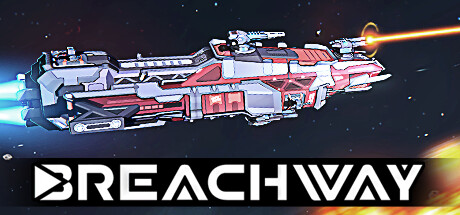
The Verdict
“A genuinely innovative FTL/deckbuilder hybrid let down by balance problems, persistent crashes, and thin Early Access content — worth it at $9.99 if you're patient.”
Mostly Positive
This puts the game in the top 30% of all reviewed games on Steam.
Analysis by Ivan Z. Ganza · Methodology →
Quick Stats
942en
1,373 total (all languages)
936 analyzed
Current as of Apr 25, 2026
Sep 26, 2024
$9.99
Apr 23, 2026
1.4/day
Slowing
Metadata current as of Apr 25, 2026 · Source: Steam
Market Reach
≈43,000
≈$430.0K
Based on 1,373 reviews (all languages)
Based on review count × genre/age/price-adjusted Boxleiter ratio. Gross revenue before Steam’s 30% cut, refunds, and regional pricing.
Design Strengths
- FTL + Slay the Spire hybrid design feels fresh and distinct — not a clone of either, with 218 mentions making it the most praised element in the dataset
- Cooldown-based card system (cards rest in discard before redraw) incentivizes larger decks and creates a deckbuilding philosophy not found in genre peers
- Energy/heat management mechanics — distributing reactor power across subsystems and managing heat dissipation — add a meaningful real-time puzzle layer to turn-based combat
- Module-tied card pools ensure offered cards combo with existing equipment rather than being pure RNG draws, a structural fix to a common deckbuilder frustration
- Visual design and sci-fi aesthetic are consistently praised: detailed ship art, satisfying combat animations, and an Expanse-coded atmosphere
- Addictive core loop with a genuine 'one more run' quality — players describe snatching victory from defeat as viscerally satisfying
- High skill ceiling rewards mastery: targeting enemy subsystems and managing reactor power create strategic depth beneath the accessible surface
Gameplay Friction
- Balance is severely skewed — Arbalest ship dramatically outperforms alternatives, status-effect mechanics (brittle, hacking, overheat) are broadly underpowered vs. raw damage, and difficulty spikes sharply at the second boss with 175 mentions making this the top friction signal
- Excessive RNG in card draws, equipment drops, and encounters removes meaningful agency; 72 mentions describe runs as luck-dependent rather than skill-based
- Reward economy is punishing — credit income consistently falls just short of upgrade thresholds (e.g. 99 vs. 100 required), and the fuel system restricts exploration to the point of forcing rushed progression
- Combat pacing is slow — lengthy animations and calculations drag out encounters even when executing flawless turns; players request 2x/4x speed options
- Steep learning curve with inadequate onboarding: tutorial fails to prepare players for interlocking systems, confusing tooltips, and punishing first-sector difficulty
- UI/UX friction: overlapping tooltips block item equipping, ship loadout is inaccessible during dialogue/events, small font sizes impede readability, and Steam Deck HUD elements are cut off
- Crew acquisition is random-event-only with no purchase option, crew abilities are poorly explained, limiting build variety and strategic planning
Audience Profile
Ideal Player
A genre-savvy roguelike fan who loves FTL and Slay the Spire, tolerates Early Access roughness, and finds satisfaction in theorycrafting tight energy-management builds across repeated runs.
Casual Friendliness
low
Player Archetypes
Not For
Sentiment Trend
declining
Sentiment dropped from 77% to 70% positive over the last 90 days (63 reviews vs 79 prior).
Genre Context
Space-themed roguelike deckbuilders are a crowded niche, and genre expectations — set by multi-year, content-rich titles — demand extensive build variety and robust replayability systems at 1.0. Breachway's mechanical innovations (module-tied cards, cooldown system, energy management) legitimately advance the genre, but its current content volume and balance polish fall well short of the bar established by top-tier genre entries.
Promise Gap
Audience Match
The store page targets players who want intense tactical depth with ship customization, crew management, and faction relationships — which matches the enthusiast audience who stays. However, it implies a fuller game than the current 2-sector EA build delivers, attracting buyers who expect near-complete content and leave disappointed.
Player Wishlist
- FTL-style ship unlock progression — earning distinct new ships with unique playstyles as meta rewards for successful runs
- Persistent meta-progression system with long-term goals, starting loadout customization, and an Ascension-style difficulty ladder
- Expanded crew acquisition — a purchasable crew pool or trade events rather than random-event-only recruitment
- More story, lore, and flavor text depth in events and faction encounters to flesh out the setting
- Additional content: more sectors, bosses, ships, and encounter variety to extend the viable play window beyond 20–30 hours
Churn Triggers
- Players drop out after hitting the second sector difficulty spike — having cleared the first sector without issue, the sudden jump in enemy scaling feels arbitrary and ends runs abruptly
- New players quit within the first 1–3 hours when repeated deaths in the starting zone with no clear path to improvement signal the game is 'not for them'
- Content-exhaustion churn hits around 20–30 hours when players recognize the limited sector/boss/ship pool and conclude the game has nothing new to offer in its current EA state
- Long-term players who invested 100+ hours disengage when balance issues remain unresolved after a year of Early Access, expressing the game 'isn't coming together'
Developer Priorities
Rebalance ships and combat mechanics — normalize Arbalest vs. alternatives, increase viability of status-effect strategies (brittle, hacking, overheat) relative to raw damage
Balance issues are the single highest-frequency complaint (175 mentions) and the primary driver of declining sentiment; unresolved imbalance makes non-default ships feel unplayable and narrows strategic expression
Fix crash-on-combat and save corruption bugs as the top-priority stability release
Crashes after combat and save corruption are cited as game-breaking across ~25% of negative reviews and persist after 2 years of EA — directly driving refund language and long-term player disengagement
Add content: a third sector, additional boss, and at least 2 more ships before 1.0 announcement
Content exhaustion at 20–30 hours is the second-highest complaint (142 mentions) and the primary reason players advise others to wait; more content directly extends the viable play window and improves value perception
Redesign onboarding — expand tutorial to cover energy management, status effects, and crew abilities; add contextual tooltips accessible during dialogue/events
Poor onboarding (52 mentions) is the primary churn trigger in hours 1–3, when new players die repeatedly without understanding why; fixing this also addresses the UI friction of inaccessible ship info during events
Implement combat speed controls (2x/4x/instant) and tighten the credit reward economy to close the 99-vs-100-credit gap
Slow combat (38 mentions) and stingy rewards (34 mentions) are friction points that make even successful runs feel tedious; both are relatively scoped fixes with high quality-of-life return
Competitive Context
Breachway's most cited reference — reviewers call it FTL's spiritual successor and praise it for streamlining crew management complexity while adding turn-based deckbuilding depth; some say it improves on FTL's formula
Reviewers acknowledge clear deckbuilding inspiration and some claim Breachway surpasses it in mechanical depth, but others note it falls short of STS's build variety, Ascension-mode replayability, and card pool breadth
Cited as offering superior strategic depth and 'broken build' synergy potential; reviewers wish Breachway's current build variety matched Monster Train's standard
Mentioned as a comparable space deckbuilder alongside FTL; one reviewer describes Breachway as a crossover of FTL and Cobalt Core
Compared negatively — Breachway shares Crying Suns' frustrating RNG-gated equipment drops and shop availability systems
Reviewer notes both games suffer from situational or borderline useless cards diluting the deck-building experience
Sentiment History
Sentiment over time
Playtime Sentiment
Sentiment by time invested
· 942 post-launch reviewsPlayers who invest more time rate this game significantly higher (+18pts) — a strong signal of a slow-burn experience that rewards patience.
Competitive Benchmark
Compared to 432 similar games in the Strategy genre released in 2024.
Tags
Loading analytics...
Get more analyses like Breachway
Free reports today. Pro launches soon. No spam.