The Verdict
“Charming cardboard city-builder with an addictive loop, undermined by punishing RNG and a deckbuilder that won't let you build your deck.”
Mostly Positive
Above the median for reviewed Steam games.
Analysis by Ivan Z. Ganza · Methodology →
Quick Stats
565en
2,154 total (all languages)
557 analyzed
Current as of Apr 22, 2026
Aug 18, 2023
$3.99
Apr 23, 2026
0.4/day
Slowing
Metadata current as of May 2, 2026 · Source: Steam
Market Reach
≈85,000
≈$2.2M
Based on 2,154 reviews (all languages)
Based on review count × genre/age/price-adjusted Boxleiter ratio. Gross revenue before Steam’s 30% cut, refunds, and regional pricing.
Design Strengths
- Three-way fusion of roguelike, deckbuilding, and city-building is a genuinely novel concept that 92 reviewers called fresh and unlike anything else available
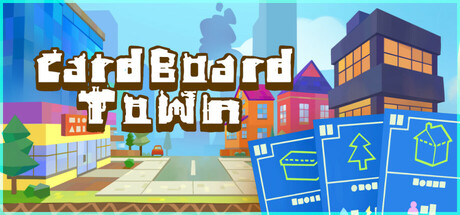
- Cardboard/papercraft tabletop aesthetic is cohesive, charming, and visually distinctive — the board-game identity is consistent throughout
- Professional-quality piano soundtrack actively keeps players calm through difficult moments, functioning as a meaningful retention tool
- Core gameplay loop produces strong 'one more run' compulsion once mechanics click, with players reporting multi-hour sessions without noticing
- Turn-based pacing creates breathing room that traditional city-builders and real-time deckbuilders don't offer
- 300+ card variety across buildings, actions, quests, and roads provides meaningful surface-level variety between runs
- Multiple game modes and scenarios add structural run variety beyond card randomness
Gameplay Friction
- Excessive RNG over card draws — players cannot curate their deck mid-run, road cards are fully RNG-gated, and bad draw streaks create unwinnable states with no recovery options (83 mentions, highest-frequency friction)
- Deck bloat with no meaningful removal tools — decks balloon to 60+ cards; the only card-removal mechanics add more cards, violating standard deckbuilder conventions and making late-game strategy feel random (62 mentions)
- Disaster and penalty mechanics are relentlessly punishing early — high-cost cards appear before players can afford them, and disasters can eliminate a run within the first few rounds (79 mentions)
- Late-game devolves into tedious cycling — established runs require clicking through bloated decks to find useful cards, and some reach an unwinnable-but-unloseable stalemate with no exit except manual abandon (22 mentions)
- Cards lack essential placement information — building grid size, zone restrictions, and hidden tile effects are absent from card text, making informed placement impossible (48 mentions)
- Tutorial is near-nonexistent — card effects, loss conditions, and quest tracking are unexplained; new players spend 20+ minutes in confusion before mechanics are introduced (55 mentions)
Audience Profile
Ideal Player
A patient strategy fan who enjoys puzzle-like resource management and cozy aesthetics, comfortable with losing runs to experimentation before mechanics click.
Casual Friendliness
low
Player Archetypes
Not For
Sentiment Trend
stable
Sentiment steady at ~61% positive over the last 180 days (54 reviews).
Genre Context
Roguelike deckbuilders have established player expectations around deck control, transparency, and meaningful run-to-run progression — standards set by genre leaders. Cardboard Town's city-builder fusion is genuinely novel, but its deck management falls below genre baseline, and its difficulty curve is steeper than most cozy-adjacent titles in the casual strategy space.
Promise Gap
Audience Match
The store page targets casual city-builder fans with approachable language and cozy visuals, but the actual audience skews toward experienced roguelite and deckbuilder players who can tolerate a steep learning curve and RNG-heavy systems. Casual players attracted by the presentation are among the most likely to churn early.
Player Wishlist
- Interactive meta-progression with manual deck editing between runs (choose cards to add/remove, not just passive level-ups)
- Themed town identity paths — e.g. mining town, fishing town — with decks and cards that reinforce a chosen strategic identity across a run
- Stat tracking and run history to contextualize performance and progress
- Infinite mode or sandbox mode for players who want to build without fail conditions
- More motivating and varied unlock rewards beyond fixed passive stat bumps at level-up
Churn Triggers
- Within the first 20 minutes: players hit unexplained loss conditions or card effects with no tutorial support, decide the learning curve isn't worth it, and quit before the loop clicks
- Around the 2-hour mark: the late-game grind of cycling a 60+ card deck becomes apparent, and players who haven't found a winning strategy conclude the game is luck-gated rather than skill-based
- After 5–15 hours: players exhaust the visible strategic variety, find meta-progression rewards feel passive and unmotivating, and lose the 'one more run' pull without a new goal to chase
- Early Access disappointment: players who purchased expecting a near-complete experience encounter persistent bugs and missing polish, converting initial enthusiasm into negative reviews
Developer Priorities
Add card-removal and deck-thinning mechanics that give players meaningful agency over deck composition during runs
Deck bloat is the second-most-cited friction (62 mentions) and directly undermines the deckbuilder identity the game markets. Fixing this also reduces perceived RNG dependency.
Redesign the early-game difficulty curve: reduce disaster frequency in the first 10 turns, ensure resource generation cards appear early, and gate high-cost cards to mid-game
Punishing early difficulty (79 mentions) is the primary churn trigger for new players who quit before the loop clicks, directly suppressing conversion and word-of-mouth
Build a comprehensive in-game information layer: card grid size on every card, tooltips for all placed buildings, visible quest tracker, and documented hidden tile effects
The most-helpful single review (208 votes) is about missing hover-info on placed buildings. UI clarity issues (55 + 48 mentions) block informed play and compound the tutorial problem.
Fix save file corruption and run-ending bugs as an emergency patch; prioritize crash-to-black-screen and meta-progression reward failures
Technical bugs destroy trust and convert otherwise positive players into negative reviews; several players report enjoying the core loop despite game-breaking bugs stopping them
Overhaul meta-progression to include at least one interactive element (e.g. choose one card to permanently add or remove between runs)
Passive level-up rewards are cited as the reason players stop returning after 5–15 hours; interactive meta-progression is the top wishlist item and is the standard in comparable roguelites
Competitive Context
Used as the benchmark for deckbuilder transparency and deck control; reviewers found Cardboard Town falls significantly short on intuitiveness and player agency over the deck
Compared favorably — some reviewers rate Cardboard Town above Stacklands in the card-driven builder space, citing it as less stressful
Cited as a more polished roguelike deckbuilder that gripped players more than Cardboard Town
Referenced as a more polished roguelike deckbuilder alternative that players preferred
Compared as a cozy turn-based tile-placement game; Cardboard Town seen as more strategically demanding
Used as a roguelike progression reference point; Cardboard Town's difficulty curve and meta-progression seen as less satisfying
Reviewer notes Cardboard Town costs more but delivers less than 1/10th the scope and depth
Compared on deckbuilding design; both share large deck sizes that dilute the deckbuilding feeling, acknowledged as a shared flaw
Cited as a conceptual predecessor in the city-builder-as-puzzle format
Identified as a comparable tabletop-style card city-builder; used for genre placement rather than quality comparison
Visual style comparison only — reviewer notes the cardboard aesthetic is reminiscent of Townscaper
Sentiment History
Sentiment over time
Playtime Sentiment
Sentiment by time invested
· 451 post-launch reviewsPlayers who invest more time rate this game significantly higher (+26pts) — a strong signal of a slow-burn experience that rewards patience.
Competitive Benchmark
Compared to 155 similar games in the Strategy genre released in 2023.
Tags
Loading analytics...
Get more analyses like Cardboard Town
Free reports today. Pro launches soon. No spam.