The Verdict
“A jaw-dropping anime deckbuilder with a killer fusion hook, let down by a shallow card pool and an unfinished Act 2.”
Very Positive
This puts the game in the top 30% of all reviewed games on Steam.
Analysis by Ivan Z. Ganza · Methodology →
Quick Stats
404en
742 total (all languages)
395 analyzed
Current as of Apr 7, 2026
May 23, 2024
$9.99
Apr 23, 2026
0.5/day
Slowing
Metadata current as of Apr 28, 2026 · Source: Steam
Market Reach
≈21,000
≈$110.0K
Based on 742 reviews (all languages)
Based on review count × genre/age/price-adjusted Boxleiter ratio. Gross revenue before Steam’s 30% cut, refunds, and regional pricing.
Design Strengths
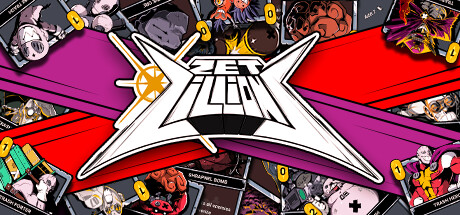
- Distinctive anime-inspired visual identity — character designs, card art, and combat energy draw consistent comparisons to Gurren Lagann and Studio Trigger, making it instantly recognizable in a crowded genre
- Card fusion system as core differentiator: the concept of combining two cards to produce new ones creates a genuinely novel strategic layer absent from most deckbuilders
- Population/colonization mechanic provides a meaningful alternate win condition — staggering enemies by colonizing planets adds tactical depth beyond raw damage output
- Writing and humor are genuinely funny and tonally cohesive, with a distinctive irreverent voice that holds up across the full campaign
- Soundtrack consistently praised as excellent and well-matched to the game's atmosphere, with individual tracks singled out as standout highlights
- Voice acting for scripted story beats is described as a production highlight — cast performances are convincing and energetic
- FTL-style node map is praised as a clean, well-executed adaptation of the format with thoughtful shop and encounter design
Gameplay Friction
- Card pool is too small and top-heavy with weak or redundant cards, funneling players into a narrow set of viable strategies and undermining the fusion system's promise of 1400+ combinations
- Fusion results frequently feel arbitrary or illogical relative to card inputs — the majority of combinations produce the same few useless cards, making experimentation feel punishing rather than rewarding
- Fusion UI becomes unreliable as hand size grows: drag-to-fuse interactions misfire, causing accidental card plays and wasted turns on a central combat action
- Meta-progression pacing is broken at both ends: XP gain and companion leveling are too slow early, then meta-unlocks trivialize difficulty once fully obtained
- Difficulty balance is inconsistent within a single run — infinite-damage combos make most encounters trivial while the Thanatos Zero final boss is considered wildly overscaled relative to everything preceding it
- Game ends on an interlude after Act 1 with no Act 2, leaving the narrative and mechanical arc visibly incomplete despite a 1.0 release label
- Partial voiceover coverage — scripted story moments are fully voiced but random encounters are silent, creating a jarring quality gap mid-campaign
Audience Profile
Ideal Player
A fan of story-driven roguelikes who prioritizes wild visual style, irreverent humor, and novel mechanics over infinite replayability — and is happy with a 20-hour authored experience.
Casual Friendliness
medium
Player Archetypes
Not For
Sentiment Trend
declining
Sentiment dropped from 90% to 83% positive over the last 90 days (12 reviews vs 21 prior).
Genre Context
Roguelike deckbuilders live or die on card pool breadth and run variance — genre leaders offer hundreds of distinct cards across multiple characters with asymmetric mechanics that generate novel decisions across dozens of hours. Zet Zillions competes on presentation and mechanical novelty (fusion, colonization) but currently sits below genre norms for replayability and content volume, making it better positioned as a story-driven entry point to the genre than as a session-count competitor.
Promise Gap
Audience Match
The store page leads with 'freakish combinations' and explosive chaos, targeting combo-hungry deckbuilder veterans who expect high mechanical depth — but the audience that actually enjoys the game skews toward story-first, aesthetic-driven players who value the 20-hour authored experience. The description undersells the narrative and oversells the fusion system's current functional breadth.
Player Wishlist
- Difficulty selector or ascension system (e.g. heat/chaos mode) to extend longevity for experienced players
- Additional starting decks and generals beyond the current three, including community-requested characters like Dok
- Expanded card pool with more viable archetypes to support diverse build strategies across runs
- Fusion tooltip showing the resulting card preview before committing to a combination
- Run history or post-run summary feature
- Searchable or filterable fusion encyclopedia instead of 300+ pages navigable only by mouse
Churn Triggers
- Players who unlock all three decks and companions within 12–20 hours hit a content wall with no meaningful new goals and disengage permanently
- New players encountering fusion UI misfires early — accidental card plays during the core mechanic create frustration before the game has established its hook
- Players who reach the Thanatos Zero final boss after a smooth run are blindsided by its difficulty spike and quit before seeing the ending
- Players completing the campaign discover Act 2 does not exist; the abrupt interlude ending triggers disengagement and no motivation for further runs
Developer Priorities
Expand the card pool with new cards and viable fusion outputs, prioritizing breadth of functional archetypes over sheer combination count
The shallow card pool is the single most upvoted criticism (66 helpful votes on the top negative review) and directly undermines the fusion system — the game's central selling point. Fixing this addresses replayability, fusion satisfaction, and churn simultaneously.
Rebuild the fusion UI with drag-and-drop reliability, add result preview tooltips before committing, and replace the 300-page mouse-only encyclopedia with a searchable reference
The fusion interface is the game's primary interaction surface. Misfires during fusion erode trust in the core mechanic on every single run, and the encyclopedia friction actively discourages the discovery loop the game is built around.
Resolve the card-effect-not-registering and post-boss softlock bugs as zero-tolerance stability issues
These bugs corrupt hour-long runs and block players from seeing the ending — the highest-impact technical failure modes driving negative reviews and refund language. Developer responsiveness has been praised; completing this work would neutralize the largest remaining trust deficit.
Add a difficulty selector or ascension-style system (e.g., modifiers unlocked per completed run)
The game's balance collapses at two extremes — trivial with meta-unlocks, randomly punishing in specific encounters. A difficulty axis gives experienced players a reason to replay while giving newer players a safety valve. This is the primary feature requested by engaged players who want to stay.
Resolve controller/gamepad support and update or remove the Steam Deck 'Playable' store tag until input is reliable
The current listing actively misleads gamepad-primary players into a purchase they immediately refund. Even one explicit 'attempted scam' refund review on Steam damages trust disproportionately. This is a low-effort credibility fix.
Competitive Context
Most frequent benchmark. Reviewers who prefer Zet Zillions cite its superior art, story, and fusion novelty; detractors note it lacks StS's infinite replayability and card pool depth. Described variously as 'StS on crack' and 'StS made by Studio Trigger.'
Node-map progression compared favorably to FTL's structure; Zet Zillions' map implementation is praised as a clean, worthwhile interpretation of the format.
Developer's prior game establishes the studio's style pedigree and attracts fans. Reviewers note Zet Zillions matches Wolfstride's visual identity but lacks its emotional depth and narrative heart.
Referenced as a comparable roguelike deckbuilder against which replayability and card fusion depth are benchmarked.
Referenced for story-driven roguelike structure and per-run narrative pacing; used as a benchmark for difficulty scaling systems the game currently lacks.
Cited as a genre peer in the modern deckbuilder space; no strong directional claim made by reviewers.
Mentioned as a comparable roguelike deckbuilder with a different approach to card mechanics; no directional preference stated.
Sentiment History
Sentiment over time
Playtime Sentiment
Sentiment by time invested
· 396 post-launch reviewsSentiment is consistent across all playtime ranges — players feel the same way whether they've played 2 hours or 200.
Competitive Benchmark
Compared to 432 similar games in the Strategy genre released in 2024.
Tags
Loading analytics...
Get more analyses like Zet Zillions
Free reports today. Pro launches soon. No spam.