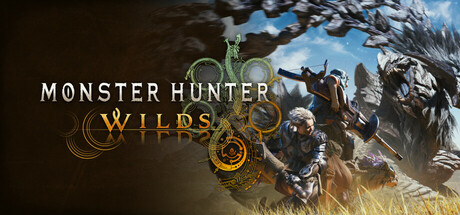
The Verdict
“Arguably the best Monster Hunter base game ever made — if you survive the 7-hour tutorial and own an Nvidia GPU.”
Mixed
Roughly half of players recommend it.
Analysis by Ivan Z. Ganza · Methodology →
Quick Stats
116,380en
317,575 total (all languages)
2,000 analyzed
Current as of Apr 27, 2026
Feb 27, 2025
$69.99
42.9/day
Slowing
Metadata current as of May 1, 2026 · Source: Steam
Market Reach
≈6.5M
≈$450.0M
Based on 317,575 reviews (all languages)
Based on review count × genre/age/price-adjusted Boxleiter ratio. Gross revenue before Steam’s 30% cut, refunds, and regional pricing.
Design Strengths
- Combat is the strongest in the series — 14 distinct weapons each with unique mechanics, Focus Mode, wound system, offset attacks, and per-weapon counter options create deep, rewarding skill expression
- Dynamic living world with weather cycles, monster turf wars, and ecosystem interactions make each map feel genuinely alive and unpredictable
- Arch Tempered monsters, Omega Planetes, and Gogmazios deliver some of the most praised boss fights in Monster Hunter history for high-playtime players
- Post-launch title updates (TU1–TU4+) substantially transformed a thin launch endgame into a content-rich high-rank experience
- Most accessible Monster Hunter entry point to date — streamlined gathering, forgiving drop rates, and faster hunt pacing lower the barrier without eliminating depth
- Layered armor and build variety systems offer extensive customization with minimal grind friction compared to prior entries
- Cinematic monster designs and visual presentation are consistently called stunning across both positive and negative reviewers
Gameplay Friction
- Multiplayer co-op requires navigating 5+ menus, forces solo play through story segments before friends can join, and suffers from frequent session errors and disconnects — widely seen as a regression from World and Rise
- Main story campaign is critically under-challenging: veterans report zero deaths through Low Rank, with 6–15 hours of railroaded walk-and-talk before free hunting begins
- Seikret mount auto-pilots players directly to monsters, removing the tracking and exploration that defined earlier entries and making the complex maps feel underutilized
- Endgame difficulty curve is jarringly non-linear — trivially easy through story, then abrupt one-shot spikes at 9★/10★ with inconsistent hitboxes and tight time limits that feel like HP inflation rather than skillful design
- Artian weapon RNG system forces repeated farming of the same monsters for random stat rolls, with material costs that disincentivize build experimentation
- Broad casualization of series DNA (auto-crafting, auto-gathering, auto-movement) alienates veteran players who valued preparation and strategic item management
- Specific weapons — notably Insect Glaive (gutted aerials, irrelevant kinsect) and Switch Axe — are significantly underperforming relative to the rest of the roster
Audience Profile
Ideal Player
A Monster Hunter World fan or action-RPG player who wants a 200+ hour hunting loop with deep combat mechanics and doesn't mind powering through a slow, easy story to reach the rewarding endgame.
Casual Friendliness
medium
Player Archetypes
Not For
Sentiment Trend
stable
Insufficient recent review volume to determine trend.
Genre Context
Monster hunting action-RPGs have an established expectation of 100–300h lifetime engagement, deep weapon mastery, and frictionless co-op — Wilds exceeds the genre on combat depth and environmental design but significantly underperforms on PC stability and co-op accessibility, two areas where the genre norm is now higher. The genre has no precedent for shipping a flagship title with hardware-specific crash loops unresolved after 12+ months at a $90 price point.
Promise Gap
Audience Match
The store description targets aspirational franchise fans expecting a polished, complete hunting world — but the actual player base arriving now encounters a game rebuilt over 13 months of post-launch patching with an unresolved AMD crash crisis. New players attracted by the 'living world' and co-op framing will be surprised by the multiplayer friction and the 7-hour tutorial gate before that world opens.
Player Wishlist
- Master Rank expansion (widely expected, anticipated to complete the Wilds experience as Iceborne did for World)
- Cross-save / cross-progression between PS5 and PC
- Additional elder dragons to address underrepresentation in the base roster
- Expanded arena and gathering hub content
- Timed event rewards made permanently accessible after their initial window
Churn Triggers
- Within the first 6 hours: heavily scripted, zero-challenge tutorial disguised as story causes World veterans to quit — one player with 215 hours in World couldn't reach 6 hours in Wilds before refunding
- Around hours 10–40: crashes onset after the Steam refund window closes, trapping players in an unplayable state with no recourse, converting frustrated fans into vocal negative reviewers
- Around hours 150–250: players hitting their final build find no motivational hook to continue — repeated hunts for incremental Artian upgrades feel purposeless without a G-rank tier to work toward
- At endgame entry (post-HR): players returning or progressing to 9★/10★ content encounter abrupt one-shot difficulty spikes after an easy 60+ hour ramp, triggering abandonment
Developer Priorities
Resolve AMD GPU crash loop with a dedicated hardware-partnership fix, not workaround documentation
The single most-cited technical complaint in the dataset — 98 direct mentions, the highest-voted negative reviews, and a hard blocker that prevents play for a significant hardware segment; directly drives the moderate refund language frequency
Overhaul the multiplayer co-op invitation and session system to match or exceed Rise's lobby simplicity
72 mentions make this the most-cited design complaint; a game branded as co-op hunting that makes playing with friends 'like solving an ancient riddle' is structurally undermining its own identity and causing early churn in the 15–30 hour window
Redesign the Low Rank story pacing — compress the tutorial-disguised-as-story to under 3 hours and introduce meaningful challenge within the first session
95 mentions of campaign being too easy and slow; the early dropout signal is explicit — veteran players quit within 6 hours and the refund window makes this a direct revenue risk
Audit and rebalance the endgame difficulty curve — specifically the jump from trivial story to one-shot 9★/10★, and the Artian weapon RNG grind
22 mentions of unfair difficulty spikes plus 38 mentions of RNG frustration combine to drive the 150–250h churn trigger; players who survived the tutorial and crashes are leaving at the gear ceiling
Make timed event rewards permanently available and re-evaluate the paid character edit voucher policy
38 mentions of monetization grievances including explicit anger at timed content locks; at a $90 price point with $550+ in cosmetic DLC already in the store, any content-lock perception compounds the 'predatory' narrative and compounds churn
Competitive Context
The primary benchmark throughout reviews. Wilds' combat, QoL, and environmental immersion are praised as improvements; World's monster roster variety, manual tracking/investigation system, multiplayer SOS system, and perceived difficulty are cited favorably by comparison. Iceborne is the explicit template for what the Wilds expansion must deliver.
Rise's co-op lobby system is praised as far superior to Wilds; wirebug movement depth is missed by veterans. Sunbreak set the quality bar for post-base-game expansions. Some reviewers prefer Wilds' combat; others recommend Rise as a better-designed alternative to Wilds.
Cited nostalgically as the series high point for difficulty progression; one reviewer calls Wilds 'the most fun since 4U,' framing it as high praise despite all criticisms.
Cited alongside Wilds as evidence of a Capcom pattern of shipping RE Engine titles on PC with severe performance issues, used to criticize the publisher rather than compare gameplay.
Players who migrated after Dauntless shut down found Wilds a major upgrade, adding a small new-audience signal despite the game's issues.
Sentiment History
Sentiment over time
Playtime Sentiment
Sentiment by time invested
· 10,475 post-launch reviewsPlayers who invest more time rate this game significantly higher (+45pts) — a strong signal of a slow-burn experience that rewards patience.
Competitive Benchmark
Compared to 84 similar games in the Action genre released in 2025.
Tags
Loading analytics...
Get more analyses like Monster Hunter Wilds
Free reports today. Pro launches soon. No spam.