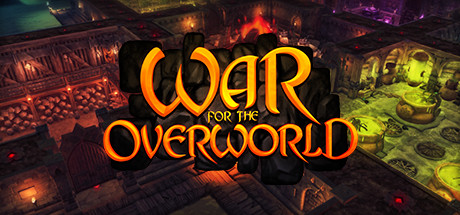
The Verdict
“The definitive modern Dungeon Keeper successor — brilliant sandbox modes, but the campaign plays like a stressful RTS, not a chill dungeon sim.”
Very Positive
This puts the game in the top 30% of all reviewed games on Steam.
Analysis by Ivan Z. Ganza · Methodology →
Quick Stats
5,131en
8,036 total (all languages)
1,993 analyzed
Current as of May 30, 2026
Apr 2, 2015
$29.99
May 30, 2026
1.2/day
Slowing
Metadata current as of May 3, 2026 · Source: Steam
Market Reach
≈300K
≈$1.8M
Based on 8,036 reviews (all languages)
Based on review count × genre/age/price-adjusted Boxleiter ratio. Gross revenue before Steam’s 30% cut, refunds, and regional pricing.
Design Strengths
- Authentic Dungeon Keeper spirit — mechanics, humor, and atmosphere faithfully recreate the franchise's DNA with modern polish
- Richard Ridings narrator delivers sarcastic, personalized commentary that elevates the entire experience
- My Pet Dungeon sandbox mode offers relaxed, goal-free building that directly addresses campaign pacing frustrations
- Steam Workshop integration and powerful map editor provide near-infinite community-made content including DK1/DK2 campaign remakes
- Six distinct game modes (Campaign, Skirmish, Survival, Scenarios, My Pet Dungeon, Multiplayer) serve different play styles
- Extensive post-launch support: Brightrock overhauled the campaign, refined mechanics, fixed bugs, and added free content years after launch
- 60+ rooms, spells, potions, rituals, and constructs create a dense strategic toolkit for players who explore it fully
- Modern QoL improvements over 1990s originals make it the recommended entry point for newcomers to the genre
Gameplay Friction
- Campaign missions prioritize speed-rushing over dungeon-building — constant time pressure, scripted enemy waves, and narrator urgency prevent the relaxed management experience the game's visuals and branding imply
- Minion AI is unreliable: workers abandon construction to chase gold into enemy territory, rally flags fail to redirect units, and pathfinding sends minions suicidally into enemy bases
- UI is designed for a slow management game but gameplay demands intense micromanagement — no multi-unit selection, no pause-to-command, minimal minion status visibility, and an unreadable minimap
- Campaign difficulty spikes sharply and inconsistently (notably levels 9–11 and the Mira encounter); AI opponents zerg-rush rather than play intelligently, making higher difficulties feel cheap rather than challenging
- Overlapping upgrade systems (spells, potions, rituals, constructs, sins tree) create redundancy and confusion; campaign time pressure means most systems go unused
- Tutorial overloads players with information without teaching key mechanics — building capacities, food systems, and warband management are not adequately explained
- Creature roster is mechanically functional but lacks the iconic personality and visual memorability of the original Dungeon Keeper minions
Audience Profile
Ideal Player
A Dungeon Keeper veteran who wants the authentic evil-overlord fantasy with modern controls, deep sandbox freedom, and Steam Workshop longevity.
Casual Friendliness
low
Player Archetypes
Not For
Sentiment Trend
improving
Sentiment rose from 75% to 89% positive over the last 90 days (44 reviews vs 32 prior).
Genre Context
Dungeon management / god-game sims are a niche genre with almost no modern competition at comparable production quality, giving WFTO a near-monopoly position among players seeking an authentic Dungeon Keeper experience. The genre norm leans toward relaxed, sandbox-style building sessions, which makes WFTO's RTS-intensity campaign pacing an outlier that consistently surprises players who benchmark against genre expectations.
Promise Gap
Audience Match
The store page targets players wanting to 'build and defend' a dungeon at their own pace — language that draws management-sim players expecting Dungeon Keeper's relaxed tempo. The actual campaign audience is RTS veterans comfortable with intense micromanagement and time pressure; the sandbox modes serve the implied audience, but they are not the store page's lead offer.
Player Wishlist
- Additional official campaign missions and new story DLC — recent DLC focused on cosmetic skins is a source of disappointment
- Return of iconic Dungeon Keeper creatures (Horned Reaper, Bile Demon, Dark Angels) as new WFTO units
- Optional relaxed/sandbox campaign mode that removes time limits and rush pressure from main story missions
- Steamworks-native multiplayer networking to replace the current port-forwarding requirement
Churn Triggers
- Players conditioned by the store page and branding to expect a chill dungeon sim hit a wall within the first 1–3 hours of campaign play when constant enemy pressure and narrator urgency shatter that expectation
- New players abandoning around levels 9–11 when difficulty spikes sharply with no corresponding mechanical explanation from the tutorial
- Multiplayer buyers churn immediately upon discovering online play requires manual port forwarding — several leave 0-hour reviews warning others
- Low-hour players who purchased expecting a management sim exit after finding the campaign demands StarCraft-level micromanagement they didn't sign up for
Developer Priorities
Redesign campaign missions to offer an optional 'Architect Mode' — no time limits, reduced enemy pressure — preserving the RTS mode for players who want it while unlocking the management sim experience the store page promises
The campaign pacing mismatch is the single highest-helpfulness friction point (283 helpful votes on top review) and is the primary driver of negative reviews and early churn; resolving it closes the largest expectation gap in the product
Migrate multiplayer networking to Steamworks P2P to eliminate the port-forwarding requirement
Port forwarding kills multiplayer entirely for most casual players, generates 0-hour negative reviews, and reviewers explicitly warn others not to buy for co-op — a fixable technical barrier destroying an entire game mode's value
Overhaul the UI to add multi-unit selection, a pause-to-command option, and a minion status panel
The UI mismatch between management-game design and RTS-intensity gameplay is the second-highest helpfulness signal (283 votes on the same top review); these three features would directly reduce micromanagement overwhelm without redesigning the campaign
Redesign the onboarding to teach building capacities, food systems, and warband management through practice — not text dumps — within the first two campaign missions
Players who don't understand core systems hit difficulty walls at levels 9–11 with no framework to recover; poor onboarding is a compounding churn accelerant on top of the pacing issue
Audit and consolidate overlapping upgrade systems (spells, potions, rituals, constructs, sins tree) — merge or remove redundant options and surface the remaining ones more clearly during missions
System bloat creates confusion for new players and goes entirely unused under campaign time pressure, making the depth feel fake rather than rewarding; reducing overlap improves both onboarding clarity and perceived mechanical quality
Competitive Context
The primary predecessor; WFTO is praised as its modern successor with better QoL, but critics miss the original's slower pace, iconic creature roster, and atmospheric charm. Some prefer the original's leisurely dungeon-building tempo.
Most common direct comparison; reviewers split between those who feel WFTO surpasses DK2 in polish and those who miss DK2's creature personality, atmosphere, and pacing. 'DK2 with modern graphics' is a frequent framing.
WFTO is consistently preferred over the Dungeons franchise as a more authentic Dungeon Keeper successor; Dungeons 1/2 are dismissed outright. A minority finds Dungeons 3 superior in humor or unit control.
Reviewers consistently contrast WFTO favorably against EA's mobile cash-grab adaptation, positioning WFTO as the worthy successor the franchise deserved.
Mentioned as a free/cheap alternative to experience the original DK with modern improvements; some reviewers present it as a valid substitute for players primarily chasing nostalgia rather than new content.
Used as a critical framing: detractors argue WFTO's campaign micromanagement intensity and rush-focus makes it feel like a competitive RTS tournament rather than a dungeon management sim.
Mentioned as a comparable villain-simulator; one reviewer recommends it over WFTO for deeper strategic gameplay, but the comparison is isolated.
Cited as an inferior DK-inspired game that WFTO surpasses in quality and authenticity.
Sentiment History
Sentiment over time
Playtime Sentiment
Sentiment by time invested
· 4,789 post-launch reviewsPlayers who invest more time rate this game significantly higher (+33pts) — a strong signal of a slow-burn experience that rewards patience.
Competitive Benchmark
Compared to 71 similar games in the Strategy genre released in 2015.
Tags
Loading analytics...
Get more analyses like War for the Overworld
Free reports today. Pro launches soon. No spam.