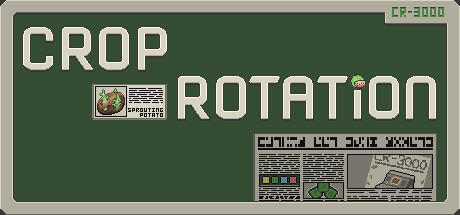
The Verdict
“A deceptively deep farming deckbuilder with a killer adaptive difficulty system — $10 well spent if you love engine-building.”
Very Positive
This puts the game in the top 30% of all reviewed games on Steam.
Analysis by Ivan Z. Ganza · Methodology →
Quick Stats
358en
546 total (all languages)
356 analyzed
Current as of Apr 24, 2026
Sep 15, 2023
$10.39
Apr 23, 2026
0.4/day
Slowing
Metadata current as of Mar 22, 2026 · Source: Steam
Market Reach
≈15,000
≈$160.0K
Based on 546 reviews (all languages)
Based on review count × genre/age/price-adjusted Boxleiter ratio. Gross revenue before Steam’s 30% cut, refunds, and regional pricing.
Design Strengths
- Adaptive rating system (0–10,000) that auto-scales difficulty to player performance, providing appropriate challenge at every skill level
- Synergy depth concealed beneath a simple presentation — strategic complexity reveals itself gradually without overwhelming new players
- Autoplaying cards shifts player focus entirely to deck construction and long-term planning, a clean separation of concerns
- Seasonal thematic integration: crop types map naturally to strategic timing (water plants for summer, invasive plants for fall), making mechanics feel coherent
- UI design surfaces complex information accessibly — hover tooltips, synergy highlighting, tier breakdowns, and turn-by-turn analytics without visual clutter
- Progressive unlocking of card sets (four additional sets, crop mutations) prevents early overwhelm while sustaining long-term engagement
- Relaxing, low-pressure atmosphere with calming string music and minimal pixel art that suits extended sessions and wind-down play
- RNG mitigation tools give players meaningful agency over randomness, making failure feel less arbitrary than genre peers
Gameplay Friction
- Base difficulty is too low — many players win their first run without fully understanding mechanics, making early decisions feel weightless
- Difficulty ramp is too slow for experienced players; the rating system eventually delivers challenge but takes too many runs to reach meaningful pressure
- At high difficulty ratings (900+), viable build archetypes converge to a narrow set (e.g., flowers dominating), reducing strategic variety when it matters most
- Some card sets have too few cards within a category to reliably execute certain strategies, frustrating players attempting minority builds
- Tutorial and first-session pacing is jarring for some — the game auto-plays while introducing multiple card types simultaneously, creating confusion before comprehension
- Card visual similarity makes deck composition hard to track at a glance; differentiating crop cards during organization is error-prone
- x2 card tooltips in the end-of-day profit breakdown display only 'x2' without identifying the contributing card, limiting post-round learning
Audience Profile
Ideal Player
A fan of engine-building card games who wants a relaxing but strategically rich roguelike that scales to their skill level without demanding combat reflex.
Casual Friendliness
high
Player Archetypes
Not For
Sentiment Trend
stable
Insufficient recent review volume to determine trend.
Genre Context
In the roguelike deckbuilder genre, Crop Rotation stands out by fully automating card play — removing execution entirely in favor of pure construction — and by replacing the standard run-ending fail state with a continuous adaptive rating ladder, both uncommon genre choices. Against farming-themed games and economic engine-builders, it offers unusually serious strategic depth for its price tier, though it lacks the dramatic variance and combo escalation that define the genre's most viral titles.
Promise Gap
Audience Match
The store description targets casual farming fans with light economic tension, but the audience that stays and evangelizes the game is optimization-focused strategy players drawn by the rating ladder and synergy depth — the store page does not speak to them at all.
Player Wishlist
- More card sets and synergy types to expand viable build paths and prevent repetition at high playtime
- Additional progression milestones or meta-progression layer beyond the rating system for long-term goal-seeking
- More variety in high-difficulty build archetypes — players want multiple competitive strategies above rating 900
- Expanded weekly challenge modes or scenario variants to provide structured variety between standard runs
Churn Triggers
- Players who win on their first run often conclude there is nothing left to discover and stop before unlocking the rating system or additional card sets
- During the first 1–2 runs, the autoplaying card structure combined with simultaneous mechanic introduction causes some players to quit before the game 'clicks'
- Players comparing to high-combo games (e.g., Balatro) feel no compulsion to continue after reaching difficulty 500 without experiencing a strategic high or breaking moment
- After exhausting the base card set before unlocking additional sets, some mid-session players perceive the content ceiling as reached and disengage
Developer Priorities
Raise the base difficulty floor so that first-run wins require meaningful decision-making, or surface the rating system earlier as the intended difficulty path
First-run wins are the single largest churn trigger — players who win immediately conclude there is nothing left and quit before discovering the rating system and additional card sets; this is the highest-frequency complaint among negative reviews
Expand the high-difficulty card pool to support 3+ competitive build archetypes above rating 900, specifically broadening underrepresented card categories
Build convergence at high difficulty (flowers only viable at 900+) is the primary reason engaged long-term players stop playing; fixing it retains the audience most likely to recommend and leave reviews
Restructure the first-session tutorial to introduce card types sequentially rather than simultaneously while the game auto-plays
The combination of autoplaying cards and simultaneous mechanic introduction is the second most cited early dropout moment; a subset of players never return after session one
Fix x2 card tooltips in the end-of-day profit breakdown to display the contributing card name
Post-round analytics are a praised UI feature; the x2 tooltip gap undermines the learning loop that drives repeat runs and synergy discovery
Improve visual differentiation between crop cards to reduce deck organization errors at a glance
Card visual similarity creates friction during deck review, a recurring minor complaint that chips at the otherwise-praised UI quality
Competitive Context
Most frequently cited comparison; reviewers broadly position Crop Rotation as a strategic step forward — more player agency, placement mechanics, and depth — while sharing the same economic engine-building DNA.
Reviewers who love both note thematic richness and strategic coherence as Crop Rotation's edge; detractors say it lacks Balatro's compulsive 'break the game' highs and wild combo escalation.
One reviewer calls it a 'Supreme Rogue-like Agricola'; the farming strategy execution is seen as capturing the board game's resource-management spirit in roguelike form.
Cited as a genre reference point for deckbuilding roguelikes; players familiar with StS are flagged as a natural audience.
Referenced for synergy and engine-building comparisons; Crop Rotation is described as delivering similar strategic satisfaction in a single-player context without opponent frustration.
Used thematically — 'Balatro x Stardew Valley' — to convey the farming aesthetic; reviewers note Crop Rotation captures farming flavor without Stardew's time-pressure busywork.
Cited as a roguelike benchmark for addictive loop and synergy satisfaction; not a mechanical comparison.
Sentiment History
Sentiment over time
Playtime Sentiment
Sentiment by time invested
· 360 post-launch reviewsPlayers who invest more time rate this game significantly higher (+15pts) — a strong signal of a slow-burn experience that rewards patience.
Competitive Benchmark
Compared to 354 similar games in the Strategy genre released in 2023.
Tags
Loading analytics...
Get more analyses like Crop Rotation
Free reports today. Pro launches soon. No spam.