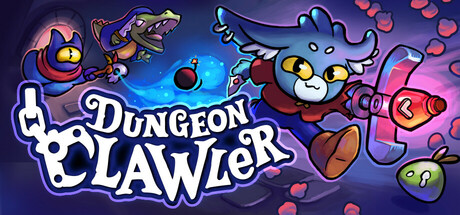
Dungeon Clawler
by Stray Fawn Studio·published by Stray Fawn Publishing
The Verdict
“A genuinely novel roguelike where physics-based claw grabs replace card draws — wildly addictive, slightly RNG-punishing, worth every cent at $14.50.”
Very Positive
This puts the game in the top 30% of all reviewed games on Steam.
Analysis by Ivan Z. Ganza · Methodology →
Quick Stats
2,157en
3,434 total (all languages)
1,986 analyzed
Current as of Apr 26, 2026
Nov 21, 2024
$14.99
Apr 23, 2026
3.7/day
Slowing
Metadata current as of Apr 26, 2026 · Source: Steam
Market Reach
≈100K
≈$1.5M
Based on 3,434 reviews (all languages)
Based on review count × genre/age/price-adjusted Boxleiter ratio. Gross revenue before Steam’s 30% cut, refunds, and regional pricing.
Design Strengths
- Physics-based claw machine mechanic is genuinely novel and creates authentic tension — the feel of a real claw machine translated into a roguelike context
- Highly addictive 'one more run' loop driven by satisfying grab-and-deliver dopamine hits that sustains 15–100+ hour playtimes
- Meaningfully distinct characters with different starting items and mechanics, not cosmetic variations, that recontextualize the entire item pool
- Layered material interaction system (water flooding, metal sinking, wood floating, magnets) creates emergent build variety well beyond simple stat math
- Turn-based pacing enables one-handed play, background media consumption, and interruption-friendly sessions — a genuine accessibility feature
- Charming hand-drawn art, expressive character designs, claymation cutscenes, and Bach-inspired soundtrack deliver polished presentation for an Early Access title
- Steam Deck verified with exceptional battery efficiency (~12% per 1.4 hours), making it a standout portable experience
- Active update cadence during Early Access — regular character, item, and mechanic additions delivered free have meaningfully grown content volume
Gameplay Friction
- RNG imbalance is the game's central tension: claw grab outcomes, item placement order (buffs landing after damage items become useless), and early run rewards can make strategy feel irrelevant — most-upvoted negative reviews (~79–73 helpful votes) specifically call this out
- Dominant meta strategies (spike shields, magnets, gold daggers, dodge/reflect) converge quickly, reducing perceived build diversity for players past their first 10–15 runs
- Difficulty scaling above Hard (Nightmare, Debt 10+) is broadly described as exponential and unfair — armor becomes useless, survivability gates to dodge/reflect only, and enemy damage values feel miscalibrated
- Meta-progression is shallow: Lucky Paws are character-locked until that character completes a run, only 1–2 items unlock per clear, and runs reset fully with minimal persistent reward — creates an artificial grind gate for new-character incentives
- Run length feels bloated at 60–90 minutes: mid-game encounters repeat once a build is established, and the 'ultra' speed setting is widely considered too slow to be truly fast
- Item and status effect descriptions are frequently inaccurate or misleading (e.g., 'on taking damage' triggers on health loss, not blocked damage) and enemy hidden mechanics are not surfaced in UI
- Slot machine spinning animation is a pacing time sink with no skip option
Audience Profile
Ideal Player
A casual-to-midcore roguelike fan who wants a relaxing, one-more-run loop they can play one-handed on a Steam Deck without committing to deep strategic mastery.
Casual Friendliness
high
Player Archetypes
Not For
Sentiment Trend
stable
Sentiment steady at ~89% positive over the last 180 days (264 reviews).
Genre Context
The physics-based claw machine mechanic carves a genuinely distinct niche within the crowded roguelike deckbuilder genre, sitting alongside pachinko-style and arcade-physics peers rather than pure card games. Content depth (20–40 hours before fatigue) trails the genre's longest-legs titles but exceeds most mid-tier entrants at this price point.
Promise Gap
Audience Match
The store description emphasizes strategic mastery ('use every trick up your sleeve,' 'game-changing synergies') and targets players seeking deep roguelike deckbuilding — but the actual audience skews toward casual, relaxation-first players who value the chill pacing, one-handed play, and portable format. The strategic depth framing may attract and then disappoint players expecting Slay the Spire-level determinism.
Player Wishlist
- More room layout variety and challenge rooms (negative/curse rooms as found in genre peers)
- Expanded enemy and boss roster — players specifically request at least 3 distinct final boss encounters
- Steam Workshop mod support to extend community content creation
- Rogue Legacy-style permanent progression layer as an optional carryover alternative to full resets
- Targetable enemy system (ability to aim claw at specific enemies) to add tactical agency
- Additional viable build archetypes beyond the current dominant strategies
Churn Triggers
- Within the first 2 hours: players who encounter the claw repeatedly grabbing multiple items then delivering zero or one usable item conclude the mechanic is 'pure luck' and exit — this is the primary refund window trigger
- Around runs 5–15: players who have solved the spike shield / magnet strategy and find subsequent characters funnel into the same build hit a repetitiveness wall and stop returning
- At first Hard+ difficulty attempt: players expecting a scaled version of the normal experience instead face exponential enemy damage they cannot mitigate without specific dodge/reflect items, causing frustration-quit
- At meta-progression wall: players who complete a first run and find the Lucky Paw unlock system requires repeating the same grind per-character before new options open lose motivation to continue
Developer Priorities
Reduce RNG determinism in claw grab outcomes — add subtle aim assist, weight distribution tuning, or a 'guaranteed minimum delivery' mechanic to ensure item agency feels skill-responsive
The RNG complaint is the single highest-upvoted negative signal (79 and 73 helpful votes on top reviews) and is the primary refund driver and early churn trigger — fixing perceived fairness unlocks the audience currently bouncing at 2 hours
Remove or make opt-in any home screen promotional content (ads) — treat the main menu as a paid-game-first space
A single review about homescreen ads collected 173 helpful votes — the highest helpful-vote count in the dataset — signaling disproportionate reputational risk for a low-effort fix
Expand item pool, room type variety, and boss roster as the top content priority — specifically add challenge/curse rooms and at least 2 additional final boss encounters
Repetitiveness (186 mentions) is the second-most-cited friction and the dominant mid-game churn trigger at runs 5–15; content breadth is the clearest path to sustaining the playerbase past first-character completion
Rewrite item and status effect descriptions to be mechanically precise — audit all conditional triggers ('on taking damage' vs 'on losing health') and surface hidden enemy mechanics in combat UI
Inaccurate descriptions erode trust in the game's systems and compound the RNG frustration — players feel cheated by rules they cannot verify, accelerating dropout
Rebalance high-difficulty scaling (Hard+/Debt 10+) to create meaningful challenge without forcing single-strategy solutions — specifically audit armor viability vs. dodge/reflect dominance
Difficulty imbalance (142 mentions) gates the game's longevity for the most dedicated players and prevents the prestige/debt system from functioning as intended long-term content
Competitive Context
Most frequent comparison point — reviewers describe Dungeon Clawler as 'Slay the Spire but with a claw machine instead of cards,' positioning it as a genre peer with similar debt/ascension progression structure
Compared for gambling-adjacent mechanics and endless mode design; one reviewer called it 'Crane Game Balatro' — frequently recommended together to the same audience
Closest physics-roguelike peer; reviewers note Dungeon Clawler has stronger character variety but fewer items, and suggest combat targeting inspiration from Peglin's targetable enemy system
Reviewers favorably blend both references — 'If Luck be a Landlord and Slay the Spire had a baby in a game center' — positioning Dungeon Clawler as the intersection of gambling-loop and dungeon-crawl roguelikes
Discovered through Brotato advertising by some players; one reviewer notes the gameplay loop is slightly less catching than Brotato but still strong
Identified by a reviewer as the nearest Steam peer mechanically to Dungeon Clawler
Referenced as a genre quality benchmark; one reviewer suggests Dungeon Clawler could reach 'the next Slay the Spire or Binding of Isaac' status with continued development
Used as a genre quality reference point when players evaluate Dungeon Clawler's roguelike execution standards
Referenced as part of reviewers' broader roguelike deckbuilder experience when evaluating Dungeon Clawler's build systems
Cited specifically for its permanent progression carryover system, which players wish Dungeon Clawler would adopt as an alternative to full run resets
Sentiment History
Sentiment over time
Playtime Sentiment
Sentiment by time invested
· 2,158 post-launch reviewsSentiment is consistent across all playtime ranges — players feel the same way whether they've played 2 hours or 200.
Competitive Benchmark
Compared to 696 similar games in the Action genre released in 2024.
Tags
Loading analytics...
Get more analyses like Dungeon Clawler
Free reports today. Pro launches soon. No spam.