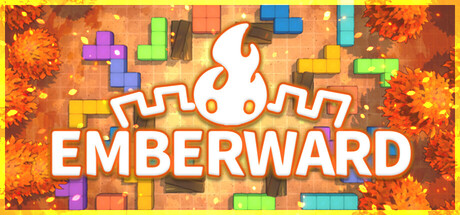
The Verdict
“Tetromino maze-building meets roguelite tower defense — the most addictive genre mashup in years, still growing in Early Access.”
Overwhelmingly Positive
Fewer than 5% of Steam games with 1,000+ reviews achieve this.
Analysis by Ivan Z. Ganza · Methodology →
Quick Stats
2,402en
3,655 total (all languages)
1,991 analyzed
Current as of Apr 26, 2026
Jun 25, 2024
$14.99
Apr 23, 2026
3.3/day
Slowing
Metadata current as of Apr 26, 2026 · Source: Steam
Market Reach
≈100K
≈$1.5M
Based on 3,655 reviews (all languages)
Based on review count × genre/age/price-adjusted Boxleiter ratio. Gross revenue before Steam’s 30% cut, refunds, and regional pricing.
Design Strengths
- Tetromino block placement system adds a spatial puzzle layer to maze construction that forces creative improvisation every run — universally called the genre's missing mechanic
- Three-genre fusion (tower defense + roguelite + deckbuilding) executes each pillar well enough to satisfy fans of all three simultaneously
- Addictive run loop with strong 'just one more run' pull — players regularly report multi-hour unplanned sessions
- Rune system layered onto block cards creates compound strategic decisions beyond standard tower placement
- Multiple heroes with distinct playstyles and flame modifiers provide genuine run-to-run identity variance
- Exceptional polish for a solo-developer Early Access title — near-zero bugs, clean UI, and satisfying sound design on tower interactions
- Daily and weekly challenge modes extend engagement for players who complete the main campaign
Gameplay Friction
- Severe tower balance disparity — poison, lightning, and a handful of other towers dominate to the point that many towers feel useless, narrowing viable builds significantly
- Tower upgrade depth is shallow: one upgrade tier with two path choices per tower feels thin compared to genre peers, reducing strategic investment in individual towers
- Hero balance is inconsistent — Builder and Enchantress are substantially easier, while Knight and Chunk offer little competitive reason to pick them
- Difficulty curve is inconsistent across the player base: Normal/Hard feel trivially easy once meta-progression unlocks stack, yet early-game can feel punishing to new players before mechanics click
- Late-game stages (Acts 3–4, Winter Zone, Bone Desert) introduce locked/frozen blocks, wind mechanics, and unkillable immune enemies that feel at odds with the core maze-building fantasy
- Talent/passive system is perceived as inconsequential — players report picking options arbitrarily because the choices don't meaningfully change run strategy
- Meta-progression talent tree maxes out quickly, after which difficulty is permanently trivialized rather than scaling with player mastery
Audience Profile
Ideal Player
A strategy-roguelike player who loved building mazes in Warcraft 3 custom TDs and wants a 'just one more run' game with genuine depth.
Casual Friendliness
medium
Player Archetypes
Not For
Sentiment Trend
declining
Sentiment dropped from 97% to 88% positive over the last 90 days (112 reviews vs 150 prior).
Genre Context
In a tower defense genre dominated by static placement games, Emberward stands out by making pre-battle maze construction a first-class mechanic — a spatial puzzle layer most TD games ignore entirely. The roguelite deckbuilder integration is executed above genre average, though tower balance depth and upgrade tree complexity currently lag behind the genre's most polished releases.
Promise Gap
Audience Match
The store description targets a broad 'strategic roguelite adventure' audience with emphasis on creativity and variety, but the actual player base skews heavily toward genre veterans (TD, roguelike, deckbuilder) who were already primed for this exact fusion. Casual players arriving for light creative fun may be surprised by the strategic depth required, while the WC3 TD nostalgia audience — one of the game's strongest advocates — is not addressed at all.
Player Wishlist
- More endless mode variety beyond Misty Graveyard — multiple maps with distinct endless rulesets
- Balatro-style run modifier system for post-completion replayability (difficulty toggles, challenge conditions, modifiers per run)
- Multi-tier tower upgrade trees (second and third upgrade branches per tower, similar to BTD6 depth)
- More maps, biomes, and world zones to extend campaign variety
- More tower types and enemy mechanics with distinct behavioral patterns
- Deeper meta-progression or achievement-gated unlocks to sustain long-term motivation after campaign completion
Churn Triggers
- Players who discover the dominant meta strategy (poison/lightning builds) within the first 5–15 hours often lose motivation once runs feel solved rather than discovered
- After completing all heroic campaigns and maxing the talent tree — typically 20–40 hours in — a subset of players hit a satisfaction ceiling and stop returning between updates
- New players encountering the early-game difficulty spike before core mechanics click (typically first 2–5 hours) report abandoning runs before the loop reveals its depth
- Players who exhausted launch content before major updates (10–20 hours of initial campaign) dropped off citing insufficient variety — concern diminishes in later review cohorts
Developer Priorities
Rebalance tower viability — reduce dominance of poison/lightning and raise the floor of underperforming towers so at least 80% of tower types form the core of a winning build
Tower balance is the single highest-frequency friction signal (118 mentions) and directly causes the meta to feel solved, which accelerates churn and generates negative reviews from engaged players
Add Balatro-style run modifier / challenge system for post-heroic endgame — stackable difficulty toggles, run conditions, or weekly cursed runs
The satisfaction ceiling hit after heroic completion is the primary churn trigger for the most engaged players; this group drives word-of-mouth and long-term review velocity
Redesign or replace the talent/passive system to create meaningful run-shaping decisions rather than incremental stat bumps
78 mentions describe talents as inconsequential; a trivially-maxed meta-progression system removes one of the core roguelite hooks that sustains replayability
Audit late-game stage design (Acts 3–4) to ensure locked-block, wind, and enemy immunity mechanics extend rather than contradict the core maze-building fantasy
24 mentions describe late stages as feeling 'designed by a different team'; negative reviews from high-playtime players who complete the game and leave disappointed carry outsized weight
Improve Steam Deck native controller UX — specifically block placement and selection flow — to earn the 'Great on Deck' badge
Steam Deck is flagged as 'Playable' not 'Verified'; awkward placement controls on handheld represent a conversion and retention gap for a game naturally suited to portable sessions
Competitive Context
Most-cited reference — reviewers shorthand Emberward as 'Slay the Spire meets tower defense.' Critics note Emberward currently lacks StS's depth of relic and card variety, while fans argue the maze mechanic more than compensates.
Cited as the modern tower defense benchmark. Reviewers claim Emberward matches or beats BTD6 in fun and replayability, but acknowledge BTD6's tower upgrade depth and balance are superior.
Deep nostalgic anchor for a large reviewer segment. Emberward is repeatedly credited with recreating the maze-building joy of WC3 custom maps (Wintermaul, Line TD, Gem TD) — often called the best TD since that era.
Referenced as a roguelike design benchmark; Emberward's escalating difficulty modifiers are explicitly compared to Hades' heat/infernal shards system.
Cited not as a competitor but as a design model for the endgame challenge/modifier system players want Emberward to adopt post-heroic completion.
Multiple reviewers rank Emberward alongside or above Kingdom Rush as one of the best tower defense games ever made.
Compared for meta-progression and roguelike deckbuilder structure; one reviewer suggests locking more content behind achievements as Monster Train does to sustain long-term motivation.
High-playtime reviewers cite Defense Grid as their prior favorite tower defense, stating Emberward is the best they've played since.
Sentiment History
Sentiment over time
Playtime Sentiment
Sentiment by time invested
· 2,403 post-launch reviewsSentiment is consistent across all playtime ranges — players feel the same way whether they've played 2 hours or 200.
Competitive Benchmark
Compared to 417 similar games in the Strategy genre released in 2024.
Tags
Loading analytics...
Get more analyses like Emberward
Free reports today. Pro launches soon. No spam.