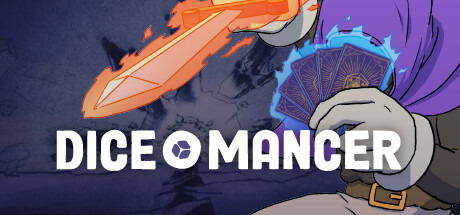
The Verdict
“A wildly inventive deckbuilder where you cheat reality with dice — gorgeous, addictive, and over too soon.”
Overwhelmingly Positive
Fewer than 5% of Steam games with 1,000+ reviews achieve this.
Analysis by Ivan Z. Ganza · Methodology →
Quick Stats
1,549en
5,482 total (all languages)
1,543 analyzed
Current as of Apr 23, 2026
Oct 9, 2024
$11.99
Apr 23, 2026
2.4/day
Slowing
Metadata current as of May 3, 2026 · Source: Steam
Market Reach
≈160K
≈$2.4M
Based on 5,482 reviews (all languages)
Based on review count × genre/age/price-adjusted Boxleiter ratio. Gross revenue before Steam’s 30% cut, refunds, and regional pricing.
Design Strengths
- The One Dice mechanic — modifying any visible number (enemy HP, card costs, mana, shop prices, ascension level) — is a genuinely novel design that creates emergent power-fantasy without feeling arbitrary
- Six mechanically distinct classes each demand different deckbuilding strategies and dice exploitation approaches, offering genuine variety across playthroughs
- Hand-drawn storybook art with bespoke per-card and per-enemy animations gives the game a visual identity that screenshots cannot convey
- First-person perspective during combat makes card hand animations and enemy attacks unusually immersive for the genre
- MTG-inspired dual-color mana system creates meaningful deck construction decisions and clear class archetypes
- Accessibility-first colorblind implementation with per-channel color sliders is a standout feature rarely seen in card games
- Light-hearted writing, absurdist humor, and touches like the fishing minigame give the world genuine personality
- Strong 'one more run' loop — players consistently report losing track of time within the first session
Gameplay Friction
- The One Dice mechanic creates a binary difficulty problem: using it makes encounters trivial, not using it feels like an arbitrary self-imposed handicap — no middle-ground tuning exists
- Ascension difficulty is per-class, requiring 20 nearly-identical runs per class to unlock higher tiers; players cannot demonstrate competence globally to skip early levels
- Many of the ~500 cards lack meaningful impact — common and uncommon cards routinely carry runs to the final boss, undermining deck curation decisions
- Some classes (notably the red class) have narrow viable build paths that make back-to-back runs feel samey within that class
- UI complexity at high card counts — keyword density (2-5 keywords per common card), buff/debuff tracking, and combat state readability are harder to parse than genre benchmarks
- Only two final bosses reported; enemy pool is small enough that encounters feel predetermined rather than reactive by mid-game
Audience Profile
Ideal Player
A Slay the Spire veteran hungry for a fresh mechanical hook who wants to feel genuinely clever rather than just optimized.
Casual Friendliness
medium
Player Archetypes
Not For
Sentiment Trend
stable
Sentiment steady at ~90% positive over the last 180 days (131 reviews).
Genre Context
Roguelike deckbuilders are a saturated genre with Slay the Spire setting the baseline for mechanical depth, enemy variety, and ascension longevity — Diceomancer clears the bar for mechanical innovation and visual identity but sits below the genre ceiling on endgame content volume and long-term replayability. Its strongest differentiator (modifying any visible number) is genuinely novel for the genre, but its content lifespan of 15-40 hours places it in the mid-tier of a genre where top titles sustain 100-500+ hours.
Promise Gap
Audience Match
The store page targets casual genre browsers with a light adventure framing ('you just wanted to go fishing'), but the actual audience skewing to the game are dedicated Slay the Spire veterans seeking mechanical depth — the page under-signals how complex and system-heavy the game actually is, likely causing some early dropout from players who expected something more approachable.
Player Wishlist
- Global ascension unlock system so difficulty level persists across all classes once demonstrated
- An endless mode or high-stakes optional boss (Heart-equivalent) to provide a long-term ceiling goal
- DLC with new classes, cards, relics, or world areas — multiple players explicitly commit to immediate purchase
- Mod support / workshop tools to extend content lifespan beyond the base game
- Expanded enemy and boss pool to reduce encounter repetition across the run structure
- Additional music tracks or a longer soundtrack loop to reduce audio repetition over extended sessions
Churn Triggers
- Within the first 1-2 hours, players overwhelmed by 2-5 keywords per common card and no gentle ramp in complexity drop before the loop clicks
- Around hours 15-40, players who have maxed the skill tree and won with all six classes hit a hard content ceiling with no new goals remaining
- Upon discovering that ascension progress does not carry globally, experienced players starting a new class face 20 easy runs before reaching challenge — many quit the class or the game at this moment
- Save data wipe bug (reported November 2025) causes immediate departure even among highly invested players with 80+ hours
Developer Priorities
Implement global ascension unlocks so difficulty tier persists across all classes once earned on any class
The per-class ascension grind is the single most cited structural complaint (89 mentions) and directly causes churn at the moment players want to explore new classes — fixing it costs no new content and immediately improves retention for engaged players
Audit and rebalance the One Dice mechanic to introduce meaningful resource constraints or graduated power (e.g., limited uses per combat that scale with ascension level)
198 mentions — the top negative signal. The binary 'trivial vs. self-imposed handicap' problem is the primary reason engaged players disengage mid-campaign; fixing it also makes ascension levels feel genuinely harder rather than cosmetically harder
Investigate and patch the save data wipe bug and add cloud-backup or local save redundancy
Even rare save wipes are catastrophic trust destroyers — a single negative review citing 80-hour loss is disproportionately harmful to conversions; this is a fixable stability issue with outsized reputational impact
Add native Steam Deck / controller support with adaptive UI scaling for card text and layout
42 mentions with outsized prominence among the game's natural audience (deckbuilder fans skew heavily Deck); Steam marks it 'Playable' but reviews describe it as effectively unplayable — resolving this gap unlocks a natural distribution channel
Release a content update or DLC adding enemies, bosses, and an optional high-difficulty final challenge (Heart-equivalent)
Content ceiling at 15-40 hours is the dominant replayability complaint (142 mentions); players are explicitly willing to pay for DLC, goodwill is high, and adding a long-term goal would re-engage the 282 high-playtime players who already exhausted content
Competitive Context
321 mentions — the dominant benchmark. Reviewers with 200-3000+ StS hours consistently rank Diceomancer as a peer or improvement in innovation and art, while acknowledging StS has a deeper mod ecosystem and longer-tail endgame.
Mentioned alongside StS as the 2024 roguelike peer set; some reviewers explicitly rank Diceomancer above Balatro as their preferred 2024 roguelike, citing shared combo-breaking philosophy.
Comparable quality benchmark; reviewers note Diceomancer is less replayable long-term than Monster Train but comparable in per-session quality.
Players who loved Inscryption's rule-breaking mechanics find the same satisfaction in Diceomancer's dice system; positioned as a spiritual sibling in the 'break your own game' subgenre.
Referenced specifically for map/overworld structure; Diceomancer described as a 'FTL + Slay the Spire' hybrid with its own identity.
Named as a direct dice-based deckbuilder predecessor; players who have played both consistently rank Diceomancer higher in depth and execution.
Mentioned as having more developed story and character work; Diceomancer's world is seen as intriguing but less narratively fleshed out.
Sentiment History
Sentiment over time
Playtime Sentiment
Sentiment by time invested
· 1,548 post-launch reviewsPlayers who invest more time rate this game significantly higher (+17pts) — a strong signal of a slow-burn experience that rewards patience.
Competitive Benchmark
Compared to 447 similar games in the Strategy genre released in 2024.
Tags
Loading analytics...
Get more analyses like DICEOMANCER
Free reports today. Pro launches soon. No spam.