The Verdict
“A 2014 roguelite deckbuilder where coins are your currency, weapon, and health — ingenious tension, brutal learning curve, zero hand-holding.”
Very Positive
This puts the game in the top 30% of all reviewed games on Steam.
Analysis by Ivan Z. Ganza · Methodology →
Quick Stats
455en
607 total (all languages)
455 analyzed
Current as of Apr 25, 2026
Oct 28, 2014
$9.99
Apr 23, 2026
0.1/day
Slowing
Metadata current as of Apr 25, 2026 · Source: Steam
Market Reach
≈22,000
≈$240.0K
Based on 607 reviews (all languages)
Based on review count × genre/age/price-adjusted Boxleiter ratio. Gross revenue before Steam’s 30% cut, refunds, and regional pricing.
Design Strengths
- Coins as unified resource — every coin simultaneously functions as currency, attack, defense, and deck composition, creating a genuinely novel tension not replicated elsewhere in the genre
- 19 unlockable character classes with meaningfully distinct playstyles that change core strategy, not just stat loadouts
- Short run length (20–30 min) supports pick-up-and-play without sacrificing depth, enabling 'one more run' loops across 200+ hours for engaged players
- Deceptively deep strategic layer — coin synergies and character-specific builds reward mastery far beyond the simple premise
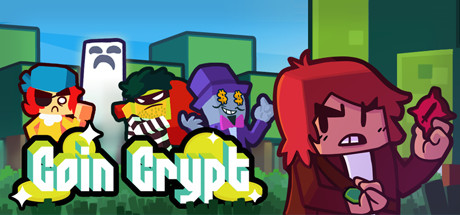
- Charming, readable pixel/voxel art style that communicates tone effectively without visual clutter
- Real-time combat creates genuine frantic tension that fans describe as a defining feature rather than a flaw
- Procedurally generated levels combined with 200+ discoverable coins ensure no two runs feel identical for invested players
Gameplay Friction
- No tutorial or help screen — icons, the god-tribute system, combat timing, and coin effects are never explained, forcing pure trial-and-error from the first run
- RNG-weighted outcome swings are severe enough that players report taking 26 damage (vs a 10 HP cap) on stage 4 within one second, making losses feel arbitrary rather than instructive
- Real-time combat timer actively punishes deliberate play, pushing players toward a single fast-repeatable strategy instead of in-the-moment decision-making
- Unlocking more characters paradoxically dilutes coin drop pools, making late-unlock runs feel worse than early ones
- Significant class balance disparity — Wizard flagged as trivially overpowered with vampiric coin stacking, while several classes feel unviable by comparison
- Many coins feel too similar in effect (e.g., 'Hit for 2' vs 'Hit for 4'), reducing perceived variety despite the large roster
- Soundtrack variety is insufficient for extended play — music becomes repetitive and grating across longer sessions
Audience Profile
Ideal Player
A patient roguelite fan who enjoys mastering dense resource-management systems through self-directed experimentation and repeated runs.
Casual Friendliness
low
Player Archetypes
Not For
Sentiment Trend
stable
Insufficient recent review volume to determine trend.
Genre Context
Coin Crypt predates the 2017–2020 roguelite deckbuilder boom and offers a mechanically distinct take — real-time combat and a unified coin resource — that remains largely unreplicated even a decade later. By genre norms, its onboarding is significantly below standard; modern deckbuilders in the same space typically include interactive tutorials and clearer icon systems, making Coin Crypt's cold-start feel increasingly dated relative to player expectations.
Promise Gap
Audience Match
The store page targets a broad, casual-leaning audience with playful copy and a simple elevator pitch, but the actual playerbase skews toward patient systems-focused roguelite veterans who self-teach through failure. Casual players drawn in by the tone are among the most likely to churn within the first hour.
Player Wishlist
- Narrative layer — character backstories, brief dialogue with enemies, or lore context to give runs thematic stakes
- Passive ability system to add a second strategic axis alongside active coin use
- Endgame progression beyond the main mode and daily challenge — a meta-goal structure to sustain play past 10–15 hours
- More mechanically distinct coin effects beyond damage-number scaling
Churn Triggers
- First run abandonment: players who encounter no tutorial drop out immediately after failing to understand icons, the god system, or combat pacing — often within 1 hour
- Early frustration spike: players hit a difficulty wall in stage 3–4 where RNG-driven one-shot damage (26 dmg vs 10 HP cap) makes failure feel arbitrary rather than instructive, causing dropout around 2–3 hours
- Content plateau: players who complete the main mode report running out of meaningful goals around 10–15 hours, with only daily challenges remaining as incentive
- Loop fatigue: players who don't find synergy-building rewarding disengage after 1–3 runs when the singular coin mechanic doesn't broaden perceptibly
Developer Priorities
Add a tutorial or interactive help system explaining icons, the god-tribute mechanic, and combat timing before the first run
Lack of onboarding is the single most-cited friction point (55 mentions, high confidence) and the primary driver of first-hour churn — fixing this recovers the largest addressable audience segment
Rebalance RNG damage ceiling to prevent one-shot outcomes that exceed player max HP — cap or telegraph extreme damage events
Arbitrary one-shot deaths at stage 3–4 are the second-most-cited negative signal (40 mentions) and cause dropout in the 2–3 hour window, just after players have invested enough to feel the loss
Revert DLC character locks for players who previously unlocked those characters, or issue a clear public statement on entitlement policy
Retroactive DLC locking generated the most emotionally charged negative reviews and represents a trust issue that directly damages word-of-mouth even among fans
Redesign coin effect variety to include more mechanically distinct effects beyond damage-value scaling
Coin homogeneity (18 mentions) is the primary reason engaged players disengage after the initial novelty phase — more distinct effects extend the replayability arc
Add a post-main-mode progression hook — a meta-goal, challenge ladder, or unlockable endgame mode
Players report content exhaustion at 10–15 hours with only daily challenges remaining; a retention anchor here converts casual completers into long-term players
Competitive Context
Reviewers repeatedly frame Coin Crypt as 'Slay the Spire before Slay the Spire,' positioning it as a genre predecessor that arrived too early to capitalize on the deckbuilder boom; one reviewer found it faster-paced and more chaotic than expected from that comparison
Most common structural comparison point for procedural generation, permadeath, and incremental unlocking systems; some reviewers favor Coin Crypt on originality
One reviewer's formula 'Spelunky + The Binding of Isaac = Coin Crypt' captures the dungeon-crawl roguelike feel; used favorably to convey genre DNA
Grouped alongside Coin Crypt as a hidden-gem roguelike deckbuilder by a high-playtime reviewer; no direct preference stated
Noted as thematically adjacent — similar dungeon-crawl structure without the rhythm mechanic; used for genre orientation
Referenced to explain the coin-as-deck innovation; one reviewer familiar with Dominion initially found card-loss-on-cast counterintuitive but came to appreciate it
Sentiment History
Sentiment over time
Playtime Sentiment
Sentiment by time invested
· 391 post-launch reviewsPlayers who invest more time rate this game significantly higher (+15pts) — a strong signal of a slow-burn experience that rewards patience.
Competitive Benchmark
Compared to 115 similar games in the RPG genre released in 2014.
Tags
Loading analytics...
Get more analyses like Coin Crypt
Free reports today. Pro launches soon. No spam.