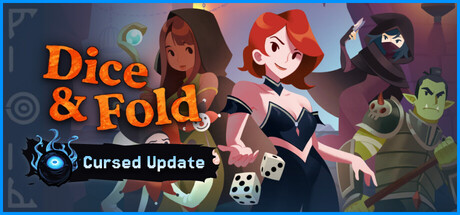
The Verdict
“Charming, addictive dice-rolling roguelite that shines for 10–15 hours before RNG frustration and unpatched bugs wear it down.”
Very Positive
This puts the game in the top 30% of all reviewed games on Steam.
Analysis by Ivan Z. Ganza · Methodology →
Quick Stats
1,419en
3,722 total (all languages)
1,389 analyzed
Current as of Apr 25, 2026
Jun 24, 2024
$5.19
Apr 23, 2026
1.9/day
Slowing
Metadata current as of May 4, 2026 · Source: Steam
Market Reach
≈120K
≈$1.5M
Based on 3,722 reviews (all languages)
Based on review count × genre/age/price-adjusted Boxleiter ratio. Gross revenue before Steam’s 30% cut, refunds, and regional pricing.
Design Strengths
- Core dice-placement mechanic is instantly intuitive and produces genuine 'one more run' pull, even at low playtime
- 35+ distinct hero classes each shift the required strategy enough to sustain experimentation across many hours
- Charming, cohesive art style with a cozy tavern-fantasy aesthetic that sets a relaxed, inviting tone
- Short 20–30 minute run length fits casual sessions and tolerates interruption well
- Companion and trinket combination layer adds build variety on top of the base dice mechanic
- ADHD mode and turn-based pacing make the game genuinely accessible as a background-play experience
- Free content expansions (including a Pirates addition) delivered post-launch without additional cost
Gameplay Friction
- Excessive RNG with near-zero luck mitigation — bad roll streaks can end runs with no meaningful player recourse
- Optimal play requires deliberately stalling fights to farm gold and set up abilities, actively punishing efficient play
- Item shop is dominated by gold/economy boosters rather than build-defining choices; a small handful of items (e.g., +1 die) are vastly more powerful than the rest
- Significant hero balance variance — some classes (Warlord) trivialize content while others (Craftsman) feel mathematically unwinnable; certain boss encounters have no valid dice solution
- Dice placement input is unreliable — dice frequently fail to register on first click, requiring repeated attempts across hundreds of placements per session
- Mechanics and keyword terminology are poorly explained — 'bosses' do not count as 'enemies,' 'silencing' means sleeping, colored dice odds are opaque — requiring external research
- Runs converge on similar win strategies (HP stacking, stall-for-gold) regardless of hero choice, reducing build diversity to surface appearance
Audience Profile
Ideal Player
A casual roguelite fan who wants short 30-minute runs with cute art, low mental overhead, and enough hero variety to keep things fresh across a weekend.
Casual Friendliness
high
Player Archetypes
Not For
Sentiment Trend
declining
Sentiment dropped from 93% to 73% positive over the last 90 days (62 reviews vs 45 prior).
Genre Context
Dice & Fold sits at the casual end of the roguelike deckbuilder spectrum — it trades the strategic layering and map-based agency typical of the genre's top performers for a more accessible, luck-forward experience. For this subgenre, its hero roster breadth is above average, but its lack of luck-mitigation mechanics and shallow item economy are significant gaps against genre norms where meaningful player agency over variance is considered table-stakes.
Promise Gap
Audience Match
The store description uses language ('strategic depth,' 'complex risk-reward system,' 'strategize the best use of dice') that positions the game toward players who want meaningful tactical decisions — but the actual audience skews heavily casual, drawn to the relaxing pace, cute art, and short sessions. Players arriving with strategy-game expectations are disproportionately represented in negative reviews.
Player Wishlist
- Branching map structure (Slay the Spire-style) to add route-choice agency between dungeon stages
- More enemy variety and additional map/dungeon themes to reduce visual and mechanical repetition
- Expanded higher-tier item pool with build-altering effects and better dice manipulation options
- Co-op multiplayer mode (comparable to One Deck Dungeon)
- More companion slots to enable broader synergy building
- Improved achievement design that rewards meaningful in-run decisions rather than grinding
Churn Triggers
- Within the first 1–3 runs, new players hit a difficulty wall from early-game RNG with no mitigation tools and a restricted hero roster, prompting near-immediate abandonment before the game opens up
- Around 10–15 hours, players recognize that all hero runs are converging on the same stall-for-gold strategy and disengage as the novelty of the roster exhausts itself
- Mid-run, a ghost-enemy bug or soft-lock prevents turn progression and forces a full restart, triggering immediate session abandonment and often a negative review
- After investing a strong run, encountering a boss whose damage output makes survival mathematically impossible regardless of dice combinations creates a perception of wasted effort and drives departure
Developer Priorities
Audit and fix the top three run-ending bugs: ghost enemies, soft-locks from input lag, and shop freezes — then communicate the fix publicly on Steam
Bug mentions appear in ~25–40% of negative reviews and are the single largest driver of the recent sentiment decline from 93% to 73%. Unaddressed bugs that persist for 2+ years actively damage trust at the moment of purchase discovery.
Introduce at least two luck-mitigation mechanics — e.g., a reroll token earned on bad-roll streaks, or a chooseable dice face once per floor — to give players agency over catastrophic RNG
RNG frustration is the most-cited criticism (248 mentions, high confidence) and the root cause of the 'almost plays itself' perception that turns warm players into negative reviewers. Even a small mitigation signal would shift sentiment.
Rebalance the item shop: reduce the proportion of gold/economy items, add more build-altering items that interact with dice faces or enemy mechanics, and cap gold items at ~25% of shop pool
Shop dominance by gold items (96 mentions) directly causes the stall-meta, which is the second largest friction cluster. Fixing item balance addresses forced stalling and run convergence simultaneously.
Overhaul dice placement input: implement snap-to-slot highlighting, accept both click and drag interchangeably, and add a single-click coin-collect-all button
112 mentions of input friction with average 8.4 hours playtime — this affects invested players who would otherwise stay. Misregistered dice placements erode the tactile pleasure of the core mechanic.
Rewrite tooltips and in-game keyword glossary: standardize terminology (boss vs. enemy, silence vs. sleep), show colored-dice probability tables, and expand the tutorial to cover the economy system
86 mentions of unclear mechanics with players needing external resources to understand core interactions. Poor onboarding accelerates churn in the critical first 1–3 runs and contributes to early negative reviews.
Competitive Context
Most frequently cited genre reference; reviewers are split between preferring Dice & Fold's execution vs. Dicey Dungeons' perceived depth and charm.
Used as the benchmark Dice & Fold fails to reach — reviewers specifically cite missing branching map progression, weaker UI clarity, and shallower strategic depth.
Players drawn from Balatro find Dice & Fold comparably engaging initially, but note it lacks Balatro's combo depth and RNG fairness.
Multiple reviewers recommend SpellRogue as a superior execution of the 'Slay the Spire with dice' concept, citing more meaningful ability combinations.
At least one reviewer explicitly recommends Slice & Dice over Dice & Fold, describing the latter as 'incredibly bland' by comparison.
An experienced player (41h) cites Diceomancer as doing the same dice concept with superior execution.
Cited as a comparable dice roguelite; some prefer it, others see Dice & Fold as a valid alternative. One reviewer wishes Dice & Fold had One Deck Dungeon's co-op mode.
Mentioned as a similar roguelite that fans of Dice & Fold would also enjoy; no strong directional preference expressed.
Cited as an S-tier deckbuilder for genre context; players who enjoyed Inscryption's first-half mechanics are recommended Dice & Fold.
Mentioned as a genre peer in the deck-based roguelike space without strong directional sentiment.
Cited as a comparable 'timeburner' roguelite; reviewers note both games become repetitive quickly once the novelty of their core loop fades.
Referenced for genre contrast — Dice & Fold's casual, low-stress pace set against Hades' intensity.
Sentiment History
Sentiment over time
Playtime Sentiment
Sentiment by time invested
· 1,391 post-launch reviewsPlayers who invest more time rate this game significantly higher (+15pts) — a strong signal of a slow-burn experience that rewards patience.
Competitive Benchmark
Compared to 326 similar games in the Strategy genre released in 2024.
Tags
Loading analytics...
Get more analyses like Dice & Fold
Free reports today. Pro launches soon. No spam.