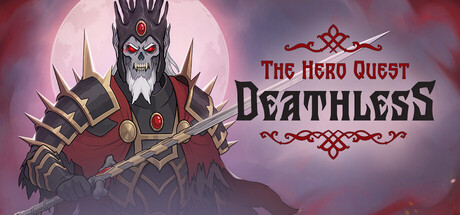
The Verdict
“Stunning Slavic-folklore deckbuilder with best-in-genre art — held back by shallow card design and punishing combat pacing.”
Very Positive
This puts the game in the top 30% of all reviewed games on Steam.
Analysis by Ivan Z. Ganza · Methodology →
Quick Stats
161en
977 total (all languages)
162 analyzed
Current as of Apr 7, 2026
Dec 12, 2024
$17.87
Apr 23, 2026
0.2/day
Slowing
Metadata current as of Mar 22, 2026 · Source: Steam
Market Reach
≈32,000
≈$580.0K
Based on 977 reviews (all languages)
Based on review count × genre/age/price-adjusted Boxleiter ratio. Gross revenue before Steam’s 30% cut, refunds, and regional pricing.
Design Strengths
- Best-in-genre 2D hand-drawn art and fluid animations that don't slow gameplay — reviewers with 60+ hours single it out as a standout across the entire deckbuilder genre
- Slavic folklore setting is a genuine differentiator: enemy bestiary lore, Bilibin-inspired visuals, and an epic CRPG-quality soundtrack create strong atmospheric cohesion
- Positioning mechanic adds puzzle-like tactical depth absent from most deckbuilders — enemies and the player both shift positions, rewarding spatial thinking
- Four heroes each ship with distinct starting decks, unique story quest chains, and their own boss encounters, providing structured variety across playthroughs
- Animations are praised as slick and satisfying without trapping players in unskippable cutscenes — rare balance in the genre
- Steam Deck verified with reliable save performance and solid compatibility on older hardware
Gameplay Friction
- Card pool depth is critically shallow — most reward cards are sidegrades to starting cards rather than strategy-defining tools, causing players to default to the gold reward ~90% of the time and leaving archetypes that don't mix into coherent builds
- Combat pacing is too slow even at 1.5x speed due to lengthy enemy animations and enemy armor turning fights into chip-damage attrition — full high-difficulty runs extend to 3+ hours with no skip option
- Significant character power imbalance: Vasilisa clears entire enemy squads on turn 1 while other heroes underperform, and the two later-added characters are notably less polished than the first two
- Higher difficulty scaling relies almost entirely on RNG card and relic availability rather than player skill — character level-up unlocks provide no stat increase, making progression feel cosmetic
- Positioning mechanic is underutilized across the roster — only the default character (Varvara) meaningfully engages the core tactical system, leaving it feeling like a feature for one out of four heroes
- Final boss encounters include auto-kill mechanics that punish the 3+ hours of run investment required to reach them, with some classes having no viable answers
- Difficulty archetype archetypes don't mix — synergy assembly collapses before mid-run, locking players into decks that are less than the sum of their parts
Audience Profile
Ideal Player
A patient deckbuilder fan who wants a visually gorgeous, thematically distinctive roguelite and doesn't mind grinding toward occasional synergistic payoffs.
Casual Friendliness
low
Player Archetypes
Not For
Sentiment Trend
stable
Insufficient recent review volume to determine trend.
Genre Context
The roguelike deckbuilder genre is crowded and benchmark-heavy, with player expectations set by titles offering 100+ card options and deep synergy systems. Deathless enters with class-leading presentation but below-genre-average card pool depth and build variety, placing it in an awkward position where its aesthetic draws players the genre established expects to retain through mechanical richness.
Promise Gap
Audience Match
The store page targets genre-agnostic fantasy players with promises of endless creativity and build variety, but the actual audience skews heavily toward established deckbuilder veterans who can appreciate the visual and thematic craft despite a shallow card pool. Casual or genre-new players attracted by the 'hundreds of combinations' promise are likely to feel misled.
Player Wishlist
- 3x or full animation-skip speed option for late-game high-difficulty runs
- Achievement system tied to difficulty progression to give harder modes a structured goal ladder
- Meaningful bonuses or modifiers for completing harder difficulty modes to incentivize replay beyond the default challenge
- Expanded card pool with archetype-defining cards that create distinct playstyles rather than numeric upgrades
Churn Triggers
- Players hit the mid-run card reward screen 3–5 times, realize cards are sidegrades, and pick gold every time — the perceived pointlessness of deck-building triggers dropout before run completion
- After completing 2–3 characters, content plateau hits: the third hero feels repetitive with no new mechanical hooks, causing long-term players to disengage around the 50–60h mark
- First encounter with an unfair final boss auto-kill mechanic after a 3+ hour run — players uninstall immediately at this moment of wasted investment
- New players on Normal difficulty encounter a wall of slow chip-damage combat with no speed option, losing interest before discovering the game's strategic depth
Developer Priorities
Add a 3x speed multiplier and full animation-skip option for combat
Combat pacing is the single most-upvoted complaint (30 helpful votes on top review), mentioned in 15 reviews; it directly causes dropout on high-difficulty runs and compounds every other friction point by extending run length to 3+ hours
Redesign card rewards to introduce archetype-defining mechanics rather than numeric sidegrades — at minimum, ensure 1 in 3 reward cards opens a new strategic axis
The shallow card pool (23 mentions, 10.8 avg helpful votes) undermines the core deckbuilding fantasy; players defaulting to gold 90% of the time means the game's primary loop feels inert, driving both dropout and negative reviews
Rebalance all four characters so each meaningfully engages the positioning mechanic, and address Vasilisa's turn-1 wipe capability and underperforming heroes
Character imbalance (20 mentions) and positioning underuse (5 mentions) together hollow out the game's two signature differentiators — if only one hero uses positioning and one hero trivializes combat, variety and tactical depth both collapse
Add meaningful rewards for higher difficulty completions — cosmetics, modifiers, or achievements — to give post-story players a progression goal
Higher difficulties are reported as unrewarding and RNG-gated; without structured incentives, players plateau at 50–60h and disengage rather than pushing to the true final boss
Redesign or telegraph the final boss auto-kill mechanic — add a visible indicator, a counter-play card, or remove it entirely
Losing a 3+ hour run to an opaque one-shot mechanic is a high-severity uninstall trigger; the emotional spike at that exact moment produces immediate negative reviews and the 'uninstall' response
Competitive Context
Primary competitive reference. Many reviewers call Deathless the best StS-like available, praising its superior visuals and positioning mechanics. A significant minority say it lacks StS's card synergy depth and replayability and doesn't justify a higher price — some explicitly recommend buying StS instead.
Deathless is praised for borrowing Roguebook's positioning ideas while layering them onto a stronger deckbuilding core, and reviewers consider the hybrid superior to Roguebook alone.
Grouped as a genre peer; one reviewer specifically notes Deathless's combat speed is dramatically slower than Monster Train's, framing it as a 'snooze' by comparison.
Reviewers compare Deathless unfavorably to Across the Obelisk on strategic depth and replayability, arguing Deathless's card pool cannot match ATO's build variety.
Identified as the closest mechanical competitor; one reviewer states Knock on the Coffin Lid organizes its plot, world, and gameplay more coherently than Deathless.
Cited as the benchmark for Slavic fantasy narrative depth; reviewers hoped Deathless would match its storytelling quality but found it fell short, though the visual presentation was praised.
Reviewer credits Deathless with better core mechanics than most genre entries but notes it lacks the creative uniqueness of Night of the Full Moon.
Cited as a thematic and mechanical inspiration, particularly for corpse and positional combat mechanics.
Named as part of the broader roguelike deckbuilder competitive set without specific valence comparison.
Mentioned alongside other deckbuilders as part of the competitive genre landscape.
Mentioned in the context of StS-alikes; Deathless is positioned as the standout among imitators in that group.
Sentiment History
Sentiment over time
Playtime Sentiment
Sentiment by time invested
· 128 post-launch reviewsSentiment is consistent across all playtime ranges — players feel the same way whether they've played 2 hours or 200.
Competitive Benchmark
Compared to 394 similar games in the Strategy genre released in 2024.
Tags
Loading analytics...
Get more analyses like Deathless. The Hero Quest
Free reports today. Pro launches soon. No spam.