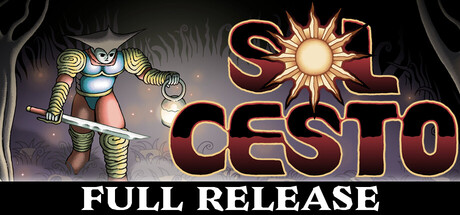
The Verdict
“Jaw-dropping art and a clever push-your-luck loop — but thin content, unbalanced RNG, and a rocky 1.0 launch undercut a genuinely special game.”
Very Positive
This puts the game in the top 30% of all reviewed games on Steam.
Analysis by Ivan Z. Ganza · Methodology →
Quick Stats
1,470en
3,490 total (all languages)
1,444 analyzed
Current as of Apr 23, 2026
Apr 10, 2026
$9.37
Apr 23, 2026
5/day
Slowing
Metadata current as of Apr 23, 2026 · Source: Steam
Market Reach
≈99,000
≈$930.0K
Based on 3,490 reviews (all languages)
Based on review count × genre/age/price-adjusted Boxleiter ratio. Gross revenue before Steam’s 30% cut, refunds, and regional pricing.
Design Strengths
- Genuinely singular hand-drawn art direction — reviewers cite Felix Colgrave, Monty Python, and medieval tapestries; no comparable aesthetic in the roguelike market
- Core push-your-luck mechanic (4x4 grid row selection + probability manipulation) creates a satisfying illusion of gambling that rewards real skill expression
- Atmospheric soundtrack perfectly complements the visual identity — described as grim, eerie, and hours-long-listenable
- Dense layer of hidden secrets, easter eggs, and item combos (flute assembly, merchant interactions, star clicking) that reward curious, exploratory play
- 7 distinct characters with genuinely different stat profiles and abilities, giving structural variety to runs
- Stone and metal teeth system meaningfully bends run probabilities and enables curse/combo builds — praised as an innovative twist on roguelike modifiers
- Procedural generation keeps dungeon layouts fresh across early-to-mid playtime
Gameplay Friction
- Early room RNG can produce statistically unbeatable layouts, forcing players to restart the first screen repeatedly before a run becomes viable
- Character balance is severely skewed: the Knight is dominant enough that playing any other character reads as a self-imposed handicap, gutting unlock motivation
- Meta-progression gold economy forces a punishing catch-22 — spend gold in-run to survive, or starve runs to fund slow permanent unlocks — with no satisfying middle path
- v1.0 UI overhaul replaced the praised scroll/paper aesthetic with high-contrast star-bordered boxes widely described as cheap, hard to read, and visually incongruous
- Slow, unskippable animations that felt charming early become a significant pacing drag in late-game runs where outcomes are already predictable
- Limited enemy variety, single boss across the first two biomes, and shallow event room design cause runs to feel structurally identical after 5–12 hours
Audience Profile
Ideal Player
A roguelike enthusiast who savors atmosphere, rewards secret-hunting, and tolerates variance in exchange for a uniquely beautiful 3–10 hour experience.
Casual Friendliness
medium
Player Archetypes
Not For
Sentiment Trend
declining
Sentiment dropped from 93% to 85% positive over the last 90 days (678 reviews vs 100 prior).
Genre Context
In an oversaturated roguelike market dominated by card-based and deckbuilder formats, Sol Cesto carves a distinct niche with its grid-based probability-manipulation loop and unmatched hand-drawn aesthetic — but its thin content volume (3–15 hours to completion) and shallow late-game build diversity fall short of genre leaders that sustain 50–100+ hour engagement curves.
Promise Gap
Audience Match
The store page's 'tactical and frantic' framing attracts players expecting fast-paced, deep strategic roguelikes — but the actual experience is slower, more atmospheric, and content-limited, better suited to aesthete-first players who value vibes and secret-hunting over mechanical depth.
Player Wishlist
- Mid-run save and resume — runs last 1–2+ hours with no save option, making the game inaccessible for interrupted sessions
- 2x or fast-forward animation speed toggle for late-game runs
- Expanded enemy roster and additional boss encounters across all biomes
- Richer event room variety comparable to genre benchmarks
- More distinct and exciting teeth to increase build diversity and run-to-run differentiation
Churn Triggers
- Within the first 5 rooms: unbeatable early layouts force repeated restarts before players have unlocked any tools to mitigate them, causing new players to abandon before the game opens up
- After 3–6 hours: once the optimal Knight build path is identified, players recognize that remaining unlocks offer only harder-to-win alternatives, collapsing motivation to continue
- At the v1.0 launch moment: Early Access veterans who lost 30+ hours of save progress to an unannounced wipe — compensated with only 1,500 gold — dropped the game rather than re-grind
- Around hours 10–15: the run structure feels 'solved' — predictable shop/event placement and a shallow decision tree make subsequent runs feel like execution rather than discovery
Developer Priorities
Revert or redesign the v1.0 star-border UI to restore the scroll/paper aesthetic — or ship a toggle between old and new UI
The UI complaint has the highest individual helpful-vote concentration in the dataset (190 and 128 votes on two reviews alone), signals mass discontent from the existing fanbase, and is directly eroding post-launch sentiment from players who were already converts
Rebalance the early-room RNG floor so that unbeatable first-screen layouts cannot appear without at least one player-actionable mitigation path
With 148 mentions and 8.1 avg helpful votes, unfair early RNG is the top design complaint and the primary churn trigger for new players who never reach the game's strengths — it directly damages first-impression reviews at the most critical post-launch window
Implement mid-run save and resume
Without it, a crash (a current live bug) destroys a full run's progress; it also structurally excludes players with limited session time and is cited in negative reviews as a reason not to recommend — compounding the crash severity issue
Redesign the meta-progression gold economy to decouple in-run spending from permanent unlock currency
121 mentions with consistent framing as 'lazy design' and 'artificial gating' — it undermines the unlock incentive loop and is the primary reason players feel the grind is punitive rather than rewarding, directly reducing long-term retention
Rebalance character viability — specifically close the Knight's stat advantage gap and buff or redesign magic builds
112 mentions confirm that Knight dominance collapses the 7-character roster into a single viable choice, making all unlock-driven progression feel pointless and eliminating a core replayability pillar the store page promises
Competitive Context
Most frequent reference point. Reviewers draw a direct parallel between Sol Cesto's probability-manipulation mechanics and Balatro's gambling loop. Some claim Sol Cesto is more fun; others note it lacks Balatro's strategic depth — better aesthetically, weaker on build complexity.
Used as a genre quality benchmark. Sol Cesto is seen as cheaper and more accessible but shallower — event room variety and strategic decision density are rated unfavorably against Slay the Spire 2 by post-launch reviewers.
Reviewers cite shared DNA in atmosphere, hidden secrets, and eccentric character — Sol Cesto's 'weirdo energy' and easter egg density earn favorable comparison to Inscryption's distinct personality.
Risk-aware row-selection combat is compared to Darkest Dungeon's positional decision-making favorably, but Sol Cesto's RNG is explicitly described as 'not fun in the way Darkest Dungeon's RNG is fun.'
Cited as a genre benchmark for roguelike production quality and run structure — used as a reference point without explicit positive or negative valence toward Sol Cesto.
Referenced specifically for hidden-detail and easter egg density — reviewer suggests Sol Cesto has comparable depth of secrets to Isaac.
Grouped alongside Balatro and Slay the Spire as part of the push-your-luck roguelike competitive set; no explicit valence claim.
Sentiment History
Sentiment over time
Playtime Sentiment
Sentiment by time invested
· 599 post-launch reviewsPlayers who invest more time rate this game significantly higher (+22pts) — a strong signal of a slow-burn experience that rewards patience.
Competitive Benchmark
Compared to 225 similar games in the Strategy genre released in 2026.
Tags
Loading analytics...
Get more analyses like Sol Cesto
Free reports today. Pro launches soon. No spam.