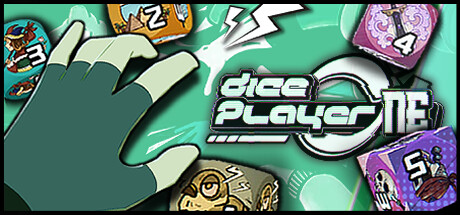
The Verdict
“Roguelike deckbuilder with dice instead of cards — deeper than it looks, rough around the edges, genuinely addictive.”
Very Positive
This puts the game in the top 30% of all reviewed games on Steam.
Analysis by Ivan Z. Ganza · Methodology →
Quick Stats
54en
522 total (all languages)
54 analyzed
Current as of Apr 7, 2026
Sep 12, 2024
$12.66
Apr 23, 2026
0.1/day
Slowing
Metadata current as of Mar 22, 2026 · Source: Steam
Market Reach
≈17,000
≈$220.0K
Based on 522 reviews (all languages)
Based on review count × genre/age/price-adjusted Boxleiter ratio. Gross revenue before Steam’s 30% cut, refunds, and regional pricing.
Design Strengths
- Highly addictive score-attack loop — combo chains produce a dopamine rush that sustains dozens of hours
- Exceptional build diversity with 400+ dice across 20 starter sets, each imposing a genuinely different playstyle
- 30+ scenarios extend structural replayability well beyond a typical indie roguelite
- Forging workshop (copy/delete abilities) adds a late-run decision layer that rewards planning
- Resonance system layers meaningful dice augmentation on top of the core pool-building
- Short run structure (12 levels + 3 bosses) makes sessions digestible without feeling shallow
Gameplay Friction
- Dice effect descriptions use undefined terminology ('choice', 'harmony', 'types') requiring constant glossary lookups, breaking decision-making flow
- Dice faces hide their effects until hovered — unlike card games where text is always visible — creating unnecessary friction during live play
- Several bosses use mechanics that reset run progress or multiply target scores beyond achievable thresholds, making some encounters feel mathematically unwinnable rather than challenging
- Boss selection has low mechanical impact — most bosses only affect score targets rather than altering strategy, reducing run differentiation
- Default animation speed makes runs significantly longer than necessary, requiring a manual settings change most new players won't know about
- High-speed (4x) animation with large card-summoning builds causes extreme screen flashing, forcing players to look away
Audience Profile
Ideal Player
A roguelike deckbuilder fan who wants hundreds of hours of build-crafting across 400+ dice and 30+ scenarios at a budget price.
Casual Friendliness
low
Player Archetypes
Not For
Sentiment Trend
stable
Insufficient recent review volume to determine trend.
Genre Context
Score-attack roguelite deckbuilders are a crowded post-Balatro genre where polish and onboarding clarity are table stakes. Dice Player One competes on content volume — 400+ dice, 20 starter sets, 30+ scenarios — which is above genre average for its price tier, but falls short of genre leaders in UI clarity and mechanical communication.
Promise Gap
Audience Match
The store page's 'simple yet infinite fun' framing targets casual players, but actual players are dedicated roguelite deckbuilder fans comfortable with complex systems and steep onboarding. The hip-hop aesthetic further narrows perceived audience in a way that doesn't reflect who is actually enjoying the game.
Player Wishlist
- Auto-save on mid-run quit so runs can be resumed from a checkpoint
- Controller/gamepad support
- Shorter 'podcast mode' run option for faster sessions
Churn Triggers
- Within the first 1–2 hours, new players encounter undefined game terms (e.g., 'choice', 'harmony') with no in-context explanation, causing frustration before synergies are discovered
- After 3–5 runs, players who haven't found a strong build synergy may hit a difficulty wall with certain boss mechanics and conclude the game is unwinnable by design
- Around the 4-hour mark, a subset of players report that initial novelty exhausts before deeper build complexity reveals itself, leading to early exit
Developer Priorities
Rewrite dice effect descriptions using consistent, defined terminology and add inline tooltip definitions for key game terms ('choice', 'harmony', 'types') without requiring glossary navigation.
8 reviews cite translation/clarity as the primary friction point; it hits players in the first 2 hours and is the leading churn trigger before any build depth is discovered.
Redesign boss difficulty scaling — cap score-target multipliers to achievable thresholds given normal run progression, and add mechanical variety so bosses alter strategy rather than just score.
7 reviews cite frustrating boss mechanics; the 'mathematically unwinnable' perception drives negative reviews from otherwise engaged players and is a mid-run drop point.
Set animation speed to 3x by default and add a photosensitivity warning or flash-reduction option for high-volume summon builds at 4x speed.
New players are losing entire sessions to slow pacing without knowing a fix exists; the flashing issue is a health/accessibility concern for power builds.
Invest in discoverability — update store page copy and screenshots to lead with the Balatro-adjacent pitch and call out the 400+ dice / 20 starter sets as headline features.
Review velocity is 0/month despite 85% positive sentiment; the game's hidden-gem status means strong word-of-mouth isn't converting to visibility.
Add mid-run auto-save so players can quit and resume without losing progress.
Run length combined with no save state creates a barrier for players with limited session windows, reducing the game's appeal to a broader audience.
Competitive Context
Referenced in 20+ reviews as the primary genre benchmark. A vocal subset claims Dice Player One exceeds Balatro in build diversity and boss variety; others consider Balatro more polished and better executed. Positions DPO as a content-richer but rougher alternative.
Used descriptively to identify the dice-rolling mechanic lineage — 'roguelike Yahtzee' is a common shorthand for the core loop.
Cited as a parallel Balatro-adjacent game with slot machine mechanics, used to place DPO within the broader score-attack roguelite subgenre.
Mentioned alongside other Balatro-likes (roulette variant) to establish competitive genre set.
Sentiment History
Sentiment over time
Playtime Sentiment
Sentiment by time invested
· 54 post-launch reviewsSentiment is consistent across all playtime ranges — players feel the same way whether they've played 2 hours or 200.
Competitive Benchmark
Compared to 461 similar games in the Strategy genre released in 2024.
Tags
Loading analytics...
Get more analyses like Dice Player One
Free reports today. Pro launches soon. No spam.