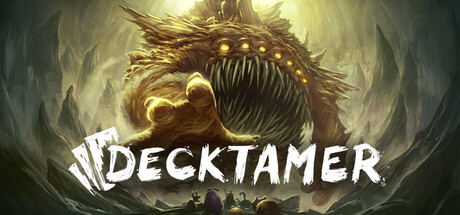
The Verdict
“A creature-collecting roguelike deckbuilder with stunning hand-drawn art, a brilliant ability-transfer system, and punishing-but-fair difficulty — if you can survive the learning cliff.”
Very Positive
This puts the game in the top 30% of all reviewed games on Steam.
Analysis by Ivan Z. Ganza · Methodology →
Quick Stats
763en
1,805 total (all languages)
758 analyzed
Current as of Apr 22, 2026
Oct 27, 2025
$15.99
Apr 23, 2026
2.7/day
Slowing
Metadata current as of May 1, 2026 · Source: Steam
Market Reach
≈53,000
≈$850.0K
Based on 1,805 reviews (all languages)
Based on review count × genre/age/price-adjusted Boxleiter ratio. Gross revenue before Steam’s 30% cut, refunds, and regional pricing.
Design Strengths
- Mutation/syringe system lets players extract abilities from any creature and transplant them to another, enabling builds with no genre equivalent and making every run feel structurally unique
- Hand-drawn creature art spans cute-to-eldritch with consistent visual identity, unanimously praised as exceptional across all review segments
- Taming-via-weakening mechanic creates genuine opportunity costs — kill for safety vs. weaken to recruit — that make every combat a multi-objective puzzle
- Permadeath on individual creature cards raises the emotional stakes of every decision without relying on a global run-fail state
- Atmospheric lore delivered through an explorer's journal and bestiary with real-life taxonomy references adds world-building depth rare in the genre
- Moody, oppressive soundtrack reinforces the Made-in-Abyss-inspired aesthetic and consistently earns standalone praise
- Undo/rewind feature meaningfully reduces the early learning cliff without compromising integrity for experienced players
- 111–150+ unique creatures with distinct ability sets provide a wide design space for combo discovery across runs
Gameplay Friction
- Run structure is uninterrupted back-to-back combat with no shops, rest sites, or non-combat nodes — removes the pacing relief veterans expect and makes 8-encounter runs mentally exhausting
- Difficulty gap between Easy and Normal is perceived as extreme, with achievement data suggesting fewer than half of players beat content beyond the easiest tier
- Higher-difficulty runs inadvertently reward stalling via armor/healing moves, causing individual fights to drag far beyond intended length
- RNG dependency at higher difficulties means runs can become statistically unwinnable if early tames lack synergy or key events (multi-injector, golden evolver) don't appear
- Creatures that accumulate many abilities become clunky to manage in the UI, with no hotkeys to reassign actions between turns
- Endless mode forces players to sit through ability-activation animations every turn, with no toggle to skip or suppress them after dozens of waves
Audience Profile
Ideal Player
A strategy-first player who has cleared Slay the Spire on high ascension, wants mechanical novelty over comfort, and treats creature permadeath as a design feature rather than a punishment
Casual Friendliness
low
Player Archetypes
Not For
Sentiment Trend
stable
Sentiment steady at ~88% positive over the last 180 days (758 reviews).
Genre Context
Roguelike deckbuilders have converged on map-node traversal with shops and rest sites as genre standard; Decktamer deliberately strips that structure to pure back-to-back combat, a bold deviation that sharpens tension but removes the pacing relief players expect. Its ability-transfer mutation system is a genuine mechanical innovation with no direct equivalent in the genre's current top tier.
Promise Gap
Audience Match
The store description's 'monster catching' and 'cute creature' framing attracts Pokémon-adjacent players who then discover the game demands they treat creatures as disposable tactical resources — the highest-upvoted review on Steam exists specifically to correct this expectation. The store correctly targets strategy players but undersells difficulty and oversells the 'collector' identity.
Player Wishlist
- Meta-progression system between runs — persistent unlocks, stat bonuses, or starting relics (à la Hades/Monster Train) to reward long-term play beyond difficulty modifiers
- Relic/item system layered onto runs to provide build-shaping options beyond creature abilities
- Non-combat nodes on the run map — shops, healing events, campfires — to add pacing variety and resource recovery
- Competitive or co-op multiplayer mode, cited as a potential growth-driver willing to launch as paid DLC
- Cosmetic card variants: shiny creature versions, alternate artworks, rarity tiers to reward collection
- Soundtrack as a purchasable standalone release
Churn Triggers
- Players expecting a creature-collector in the Pokémon mold drop out within the first 1–2 runs once they realize creatures are expendable resources, not companions — the mental model mismatch hits immediately
- New players on Normal difficulty frequently quit after hitting an impassable difficulty wall at level 3, having already cleared levels 1–2 with apparent ease
- Players without prior roguelike-deckbuilder fluency leave within 2 hours when repeated runs fail without a clear explanation of what decisions caused the loss
- Extended-session players (endless mode, late-game) disengage when individual battles stretch to 15+ minutes due to animation overhead and stalling incentives
Developer Priorities
Add non-combat nodes (shop, rest, event) to the run map
The most-upvoted critical review (64 helpful) directly cites relentless combat pacing as the reason for a negative review. Fixing run structure addresses the top friction point for new players AND experienced players worn down by back-to-back encounters.
Implement a meta-progression layer with meaningful between-run unlocks
Absence of persistent progression is the single largest churn trigger for players who 'complete' the content loop. Every major roguelike comparator (Hades, STS, Monster Train) offers this. Without it, motivated players have no long-term hook.
Stabilize crash and CPU performance issues, prioritizing the every-other-level crash bug
Crashes rendering progress impossible are the only issue that converts otherwise-satisfied players into negative reviewers. This is reputation risk, not just UX friction.
Add an animation-skip toggle for endless mode and hotkeys for per-turn action reassignment
High-engagement players (endless mode, wave 37+) are the community's loudest advocates. Making extended play miserable through animation bloat and manual micro-management is a loyalty tax on your most dedicated audience.
Rebalance Normal difficulty or add a graduated difficulty tier between Easy and Normal
Achievement data cited in reviews suggests fewer than half of players clear content above Easy. This is a funnel problem — players who never experience mid-game mechanics can't become word-of-mouth advocates.
Competitive Context
Most frequent reference point. Veterans with A20 clears praise Decktamer as a worthy successor with deeper creature mechanics; critics note Decktamer lacks STS's map variety (shops, campfires, chests) that provides pacing relief and resource recovery.
Cited as a difficulty benchmark — Decktamer described as harder than Monster Train 2. Players also request Decktamer adopt Monster Train's damage-preview UI feature.
Reviewers consistently describe Decktamer as their favorite deckbuilder since Inscryption, citing shared dark atmosphere and creature-card identity. Comparison is enthusiastically positive.
Referenced as the benchmark for roguelike meta-progression that Decktamer lacks. The comparison is used to articulate what's missing, not to praise the game.
Creature-collecting draw creates a dangerous expectation mismatch. Reviewers explicitly warn that Decktamer is far harder and treats creatures as expendable — the opposite of Pokémon's emotional loop.
Cited as the primary aesthetic and thematic inspiration across all review segments. Players praise Decktamer for authentically capturing the anime's dark, grotesque, mysterious atmosphere.
Recommended alongside Decktamer for fans of unforgiving roguelike deckbuilders with similar difficulty profiles.
Compared for punishing difficulty and required mindset shift — one reviewer notes switching from an STS mindset to a Darkest Dungeon mindset unlocked their enjoyment.
Sentiment History
Sentiment over time
Playtime Sentiment
Sentiment by time invested
· 760 post-launch reviewsSentiment is consistent across all playtime ranges — players feel the same way whether they've played 2 hours or 200.
Competitive Benchmark
Compared to 576 similar games in the Strategy genre released in 2025.
Tags
Loading analytics...
Get more analyses like Decktamer
Free reports today. Pro launches soon. No spam.