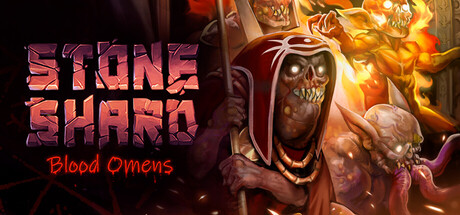
The Verdict
“Brutally rewarding turn-based dungeon crawler with world-class pixel art — but its save system will test your patience before the game clicks.”
Mostly Positive
Above the median for reviewed Steam games.
Analysis by Ivan Z. Ganza · Methodology →
Quick Stats
11,547en
34,008 total (all languages)
1,994 analyzed
Current as of May 26, 2026
Feb 6, 2020
$18.74
May 27, 2026
4.3/day
Slowing
Metadata current as of May 2, 2026 · Source: Steam
Market Reach
≈1.4M
≈$27.0M
Based on 34,008 reviews (all languages)
Based on review count × genre/age/price-adjusted Boxleiter ratio. Gross revenue before Steam’s 30% cut, refunds, and regional pricing.
Design Strengths
- Exceptional pixel art — universally called among the finest in the medium, with detailed sprites, smooth animations, and a cohesive dark-fantasy aesthetic that anchors the experience
- Tactical combat with body-part damage, bleeding, pain, sanity, and positioning mechanics that reward deliberate play — described as 'RPG chess' by veterans
- Enormous build diversity: 12 weapon trees, 4 magic styles, 7 utility trees, and 400+ equipment pieces with no class restrictions enable hundreds of hours of viable experimentation
- Addictive prepare→dungeon→return→upgrade loop that triggers 'one more run' across all playtime ranges, with players accumulating 500–2000+ hours
- Atmospheric world immersion — crows picking at corpses, food items visually shrinking as consumed, a phenomenal soundtrack — creates a sense of a living, gritty medieval world
- Survival mechanics (hunger, thirst, injuries, sanity, morale) reward strategic expedition planning and create meaningful resource tradeoffs for players who engage with them
Gameplay Friction
- Sleep-only save system causes losses of 30 minutes to 2+ hours on death; bedrolls consume significant inventory space and are expensive, making saves a resource tradeoff rather than a given
- No fast travel on explored routes forces screen-by-screen traversal; players report 20–40 minute walks to dungeons that must be fully repeated on death — widely used with Cheat Engine speed hacks as a workaround
- Inventory space is critically limited with no item rotation; survival supplies (bedroll, food, bandages, antivenom) crowd out loot, and most loot sells at a loss or creates debt
- Patch philosophy systematically nerfs player-beneficial mechanics (healing, magic builds, ranged accuracy) rather than buffing weaker options, creating a perception of adversarial balancing and invalidating long-term build investment
- Tutorial covers bare-minimum mechanics; status effects, opportunity attacks, morale/sanity interactions, and merchant repair are undiscovered for hours, making the early game the hardest phase by a wide margin
- Survival subsystems — particularly food morale variety and frequent sanity/hunger interruptions — are experienced as busywork that dominates playtime over actual combat by a significant minority of players
Audience Profile
Ideal Player
A patient masochist who spent 300 hours in Battle Brothers and wants a single-character version with deeper mechanical crunch and gothic pixel art.
Casual Friendliness
low
Player Archetypes
Not For
Sentiment Trend
stable
Sentiment steady at ~71% positive over the last 180 days (662 reviews).
Genre Context
In a genre where most hardcore roguelikes offer quicksave or permadeath-only, Stoneshard's sleep-only save sits in an awkward middle ground that neither camp finds natural. Its build depth — 12 weapon trees, 4 magic styles, 200+ abilities — is among the deepest in indie turn-based RPGs, but 6+ years of Early Access puts it well behind the completion timelines players expect of the genre.
Promise Gap
Audience Match
The store page targets players drawn to open-world freedom and character-building depth, but the actual experience skews hard toward masochistic roguelike enthusiasts who tolerate extreme friction as part of the appeal. Casual RPG fans and open-world explorers who respond to the store framing are the most likely refund sources.
Player Wishlist
- Character creator with custom appearance and backstory — promised as free DLC on the roadmap since at least 2022, absent after 6+ years
- In-game speed toggle (currently addressed only via Cheat Engine at 1.5–3x) to reduce traversal tedium without external tools
- Expanded main story, additional factions, and richer NPC dialogue — current story is ~10 hours with two empty faction regions visible on the map
- Cloud save support — no cloud saves in 2025 on a game that risks save corruption
- Auto-save at dungeon entrances or a difficulty slider that unlocks a casual quicksave mode
- Respec mechanic or skill reset option to support build experimentation without starting over
Churn Triggers
- First death after a 30+ minute dungeon run with no bedroll — new players discover the save system's consequences before understanding it, typically within the first 2–5 hours
- Early-game wall where stunlocks, 5v1 encounters, and random crits produce deaths that feel unlearnable rather than instructive, causing dropout before the mechanics 'click' (most evident under 10 hours playtime)
- Discovering the missing character creator at purchase or shortly after — several reviewers refunded immediately upon learning preset-only characters exist after 6+ years of Early Access
- Save file invalidation after major updates wipes long-running playthroughs, triggering departures from invested players who return after a patch
Developer Priorities
Introduce a flexible save option — either auto-save at dungeon entrances or an optional difficulty mode with quicksave — without removing the current hardcore sleep-only save for purists
The save system is the single most-cited friction point (312 mentions), the leading refund driver, and the primary reason for negative reviews across all playtime brackets. It is also the hardest conversion blocker for the audience the store page targets.
Add a fast-travel option on previously explored map routes, or meaningfully increase base movement speed without mods
168 mentions — the second-highest friction topic. Players are actively using Cheat Engine to work around this, which signals a clear unmet need. Traversal tedium compounds the save system problem because each death multiplies wasted walking time.
Deliver the character creator — ship the promised free DLC feature that has been on the roadmap since 2022
128 mentions with direct refund behavior attached. Broken promises on a high-visibility feature damage trust in the roadmap broadly, and the absence is cited as a dealbreaker by players who would otherwise stay.
Shift balance patch philosophy from nerfing player-beneficial mechanics to buffing underpowered options; publish balance rationale in patch notes
98 mentions from high-playtime players (avg 148h) — this demographic is the game's most valuable retention segment. Perception of adversarial balancing invalidates long-term build investment and drives departures from the core audience.
Fix the Jonna movement bug (character moves to wrong cell) — a known issue since 2020 that remains unfixed after 5+ years
A 5-year-old unfixed bug is a trust signal that damages developer credibility disproportionate to its raw mention count. In a game where misclicks can end a run, this is a safety issue for invested players.
Competitive Context
Most frequent comparison — described as 'single-character Battle Brothers' to convey the mercenary tactical RPG feel and grimdark difficulty. Some reviewers recommend it as a finished alternative.
Compared for punishing RNG-heavy difficulty and dungeon-crawling loop. One reviewer calls Stoneshard 'what Darkest Dungeon 2 should have been.'
Used as a difficulty benchmark. Positive comparisons praise Stoneshard's learnable challenge; negative comparisons argue its difficulty is RNG-dependent rather than skill-based, unlike Dark Souls.
Cited as a properly finished alternative with adjustable difficulty and actual balance. Reviewers frustrated by Stoneshard's save system and difficulty explicitly recommend Wartales instead.
Comparable deep roguelike. Some reviewers argue Caves of Qud does everything better; others find Stoneshard more accessible. Caves of Qud's save-anywhere system is directly suggested as a model for Stoneshard.
Compared for gritty medieval realism. Its Saviour Schnapps save system is cited as a better-designed consumable save model than Stoneshard's bedroll mechanic.
Cited as the closest comparable open-world survival RPG. Reviewers who searched for a Kenshi-like experience found Stoneshard satisfying, though note it is more restrictive in sandbox freedom.
Compared for tension, atmosphere, survival depth, and similar 'everything can go wrong' feeling. Update cadence also compared unfavorably.
At least one reviewer accumulated more hours in Stoneshard than BG3 and found it more engaging — used to signal Stoneshard's addictive depth.
Referenced in genre discussions as a permadeath/replayability comparison point, without strong directional preference.
Sentiment History
Sentiment over time
Playtime Sentiment
Sentiment by time invested
· 10,258 post-launch reviewsPlayers who invest more time rate this game significantly higher (+38pts) — a strong signal of a slow-burn experience that rewards patience.
Competitive Benchmark
Compared to 257 similar games in the Strategy genre released in 2020.
Tags
Loading analytics...
Get more analyses like Stoneshard
Free reports today. Pro launches soon. No spam.