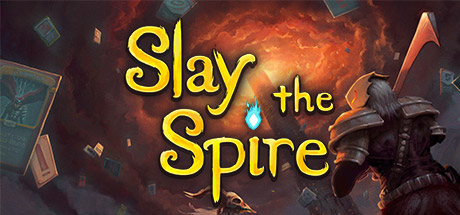
The Verdict
“The genre-defining roguelike deckbuilder — dangerously addictive, endlessly replayable, and worth hundreds of hours at any price.”
Overwhelmingly Positive
Fewer than 5% of Steam games with 1,000+ reviews achieve this.
Analysis by Ivan Z. Ganza · Methodology →
Quick Stats
90,143en
213,152 total (all languages)
1,992 analyzed
Current as of Apr 24, 2026
Jan 23, 2019
$6.24
Apr 20, 2026
28.5/day
Slowing
Metadata current as of May 1, 2026 · Source: Steam
Market Reach
≈4.2M
≈$96.0M
Based on 213,152 reviews (all languages)
Based on review count × genre/age/price-adjusted Boxleiter ratio. Gross revenue before Steam’s 30% cut, refunds, and regional pricing.
Design Strengths
- Core roguelike deckbuilding loop produces genuine 'one more run' compulsion — average reviewer playtime of 98+ hours for the addictiveness topic alone
- Card and relic synergy system rewards both experimentation and mastery, with players still discovering new interactions after 500+ hours
- Turn-based pacing removes real-time pressure, making the game accessible to players who typically dislike card games or roguelikes
- Four distinct characters each with unique card pools and 20 ascension levels provide structured long-term progression goals
- Difficulty is tuned so that losses feel instructive rather than arbitrary — virtually all runs are mathematically winnable, placing accountability on the player
- Steam Workshop mod ecosystem meaningfully extends content lifespan, with community mods like Downfall praised as high-quality additions
- Broad platform availability (PC, mobile, Switch, Steam Deck) lets players continue runs across contexts, reinforcing habit formation
Gameplay Friction
- RNG card offerings can produce runs that feel unwinnable from early acts — a consistent complaint from players with 5–64 hours, driving perception of 'luck simulator'
- Only 3 rotating final bosses and limited elite variety per act makes repeated runs feel stale for players past their first character clear
- Act 3 bosses and high-ascension (A15+) encounters create sharp difficulty spikes that disproportionately punish otherwise viable deck strategies
- The Watcher character has a significantly steeper mastery curve than the other three characters, which is not surfaced to new players before selection
- Replaying Act 1 in full after each death contributes to fatigue in players who have already mastered early-game encounters
Audience Profile
Ideal Player
A patient, strategy-minded player who enjoys puzzle-like optimization, tolerates losing, and craves the 'one more run' loop of discovering card-relic synergies.
Casual Friendliness
medium
Player Archetypes
Not For
Sentiment Trend
stable
Insufficient recent review volume to determine trend.
Genre Context
Slay the Spire is widely credited with codifying the roguelike deckbuilder as a genre, and by genre norms it sits at the ceiling for depth, balance, and replayability — most peers are explicitly measured against it. Where the genre norm accepts shallow runs of 30–60 minutes, StS sustains engagement across hundreds of hours through ascension systems and mod support that no direct contemporary has fully replicated.
Promise Gap
Audience Match
The store description targets existing fans of card games and roguelikes with genre-specific language ('dynamic deck building,' 'roguelike'), but a meaningful share of actual players are genre skeptics who were converted by the game's accessibility. The description misses an opportunity to speak to the broader 'I don't usually like these games' audience that represents a significant acquisition vector.
Player Wishlist
- More enemy variety — additional elite and boss types per act to reduce rotation fatigue across extended play
- More mystery events per run — fans want greater event density and variety within a single climb
- Additional playable characters beyond the current four
- Optional narrative or lore layer for players who want context for the world and its creatures
Churn Triggers
- Players with fewer than 5 hours who hit their first long losing streak drop off immediately, concluding the game is pure luck before skill patterns emerge
- Players around 15–40 hours who beat the game with their first character and find the ascension grind unappealing disengage before exploring other characters
- Players around 40–100 hours who complete all four characters lose forward momentum when no structured goal remains beyond self-imposed challenges
- Players across all levels who encounter a Steam Cloud save conflict that overwrites a completed run (e.g., first Watcher clear) report immediate disengagement or uninstall
Developer Priorities
Improve new-player onboarding to contextualize RNG — add tooltips or a brief tutorial run that demonstrates how card synergies reduce variance, reframing early losses as skill gaps rather than luck failures
RNG frustration is the single largest negative signal (112 mentions) and the primary driver of sub-5-hour churn; players who understand the skill layer become long-term fans
Fix Steam Cloud save conflicts — implement per-character save file validation and a clear conflict-resolution UI that shows timestamps and run state before overwriting
Save corruption after a milestone run (first Watcher clear, first Heart kill) is an acute trust-breaking event that drives immediate negative reviews and uninstalls disproportionate to its raw frequency
Surface the Watcher character's difficulty gap — add an in-game difficulty indicator per character at the selection screen to set accurate expectations before players commit a full run
Players who pick Watcher early and fail repeatedly blame the game rather than character complexity; a simple label prevents misattributed frustration
Expand boss and elite pool — add at least 1–2 additional rotating bosses per act and new elite encounter types to reduce repetition fatigue in the 40–100 hour cohort
Limited enemy variety (3 rotating final bosses) is the most cited specific content gap across both the dropout-moments topic (38 mentions) and the player wishlist topic (19 mentions)
Investigate and resolve vanilla-mode crash reports — determine whether the crash condition present in vanilla (reportedly resolved by mods) is a known engine issue and ship a first-party fix
Crashes that are fixed by community mods but not by the developer signal neglect and push players toward mod dependency as a workaround for a base-game problem
Competitive Context
Most-referenced title in the dataset. Players overwhelmingly treat StS2 as an evolution rather than a replacement, with many purchasing the original specifically to prepare for or alongside the sequel. A small subset notes StS1's greater polish and fairness versus StS2's early-access state.
Positioned as a peer roguelike deckbuilder. Most players find StS deeper or more addictive; a minority preferred Balatro's mechanics after clearing StS with the first three characters. Both games are frequently recommended together.
Cited as a quality genre peer rather than a competitor. Players with 300+ hours in StS sometimes prefer Monster Train for variety; both are recommended as complementary experiences in the deckbuilder genre.
Repeatedly cited as the spiritual itch StS scratches without the financial barrier of physical cards or the pay-to-win meta of live card games. Ex-MTG and Hearthstone players report StS replacing those games entirely.
Mentioned as another quality card-based roguelike; players note StS offers superior synergy scaling and game-breaking combo potential compared to Inscryption.
Referenced as a gateway roguelike that led players to StS. Players who found Hades compelling describe a similar quality and compulsion loop in StS.
Contrasted as an action roguelike versus StS's turn-based design. Players who prefer real-time action over deck-building tend to bounce off StS; fans of both genres enjoy both.
Sentiment History
Sentiment over time
Playtime Sentiment
Sentiment by time invested
· 10,446 post-launch reviewsPlayers who invest more time rate this game significantly higher (+17pts) — a strong signal of a slow-burn experience that rewards patience.
Competitive Benchmark
Compared to 186 similar games in the Strategy genre released in 2019.
Tags
Loading analytics...
Get more analyses like Slay the Spire
Free reports today. Pro launches soon. No spam.