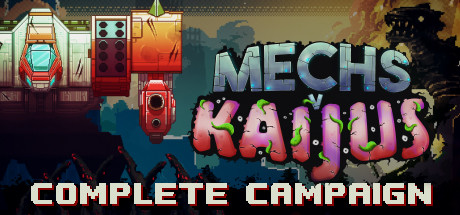
The Verdict
“Addictive mech-meets-tower-defense action undermined by brutal grinding, unpolished UI, and a developer who appears to have walked away.”
Very Positive
This puts the game in the top 30% of all reviewed games on Steam.
Analysis by Ivan Z. Ganza · Methodology →
Quick Stats
365en
534 total (all languages)
365 analyzed
Current as of Apr 26, 2026
Feb 17, 2022
$7.53
Apr 29, 2026
0.1/day
Slowing
Metadata current as of Apr 26, 2026 · Source: Steam
Market Reach
≈18,000
≈$170.0K
Based on 534 reviews (all languages)
Based on review count × genre/age/price-adjusted Boxleiter ratio. Gross revenue before Steam’s 30% cut, refunds, and regional pricing.
Design Strengths
- Active mech control layered on top of passive tower placement creates a genuinely distinct hybrid loop — players describe losing hours without noticing
- Pacific Rim-inspired mech vs. kaiju theme differentiates the game from zombie/fantasy tower defense saturation
- Polished pixel art with comic-book and retro-anime aesthetic that reviewers consistently describe as cohesive and fitting
- Soundtrack praised as exceptional, with Red Alert-era energy that reinforces the theme
- Branching research tree and multiple mech/tower upgrade paths support diverse build experimentation
- Sell-towers-without-penalty mechanic adds real tactical flexibility during waves
- Multiple difficulty modes and challenge stages extend the core campaign meaningfully
Gameplay Friction
- Progression is gated behind severe grinding — players must replay maps repeatedly not due to strategic failure but because required equipment is locked behind excessive resource farming
- Difficulty curve is erratic: missions swing from trivially easy to brutally impossible with no smooth ramp; even Easy mode is described as punishing by multiple reviewers
- Starting mech weapon is dramatically underpowered relative to the power fantasy promised — early sessions feel like fighting kaiju with a water pistol
- Research tree layout is disorganized, placing escalating upgrades (e.g., Shield MK1/2/3) at non-sequential positions, confusing build planning
- Late-game viable strategies narrow to a handful of towers/mechs, making most of the upgrade tree feel wasted
- No tutorial or onboarding — mechanics, controls, and strategic systems must be self-discovered or researched externally
Audience Profile
Ideal Player
A patient tower defense veteran who loves mech/kaiju aesthetics and doesn't mind replaying levels to unlock progression — and can forgive rough edges at $7.53.
Casual Friendliness
low
Player Archetypes
Not For
Sentiment Trend
stable
Insufficient recent review volume to determine trend.
Genre Context
In a tower defense genre dominated by static placement games, Mechs V Kaijus earns distinction through its active mech-shooting hybrid — a mechanic that remains rare and well-executed relative to genre norms. However, it falls below genre standards on onboarding, balance, and post-launch polish, areas where flagship TD titles invest heavily to retain players beyond the first few hours.
Promise Gap
Audience Match
The store page targets a broad audience with language like 'easy to understand' and MOBA comparisons, but actual players skew toward experienced tower defense fans who can tolerate rough onboarding and high difficulty. Casual players drawn in by the accessible framing frequently churn early.
Player Wishlist
- Game speed controls (2x/4x fast-forward) for grinding and replaying known maps
- Deeper mech customization — distinct weapon loadouts, specializations, and meaningful upgrade branches per mech
- Additional story chapters and missions beyond the current 'to be continued' endpoint
- More tower types to expand strategic variety in late game
Churn Triggers
- Within the first session, players hit an unexplained mechanic or system with zero tutorial context — many stop here and never return
- Around hours 4–6, players encounter their first hard difficulty wall and realize they must grind earlier maps for resources rather than progress — a significant dropout point among negative reviewers
- At the late-game 'surrounded' mission, invisible enemy sprites make the level effectively unplayable — players who reach this point post-review as abandoned
- After completing the campaign and seeing a 'to be continued' ending with no follow-up content delivered, players who expected a full arc feel misled
Developer Priorities
Rebalance research point rewards and early-game resource economy to reduce mandatory grinding — tie rewards to difficulty rather than flat map farming
The most-cited friction point (59 mentions, avg 12.4 helpful votes) and the top churn trigger at hours 4–6. Fixing this alone would convert the largest pool of negative reviewers.
Fix hitbox misalignment for enemies and UI buttons, resolve invisible enemy sprites on the 'surrounded' mission, and eliminate dead-mob hitbox persistence
The two highest helpful-vote reviews in the dataset (77 and 73 votes) both call out these bugs. They are the first thing potential buyers see and directly suppress purchase intent.
Build an interactive tutorial covering tower placement, mech controls, and research prioritization for the first 3 missions
Absence of onboarding is the primary early-session churn trigger — players quit before experiencing the addictive loop the positive reviews describe. It's also a store page promise ('easy to understand') that reviews flatly contradict.
Reorganize the research tree so upgrade tiers (MK1 → MK2 → MK3) flow sequentially, and rebalance late-game tower/mech viability so at least 60% of options remain relevant
Disorganized tech tree and narrow late-game meta reduce the payoff of the game's most-praised system (build variety), compounding frustration from the grind required to reach it.
Add game speed controls (2x/4x) and buff starting mech weapon damage to match the power fantasy in the first 30 minutes of play
Speed controls are the top wishlist item and directly reduce grind tedium without requiring economy restructuring. Starting weapon underperformance is the second churn trigger, killing the first impression before the addictive loop hooks players.
Competitive Context
Most frequent comparison — reviewers identify similar lane-defense structure but credit Mechs V Kaijus with greater depth via mech control and upgrade customization.
Cited as a static TD benchmark; reviewers note Mechs V Kaijus demands faster adaptation and active play, requiring adjustment for Defense Grid veterans.
Referenced as the slower-paced traditional TD standard; Mechs V Kaijus is positioned as the faster, more action-oriented alternative.
Reviewer explicitly cites Slay the Spire as having superior replayability and build variety compared to Mechs V Kaijus.
Mentioned alongside Slay the Spire as a game with stronger roguelike replayability that Mechs V Kaijus doesn't match.
One reviewer found Mechs V Kaijus similar to Marfusha but less well-executed, citing difficulty as unreasonable even on Easy.
Cited for comparable arcade-action tower defense ambition and resource-gathering mechanics.
Reviewers praise the C&C-inspired soundtrack and references, with the music specifically compared favorably to Red Alert.
Sentiment History
Sentiment over time
Playtime Sentiment
Sentiment by time invested
· 201 post-launch reviewsSentiment is consistent across all playtime ranges — players feel the same way whether they've played 2 hours or 200.
Competitive Benchmark
Compared to 486 similar games in the Action genre released in 2022.
Tags
Loading analytics...
Get more analyses like Mechs V Kaijus - Tower Defense
Free reports today. Pro launches soon. No spam.