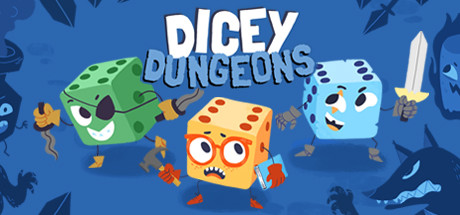
The Verdict
“A charming, banger-soundtracked dice roguelike — deceptively deep but brutally RNG-punishing in its later episodes.”
Very Positive
This puts the game in the top 30% of all reviewed games on Steam.
Analysis by Ivan Z. Ganza · Methodology →
Quick Stats
7,185en
11,553 total (all languages)
1,992 analyzed
Current as of Apr 27, 2026
Aug 13, 2019
$14.99
Apr 23, 2026
2.9/day
Slowing
Metadata current as of May 3, 2026 · Source: Steam
Market Reach
≈380K
≈$7.4M
Based on 11,553 reviews (all languages)
Based on review count × genre/age/price-adjusted Boxleiter ratio. Gross revenue before Steam’s 30% cut, refunds, and regional pricing.
Design Strengths
- Six characters with fundamentally distinct mechanics that make each feel like a different game — Thief steals enemy equipment, Robot plays push-your-luck blackjack, Inventor destroys gear to craft gadgets
- Combat resolves like puzzles: optimal dice allocation across equipment slots rewards careful planning within each fight
- Episode modifiers layer constraints and twists on top of base classes, extending variety across 36+ scenarios without inflating the core ruleset
- Short runs (~20–40 min) make failure non-punishing and sustain 'one more run' momentum across 100+ hours for dedicated players
- Equipment pool avoids card-dilution problems common in the genre — each character's item set is tight and purposeful
- Chipzel's chiptune/nu-jazz soundtrack is a genuine standout, with individual tracks compelling players to pause and listen
- Witty game-show framing and Lady Luck's personality give the world consistent, cohesive charm without tonal padding
- Relaxed Mode (25% enemy HP reduction) and mouse-only controls lower the entry barrier without removing challenge for those who want it
Gameplay Friction
- RNG can produce unwinnable states — players report losing runs on the very first enemy due to dice streaks, with no sufficient mitigation tools in later episodes
- Witch character is a significant balance outlier: her Elimination Round (Episode 4) is consistently cited as disproportionately hard, with many players reporting dozens of failed attempts before quitting
- Episode 4 difficulty spikes across all characters introduce disadvantages rather than power-ups alongside stronger enemies, creating a perception of artificial difficulty
- Lack of meta-progression means each run resets completely — no persistent unlocks, artifacts, or character growth to offset RNG variance
- Enemy and dungeon variety exhausts quickly; small enemy pool repeats noticeably within a few runs
- Dice assignment frequently forces equipment into one or two obvious slots, narrowing meaningful decisions per turn
- Unskippable cutscenes and animations extend per-run time without adding value after first viewing
Audience Profile
Ideal Player
A casual-to-mid-core roguelike fan who values charm, accessibility, and short sessions over deep meta-optimization.
Casual Friendliness
high
Player Archetypes
Not For
Sentiment Trend
stable
Sentiment steady at ~87% positive over the last 180 days (141 reviews).
Genre Context
In the dice/card roguelike genre, Dicey Dungeons stands out for accessibility and character-mechanical variety rather than build-depth optimization — it plays closer to a puzzle-episodic game than an infinite-replay roguelike. Compared to genre norms, it trades meta-progression and high strategic ceilings for tighter episode structure, broader casual reach, and an unusually high production value in art and audio.
Promise Gap
Audience Match
The store page pitches a lighthearted luck-defying adventure to a broad audience, but the game's hardest content requires sustained tolerance for RNG-driven failure — players who took the breezy framing at face value report the most friction. The description undersells strategic depth while overselling the sense of player control.
Player Wishlist
- Trinket or modifier system to add run-shaping variety beyond the current episode structure
- Infinite-replay mode that runs beyond the fixed 6-episode arc per character
- Keyboard hotkeys to reduce repetitive mouse-clicking strain during long sessions
- Ability to view current equipment and backpack contents during shop, upgrade, and treasure screens
- Expanded enemy pool to reduce repetition across extended play
- Optional meta-progression layer (e.g., passive unlocks after failed runs) for players who want it
Churn Triggers
- Players hit the Witch's Elimination Round (Episode 4) and abandon the game after multiple failed attempts — blocking access to the ending for players committed to full completion
- RNG frustration peaks around 8–15 hours when later episodes reveal that disadvantage modifiers compound dice variance rather than reward skill growth
- After all achievements are unlocked, players with no remaining goals quit due to absence of meta-progression or new run modifiers
- Some players disengage mid-game (~30 hours) when the small enemy pool's repetition sets in before they reach episode completion
Developer Priorities
Rebalance the Witch's Elimination Round (Episode 4) — reduce RNG variance or introduce a difficulty toggle specific to her kit
The Witch is the single most-cited specific character complaint (98 mentions) and is the primary churn wall blocking players from reaching the ending. Even players who leave positive reviews flag this as nearly deal-breaking.
Redesign Episode 4 difficulty scaling for all characters — reward player skill with power-ups alongside harder enemies rather than stacking pure disadvantages
112 mentions of difficulty spikes framed as 'artificial' — the spike isn't just hard, it reads as unfair, which damages trust in the design and drives negative reviews from players who otherwise loved the game.
Add optional meta-progression (e.g., passive bonuses or cosmetic unlocks earned after failed runs) as an opt-in mode
52 explicit mentions of missing meta-progression, concentrated among experienced roguelike players who disengage post-completion. A Hades-style opt-in layer would extend retention without compromising the purist experience.
Implement keyboard hotkeys for combat actions and allow equipment inspection during shop/upgrade/treasure screens
Cited in player wishlist signals and QoL complaints — mouse-only interaction creates repetitive strain across long sessions, and equipment blindness during key decision screens leads to suboptimal choices that feel unfair.
Add a skip/fast-forward option for repeated cutscenes and combat animations
Unskippable animations are a consistent secondary irritant across the review corpus, especially for players replaying episodes. Low implementation cost with measurable session-quality improvement.
Competitive Context
Most-referenced competitor. Dicey Dungeons praised as more charming and accessible; criticized for shallower build depth and lower skill-expression ceiling. Some reviewers prefer it; others call StS 'the gold standard' with Dicey Dungeons 'a strong silver.'
Repeatedly co-recommended as a 'casino-like roguelike' companion. Players who enjoy one are consistently directed to the other.
Mentioned alongside Slay the Spire as a deckbuilder with greater long-term staying power, but reviewers still recommend Dicey Dungeons to fans of the genre.
Referenced specifically for its between-run meta-progression — a feature Dicey Dungeons lacks. Players suggest a Hades-style mechanic would improve retention.
One reviewer cited it as a superior game in the dice roguelike genre and recommended it as an alternative for players specifically seeking dice-battler mechanics.
One player compared Dicey Dungeons unfavorably, describing Griftlands as more fun in the roguelike category.
Co-listed by multiple players as an all-time favorite alongside Dicey Dungeons, indicating comparable strategic turn-based appeal.
Cited as a deeper roguelike but Dicey Dungeons praised as lighter yet excellent in its own right.
Sentiment History
Sentiment over time
Playtime Sentiment
Sentiment by time invested
· 7,179 post-launch reviewsPlayers who invest more time rate this game significantly higher (+23pts) — a strong signal of a slow-burn experience that rewards patience.
Competitive Benchmark
Compared to 226 similar games in the Strategy genre released in 2019.
Tags
Loading analytics...
Get more analyses like Dicey Dungeons
Free reports today. Pro launches soon. No spam.