The Verdict
“A chaotic, deck-as-HP roguelike that earns its $3.49 price tag despite rough balance and unpolished edges.”
Very Positive
This puts the game in the top 30% of all reviewed games on Steam.
Analysis by Ivan Z. Ganza · Methodology →
Quick Stats
267en
720 total (all languages)
266 analyzed
Current as of Apr 26, 2026
May 24, 2019
$14.99
Apr 23, 2026
0.1/day
Slowing
Metadata current as of Apr 26, 2026 · Source: Steam
Market Reach
≈21,000
≈$74.0K
Based on 720 reviews (all languages)
Based on review count × genre/age/price-adjusted Boxleiter ratio. Gross revenue before Steam’s 30% cut, refunds, and regional pricing.
Design Strengths
- Deck-as-HP mechanic: damage removes cards from your draw pile, healing returns them — fundamentally reframes every deckbuilding decision and creates constant tension
- The Grim Reaper pursuer forces pacing decisions and can be strategically leveraged, adding a distinctive urgency layer absent in most genre peers
- 230+ card pool with discard, curse, AOE, recycle, and transformation archetypes enables genuinely varied builds across multiple characters
- Progressive difficulty unlock system (harder modes after each win) extends engagement for players who would otherwise exhaust the content quickly
- Fast, accessible run loop suits short-session play without sacrificing depth for experienced players
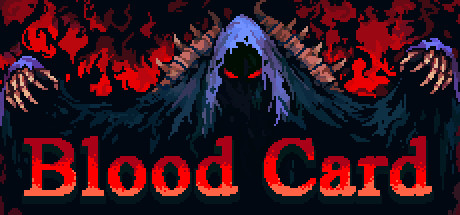
- Grimdark pixel art and macabre gothic atmosphere deliver a distinctive visual identity that stands apart from genre competitors
- Card synergy depth — discard triggers, block accumulation, card transformations — rewards strategic thinking beyond surface-level play
Gameplay Friction
- Severe card balance failures: dodge-stacking to 100% invincibility is possible with a common card, certain zero-cost transformations and equipment trivialize entire runs within 2 hours
- Only 2–3 viable high-level archetypes perceived by experienced players despite large card pool, limiting late-game strategic diversity
- Confusing card wording, poor translations, and missing keyword glossary leave players guessing at effect interactions — no tutorial or rules reference exists
- Character class imbalance: Rogue is significantly easier than Blood Witch, whose energy mechanic (discard cards for 1 energy) makes early game dramatically harder
- Events are repetitive after first playthrough with minimal meaningful choices, breaking immersion and adding little strategic value on subsequent runs
- Death/Grim Reaper mechanic punishes defensive and attrition builds by imposing an implicit turn limit, narrowing viable strategies toward aggression
- Asset visual inconsistency — purchased Unity Asset Store art sits alongside original work, creating a cobbled-together aesthetic in some areas
Audience Profile
Ideal Player
A deckbuilding roguelike fan who enjoys discovering broken combos and finding power-fantasy runs over perfectly tuned challenge.
Casual Friendliness
medium
Player Archetypes
Not For
Sentiment Trend
stable
Insufficient recent review volume to determine trend.
Genre Context
Roguelike deckbuilders live or die on the tension between build expression and difficulty calibration — Blood Card's deck-as-HP inversion is a genuinely novel mechanic contribution to the genre, but its balance execution falls well below genre standards set by top-tier competitors. At $3.49 it sits at the extreme budget end of the genre, where rough edges are tolerated, but players still expect card text they can trust and runs that don't trivialize within 2 hours.
Promise Gap
Audience Match
The store page targets anyone interested in roguelike deckbuilding with 'infinite possibilities' and 'flexible progression' language suggesting deep strategic choice — but reviewers consistently find only 2–3 viable high-level archetypes and an experience that rewards chaos-lovers over strategic optimizers. The 'strive ahead' urgency framing undersells the Death-pursuer mechanic that is actually the game's most distinctive feature.
Player Wishlist
- Non-roguelike persistent deck mode where a built deck carries over between sessions
- Additional characters beyond the current roster to expand build variety
- More relics or equipment-style persistent upgrades across a run similar to genre peers
- Expanded event pool with genuinely branching, meaningful choices
Churn Triggers
- Players who discover the dodge-stacking exploit on their second run become invincible and beat the game in under 2 hours, leaving with nothing left to solve
- After 8–10 hours, once the card pool feels exhausted and the same broken combos recur, runs feel repetitive and players stop returning
- New players in the first 1–3 hours hit confusing card wording and no tutorial, and quit before the core mechanic clicks
- Players who unlock most cards and characters around the 9-hour mark report the game goes stale — difficulty unlocks don't surface until players know to look for achievements
Developer Priorities
Fix dodge-stack and top-tier card balance: cap dodge chance below 100%, tune equipment power, and reduce frequency of dominant common cards
The single most-cited reason runs become trivial — and it's also the primary 2-hour churn trigger. Fixing this extends engagement for the majority of players who currently exhaust the game before the depth reveals itself.
Add an in-game keyword glossary and rewrite ambiguous card text with consistent terminology
Confusing wording is the leading first-session dropout cause. It filters out players before they experience the innovative HP mechanic that drives all positive word-of-mouth.
Rebalance character classes: reduce Blood Witch early-game energy tax and tune Rogue difficulty upward to narrow the gap
A character labeled 'hard mode times 3' discourages exploration of half the game's content and skews perceived build variety downward.
Redesign or expand the event pool with branching outcomes that have meaningful strategic consequences
Events are cited as stale after first playthrough — a low-cost content refresh here directly counters the 8–10 hour staleness churn trigger.
Add full controller support and resolve Steam Deck input gaps
Steam Deck is listed as 'Playable' but controller support is absent — this is a false promise that damages trust and has gone unaddressed despite direct developer contact attempts.
Competitive Context
Referenced in ~93 reviews — the dominant comparison. Blood Card is seen as rougher, less balanced, and less content-rich, but praised for its distinct deck-as-HP mechanic, Death pursuer, and chaotic energy that differentiates it. Some reviewers explicitly prefer Blood Card; most position it as a worthy but lesser sibling.
Flagged for sharing art assets with Blood Card — the store description acknowledges purchasing Unity Asset Store assets. Some reviewers view this as derivative; others accept it given the $3.49 price point.
Cited by at least one reviewer as a more refined follow-up by the same developer that further develops the cards-as-HP concept — suggests developer growth but also implies Blood Card's limitations are known and partially addressed elsewhere.
Used as a production-value benchmark; Blood Card is positioned below Monster Train in polish and content depth but at a fraction of the price.
Sentiment History
Sentiment over time
Playtime Sentiment
Sentiment by time invested
· 190 post-launch reviewsPlayers who invest more time rate this game significantly higher (+50pts) — a strong signal of a slow-burn experience that rewards patience.
Competitive Benchmark
Compared to 226 similar games in the Strategy genre released in 2019.
Tags
Loading analytics...
Get more analyses like Blood Card
Free reports today. Pro launches soon. No spam.