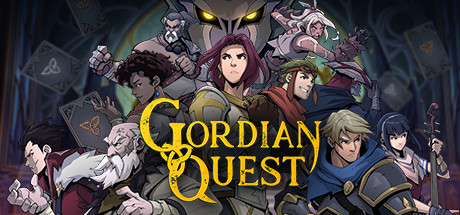
The Verdict
“A deep, addictive party deckbuilder that outguns Slay the Spire on mechanics — if you can survive its padded campaign.”
Very Positive
This puts the game in the top 30% of all reviewed games on Steam.
Analysis by Ivan Z. Ganza · Methodology →
Quick Stats
2,182en
5,939 total (all languages)
1,993 analyzed
Current as of Apr 25, 2026
Jun 23, 2022
$19.99
Apr 23, 2026
0.6/day
Slowing
Metadata current as of Apr 29, 2026 · Source: Steam
Market Reach
≈220K
≈$4.0M
Based on 5,939 reviews (all languages)
Based on review count × genre/age/price-adjusted Boxleiter ratio. Gross revenue before Steam’s 30% cut, refunds, and regional pricing.
Design Strengths
- Equipment-linked card system lets builds pivot organically around found loot, creating genuine discovery moments rather than predefined deck paths
- Three-character grid-based tactical combat adds spatial depth — avoidance and positioning are viable strategies alongside blocking, absent from single-character deckbuilders
- Ten heroes each with 3–4 distinct archetypes and multiple upgrade paths generate extensive cross-run variety and team composition experimentation
- Card mechanics support deep creative synergies with rune sockets, gem slots, and talent trees layering meaningfully onto the core deckbuilding loop
- Realm Mode delivers a faster-paced roguelite experience that concentrates the game's mechanical strengths without the campaign's pacing drag
- Addictive feedback cycle combining progression systems creates a compelling 'one more fight' loop sustaining 40–600+ hour sessions
- Hand-drawn 2D art style and haunting soundtrack deliver strong aesthetic cohesion that elevates the overall experience
Gameplay Friction
- Campaign is critically over-long (8–15 hours per act across 4 acts), padded with trivial common encounters against weak enemy AI that targets unoccupied tiles and ignores threats
- Too many peripheral systems (supply, camping, exhaustion, d20 rolls, crafting, synergy points) operate in parallel without integrating meaningfully with core deckbuilding — described by players as 'systems upon systems'
- Build lock-in occurs too early (often Act 2), leaving players cycling the same cards for the majority of a 30–50 hour campaign with diminishing strategic variation
- Tutorial and tooltips fail to explain card icons, row/column targeting terminology, status effects, and secondary systems — new players require external guides to function
- Inventory management across three characters is cumbersome: no bulk-sell, no keyword filtering, no tier sorting, forcing constant manual loot sorting through high volumes of junk drops
- Difficulty curve is poorly calibrated — normal mode is near-trivial due to weak enemy AI, while difficulty scaling on higher tiers inflates stats rather than improving tactical complexity
- Game mode identity is unresolved: long act lengths undermine roguelite tension, while random loot contradicts campaign RPG pacing — each mode inherits mechanics that fit poorly in its context
Audience Profile
Ideal Player
A strategy-minded deckbuilder fan who wants RPG-depth party building, meaningful loot, and 100+ hours of synergy hunting across 10 distinct hero classes.
Casual Friendliness
low
Player Archetypes
Not For
Sentiment Trend
stable
Sentiment steady at ~79% positive over the last 180 days (35 reviews).
Genre Context
Party-based roguelite deckbuilders are a small but growing genre sub-niche; Gordian Quest stands out as one of the few titles combining full equipment loot systems, grid tactical combat, and multi-character deckbuilding in a single package — a mechanical density most genre peers don't attempt. However, the genre norm of tight, sub-2-hour runs conflicts with Gordian Quest's 8–15 hour act structure, putting it closer to campaign RPG territory than most deckbuilder players expect.
Promise Gap
Audience Match
The store description targets fans of narrative RPG classics (Ultima, D&D) who expect a story-driven journey, but actual players are primarily min-maxing deckbuilder enthusiasts drawn by mechanical depth — the narrative framing sets expectations the game cannot meet and may deter the mechanics-first audience most likely to love it.
Player Wishlist
- Cooperative multiplayer mode leveraging the party-based design for social play
- Steam Workshop / modding support to extend longevity beyond the base content
- Shorter, self-contained act lengths or a dedicated campaign-specific pacing mode
- Improved enemy AI with genuinely tactical decision-making at all difficulty levels
Churn Triggers
- Within the first 2 hours, new players overwhelmed by simultaneous mechanic introductions (supply, camping, card icons, status effects) with no adequate tutorial hit a discouragement wall and quit
- Around Act 2–3 (typically 15–30 hours in), players notice their build is locked in and combat becomes repetitive, triggering dropout from campaign before completion
- After a promising early run, players expecting tighter roguelite tension encounter 8–15 hour act lengths and abandon the campaign mode, some migrating to Realm Mode instead
- Players who reach a game-breaking crash or save corruption mid-run (around 15–20 hours in) frequently leave negative reviews and do not restart
Developer Priorities
Restructure campaign pacing: shorten act lengths or introduce mid-act checkpoints that allow shorter sessions without restarting progress
Campaign length and padding is the #1 friction signal (284 mentions, avg 22 helpful votes) and the primary driver of mid-game dropout around Act 2–3. Fixing this directly reduces the largest churn event in the game.
Audit and prune peripheral systems: consolidate or remove supply, exhaustion, and camping mechanics unless each is redesigned to interact directly with deckbuilding decisions
System bloat is the #2 friction signal (248 mentions, avg 15 helpful votes) and compounds the onboarding failure — new players encounter systems that veterans also find pointless, eroding trust in the game's design coherence.
Rebuild the new player onboarding: add contextual tooltips for card icons and targeting terms, introduce systems incrementally across the first run, and create an in-game reference glossary
Onboarding failure (218 mentions) causes abandonment within the first 2 hours — the steepest churn window. Players are dropping before experiencing the game's genuine strengths.
Overhaul inventory UX: add bulk-sell/salvage, keyword filtering, tier sorting, and visual junk indicators to reduce per-session management overhead
Inventory friction (148 mentions) actively discourages players from trying new heroes and compounds fatigue during already-long sessions — a fixable UX problem suppressing the game's core replayability strength.
Redesign enemy AI behavior at all difficulty tiers, shifting hard mode challenge from stat inflation to smarter targeting, formation pressure, and ability prioritization
Weak enemy AI (224 mentions) makes the majority of combat trivial, accelerating build stagnation fatigue and undermining the tactical positioning system that is the game's primary mechanical differentiator.
Competitive Context
Most frequent comparator; Gordian Quest overwhelmingly seen as superior in party depth, equipment systems, and build variety — a minority find Realm Mode's event design and polish below StS's standard
Cited as a core inspiration for party-based tactical mechanics and atmosphere; GQ's lack of mod support contrasted unfavorably against Darkest Dungeon's modding ecosystem
Frequently mentioned as a comparable roguelite deckbuilder; GQ seen as equally or more enjoyable due to deeper RPG mechanics
Mentioned as a step beyond Slay the Spire that GQ then 'obliterates' in one high-voted review — positions GQ at the apex of the deckbuilder genre in player perception
Some players prefer Trials of Fire's integration of tactical combat and deckbuilding; others list both as top-tier — not a clear win for GQ in this matchup
Seen as a comparable party-based deckbuilder; some players prefer Across the Obelisk for tighter cardplay, making this GQ's closest direct competition
Referenced for grid-based tactical party combat similarities; GQ described as 'a nice mixture between Gloomhaven and Fire Emblem' in card game form
Mentioned as a strong StS alternative; some players feel Vault of the Void offers deeper pure deckbuilding than GQ, suggesting a niche where GQ's RPG breadth is less valued
Sentiment History
Sentiment over time
Playtime Sentiment
Sentiment by time invested
· 939 post-launch reviewsPlayers who invest more time rate this game significantly higher (+20pts) — a strong signal of a slow-burn experience that rewards patience.
Competitive Benchmark
Compared to 232 similar games in the Strategy genre released in 2022.
Tags
Loading analytics...
Get more analyses like Gordian Quest
Free reports today. Pro launches soon. No spam.