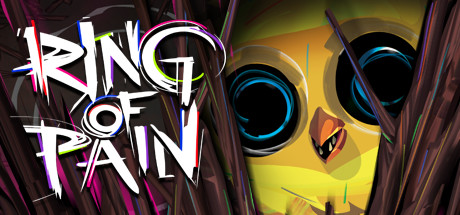
The Verdict
“A compulsive, creepy dungeon crawler where left-or-right decisions snowball into brilliant chaos — if you can stomach brutal RNG.”
Very Positive
This puts the game in the top 30% of all reviewed games on Steam.
Analysis by Ivan Z. Ganza · Methodology →
Quick Stats
2,504en
5,030 total (all languages)
1,995 analyzed
Current as of Apr 22, 2026
Oct 15, 2020
$19.99
Apr 23, 2026
1.2/day
Slowing
Metadata current as of May 1, 2026 · Source: Steam
Market Reach
≈160K
≈$3.3M
Based on 5,030 reviews (all languages)
Based on review count × genre/age/price-adjusted Boxleiter ratio. Gross revenue before Steam’s 30% cut, refunds, and regional pricing.
Design Strengths
- Circular ring layout turns dungeon navigation into a constant left-or-right puzzle — a genuinely novel spatial mechanic that isn't a deckbuilder and isn't a traditional crawler
- 15–30 minute run length makes restarting feel low-cost, directly fueling the 'one more run' compulsion that players cite as the game's defining pull
- 300+ item pool with passive synergies (freeze chains, acid blades, damage-sink builds) sustains discovery well past 100 hours for high-playtime players
- Dark, hand-drawn aesthetic with cohesive horror-tinged sound design creates a 'creepy-cute' identity players describe as immersive at every layer from UI to music
- Achievement system doubles as in-game challenge design, unlocking new items and encouraging intentional build diversification across runs
- Developer track record of consistent free content updates, balance patches, and community-suggested item additions builds long-term trust and keeps returning players rewarded
- Steam Deck Verified status is reinforced by players who report the left/right input scheme feels more natural on controller than mouse, and short runs suit handheld sessions
- Creatures broadcasting their next action creates visible counterplay opportunities, partially offsetting the RNG variance with readable tactical information
Gameplay Friction
- Excessive RNG governs item drops, enemy spawns, and stat rolls to the degree that high-playtime reviewers (100–800 runs) report 519 of 802 runs abandoned due to unfavorable conditions — the core tension of the game's reception
- Exploding slime/blob enemies and poison mechanics deal positioning-dependent lethal damage with insufficient counterplay, cited as the primary cause of deaths that feel unfair rather than instructive
- Final boss's freeze immunity — patched in post-launch — narrows viable endgame builds without compensating improvements elsewhere, making many items collected throughout a run feel retroactively wasted
- Difficulty gap between medium and hard has no satisfying middle ground; hard mode plays as a near-pure RNG gauntlet rather than a skill test, per high-playtime reviewers
- Core mechanics are poorly explained at launch; players routinely die without understanding the cause, and enemy/room mechanics are not surfaced in-game — the game teaches by punishing, not by tutorializing
- Best items are locked behind achievement progression, meaning new players face the hardest early game with the weakest item pool — compounding the steep learning curve
- Early-run RNG forces repeated restarts at higher difficulties; players report rerolling 15+ times before a run feels viable, creating a frustrating meta-loop before meaningful gameplay begins
Audience Profile
Ideal Player
A roguelike enthusiast who enjoys iterative mastery, thrives on atmospheric tension, and treats a run-ending death as a lesson rather than a betrayal.
Casual Friendliness
low
Player Archetypes
Not For
Sentiment Trend
stable
Sentiment steady at ~87% positive over the last 180 days (73 reviews).
Genre Context
Ring of Pain occupies a rare niche within the roguelike card-game genre: it is a positional dungeon crawler that uses cards to represent the environment, not a hand — distinguishing it from deckbuilders that dominate the space. By genre norms, its 15–30 minute run length and equipment-based progression sit closer to traditional roguelikes than to card-game peers, making RNG tolerance expectations from deckbuilder players a persistent misalignment risk.
Promise Gap
Audience Match
The store description targets a broad roguelike audience comfortable with challenge and emergent strategy, but does not warn that this is not a deckbuilder — causing systematic expectation mismatch among card-game players who represent a meaningful churn cohort. The difficulty and RNG intensity are undersold relative to what reviewers actually experience.
Player Wishlist
- A difficulty tier between medium and hard that adjusts RNG variance rather than simply scaling enemy stats
- Expanded narrative content or a third ending to reward hard-mode completion beyond mechanical challenge
- In-game item/mechanic reference or codex so players can look up enemy behaviors without dying to them first
- Additional build archetypes or item categories to expand synergy space beyond the current dominant defense meta
Churn Triggers
- Within the first 3–4 hours, new players die repeatedly without understanding what killed them, and with a depleted item pool locked behind achievements — many quit before mechanics click
- On higher difficulties, players who restart 15+ consecutive times due to unfavorable opening RNG hit patience fatigue and abandon the game entirely before completing a meaningful run
- Players deep into a strong run who face the final boss discover their freeze-based build is immune-blocked, invalidating hours of item collection — a late-run rug-pull that drives negative reviews from otherwise-engaged players
- Players arriving from Slay the Spire or Monster Train expecting deckbuilder depth encounter what feels like a lighter experience within the first hour and disengage before the item-synergy layer reveals itself
Developer Priorities
Redesign starting RNG at higher difficulties to guarantee a minimum viable opening condition — e.g., a draft from 3 starting item sets rather than a pure random draw
RNG-driven restart fatigue is the single highest-frequency complaint across all review chunks (298 mentions) and directly causes both churn before the game's depth is revealed and the majority of negative reviews from high-playtime players
Add a lightweight in-game reference panel for enemy mechanics and status effects, surfaced on hover or from the pause menu
198 reviews cite dying without understanding the cause as the primary early-game churn driver; this fix directly extends player retention past the critical first 3–4 hours where dropout is highest
Rebalance exploding/poison enemy spawn rates and introduce a positioning-based counterplay option (e.g., a consumable or item that neutralizes chain explosions)
87 mentions with the highest average helpful votes (36.2) in the dataset — meaning this specific feedback resonates with readers, not just writers; it is the most-validated specific mechanical complaint
Introduce a difficulty tier between medium and hard — tuned to reduce RNG variance rather than scale enemy stats — and reassess the final boss's freeze immunity in the context of overall build viability
The medium/hard difficulty gap and the freeze-immunity boss patch together invalidate two of the game's core engagement loops (build crafting and difficulty progression) for the player segment most likely to leave reviews and recommend the game
Reduce the number of best items gated behind late-tier achievements, or add an optional 'guided start' mode that grants one selected item unlock to new players
New players face the hardest early game with the weakest item pool — compounding the already-steep learning curve and accelerating dropout before the game's depth is reachable; resolving this expands the addressable audience
Competitive Context
Most-cited competitor. Reviewers who prefer Ring of Pain cite its equipment system over card-hand bloat and its dungeon-crawler identity; reviewers who prefer StS call Ring of Pain shallower. Consensus positions Ring of Pain as a distinct alternative, not a clone.
Grouped with StS as the deckbuilder benchmark. Positive reviewers rank Ring of Pain alongside or above Monster Train; negative reviewers cite Monster Train as a superior alternative.
Compared for dark atmospheric card-game aesthetic. Fans of Inscryption's first act are explicitly recommended Ring of Pain; some negative reviewers prefer Inscryption.
Named as a comparable roguelike card game. At least one positive reviewer prefers Ring of Pain over Griftlands; negative reviewers cite it as superior.
Referenced for similar trial-and-error progression and item collection replayability. One reviewer claims Ring of Pain is 'somehow more luck-based than Isaac.'
Used as a genre benchmark for roguelikes with repeated runs and progressive unlocks; no direct quality comparison made.
Compared for punishing tactical difficulty. One reviewer notes Ring of Pain's RNG cannot be mitigated the way Darkest Dungeon's strategic layer allows.
Reviewers note similar card-based mechanics but find Ring of Pain less punishing when runs fail — a favorable distinction.
One reviewer cites Balatro as offering deeper synergy systems, positioning Ring of Pain below it in the card-roguelike hierarchy.
Sentiment History
Sentiment over time
Playtime Sentiment
Sentiment by time invested
· 2,504 post-launch reviewsPlayers who invest more time rate this game significantly higher (+25pts) — a strong signal of a slow-burn experience that rewards patience.
Competitive Benchmark
Compared to 211 similar games in the Strategy genre released in 2020.
Tags
Loading analytics...
Get more analyses like Ring of Pain
Free reports today. Pro launches soon. No spam.